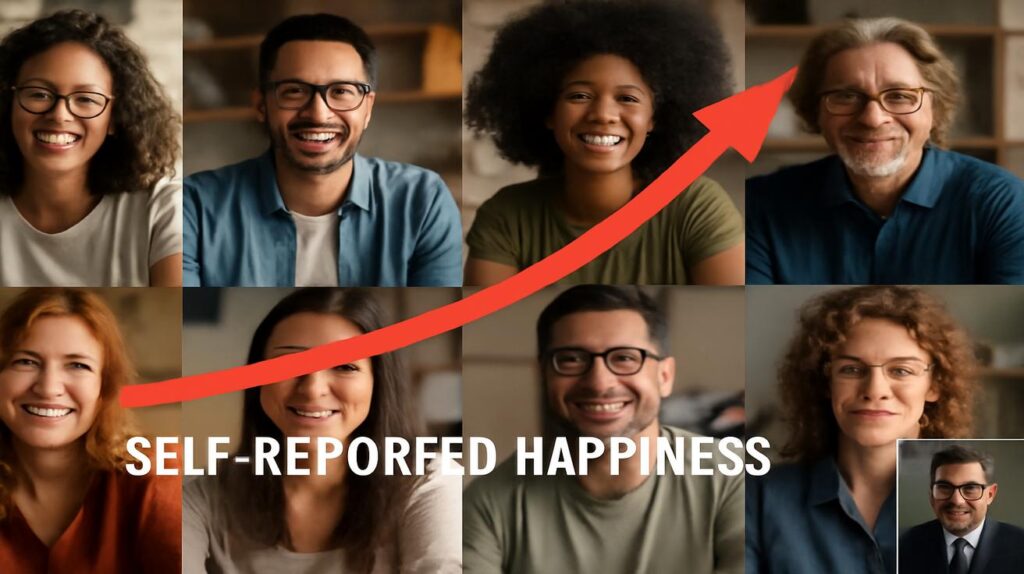
The kettle clicks off in a quiet kitchen. Somewhere, a dog sighs and settles under a desk. Light pours through a window that used to be just “the dining room,” but now doubles as an office with a view of the neighbor’s maple tree. On the laptop screen, a gallery of faces appears—some framed by bookshelves, others by curtains or houseplants. Someone’s toddler makes a brief, chaotic cameo; someone else mutes to hush a barking spaniel. It looks a little messy. It also looks like something quietly radical: the everyday landscape of work, unhooked from the office.
A Four-Year Experiment No One Meant to Run
No one planned for this grand experiment. It crept in on the back of crisis—a global pandemic that sent millions of people home with their laptops and their anxieties, told to keep the economy running from kitchen tables and spare bedrooms. What felt, at first, like an emergency patch quickly turned into a question: Was this actually better?
For four years, researchers in fields from organizational psychology to urban planning watched. They tracked surveys and biometric data, productivity dashboards and calendar logs. They interviewed parents, introverts, managers who hated it, managers who secretly loved it, and workers who caught their breath for the first time in a decade.
By the end of those four years, the numbers were stubbornly clear. People working from home were, on average, happier. Not a little happier, not just “less stressed,” but meaningfully, measurably more content with their lives, their days, and the texture of their time. Their heart rates told one story; their diaries told the same one in more poetic detail.
Yet, at the same time, another pattern emerged: the more solid the evidence became, the more many managers stiffened against it. Return-to-office mandates thickened like fog. “We need to preserve culture,” they said. “Innovation needs in-person collisions.” “We can’t manage what we can’t see.”
It was as if, while employees were discovering their lives had colors they’d forgotten, a lot of leaders were panicking that the crayons were getting out of order.
The Science of Quiet Joy
Happiness is slippery to measure. It’s less a single data point and more like weather: a pattern of moods and moments, shaped by environment, relationships, health, and the simple question of how you feel when you wake up each morning. Scientists didn’t just ask people “Are you happy?” then call it a day. Over four years, they layered methods like sediment in a core sample.
They looked at:
- Longitudinal surveys, following the same workers over years.
- Daily mood logs, pinging phones a few times a day.
- Burnout and stress scales used in clinical settings.
- Turnover data, sick days, and even sleep quality.
The patterns lined up. When people worked from home at least part of the week, they reported:
- Lower daily stress.
- Better work-life balance.
- Stronger feelings of autonomy and control.
- More time for family, hobbies, exercise, or simply rest.
One researcher described it as a “gentle uptick in overall life satisfaction that, over years, becomes dramatic.” It wasn’t the euphoria of lottery winners or the dizzy joy of vacations. It was quiet joy: the absence of the grinding frictions that had been mistaken for “just how work is.” The commute that evaporates. The 7:00 a.m. scramble that smooths out. The mental load of packing lunches, outfits, gym bags, and “don’t forget the permission slip” that lightens when home and work share an address.
Crucially, it was not just parents or introverts or knowledge workers in cushy roles reporting this uptick. It spanned ages, industries, and income brackets. It also came with an unexpected side effect: when given more control over where they worked, many people started to rethink how they worked. They rearranged their days around energy rather than optics, focus rather than facetime.
| Aspect | Mostly In-Office | Hybrid / Remote |
|---|---|---|
| Daily Stress Levels | Higher, spike around commute and late meetings | Lower, more stable across the day |
| Life Satisfaction | Moderate, strongly tied to job role | Higher, improves even in similar roles |
| Burnout Risk | Elevated, especially for caregivers | Reduced, though boundary issues emerge |
| Sense of Autonomy | Lower, schedule dictated by office norms | Higher, more control over time and space |
| Time for Non-Work Life | Constrained by commuting and office hours | Expanded, reclaimed commute hours |
The table’s numbers and descriptors distill years of research into something simple: when we release the physical tether between workers and office buildings, the human cost of a workday drops. People get some of their lives back.
The Commute: A Quiet Thief of Joy
Any scientist studying happiness in the last decade has run into the same villain: the commute. Even before the remote work explosion, economists knew that long commutes reliably erode wellbeing. The data has been intoxicatingly consistent: every additional minute spent grinding between home and office tends to nibble away at life satisfaction.
Now, for millions, this daily migration has vanished. Instead of being wedged among strangers under fluorescent lights or idling in evening traffic, workers reclaim that time. Some sleep longer. Others walk their kids to school, or slip outside for a bike ride before their first call. A surprising number report doing very little with those minutes—just sitting with coffee, letting the day unspool more gently.
For happiness researchers, this is almost comically straightforward: remove a well-documented source of daily misery, and people feel better. But buried in that simplicity is something more textured. Commuting, for many, wasn’t just a nuisance; it was a border wall between identities. At home they were parents, musicians, gardeners, caretakers; at the office, they were job titles. The commute was the forced tunnel between them. When that tunnel disappeared, the edges between roles softened, and a different kind of self was allowed to exist across the workday.
Inside the Home Office: Autonomy, Scented Candles, and the Sound of Your Own Life
To walk through the average home office is to move through a museum of quiet customization. A candle that smells like pine trees instead of corporate carpeting. A blanket over the back of a chair. A standing desk that doubles as a craft table. A family photo taped to the monitor, not as a subtle rebellion but because no one will question whether it’s “too personal.”
From the outside, these details look trivial. From the inside, they are signals of control. Environmental psychologists have long known that feeling able to shape your surroundings is strongly linked to wellbeing. The office, with its thermostat wars and uniform lighting, often strips that sense away. The home office gives it back, and with it returns a subtle internal message: “This is your space. You can shape your day here.”
Across interviews, remote workers spoke in sensory language more often than office-based peers. They talked about the smell of their own coffee, the light in their workspace at 3:00 p.m., the sound of birds outside their window. These details might sound indulgent, yet they’re the fabric of experience. When you can open a window instead of silently enduring stale air, when you can play your own music or sit in your preferred kind of chair, your nervous system relaxes.
Autonomy shows up in the schedule, too. Workers spoke about doing deep-focus tasks early in the morning, or slipping out for a midday walk and then finishing later, without the mortal fear of being “caught” away from their desk. Parents shifted their workday to be present for school pickups, then wrapped up at night after bedtime stories. The rhythm of their days followed human needs rather than the blunt geometry of a shared office block.
Of course, not all home offices are sunlit sanctuaries. Plenty of people work from cramped apartments, share space with roommates, or balance laptops on counters. Remote work has never been an equalizer of housing inequality. Yet, even within those constraints, autonomy peeks through: noise-canceling headphones, flexible hours, micro-boundaries carved into domestic chaos. For many, that’s still better than being locked into a cubicle both physically and psychologically.
The Loneliness Myth (And the Loneliness Truth)
One of the loudest critiques of remote work is its supposed loneliness. “People are social animals,” the argument goes. “If we take away offices, aren’t we just isolating ourselves in little digital caves?” There is truth here—loneliness did spike during the pandemic years, and screens are shaky substitutes for shared meals.
But the four-year research arc paints a subtler picture. Many workers distinguished between office proximity and real connection. Sitting in the same climate-controlled building as other people does not guarantee friendship, community, or belonging. In fact, some of the loneliest respondents were those who returned to offices where half the desks sat empty and hallway conversations had been replaced by noise-canceling headphones and Slack messages.
Remote workers, meanwhile, reported more agency in choosing how to connect. Some invested more in relationships outside of work: neighbors, local communities, family members they could now visit more flexibly. Others leaned into virtual coworking, online social circles, or intentional meetups instead of defaulting to the office cafeteria. The question shifted from “Who happens to share my building?” to “Who do I actually want in my life?”
Where loneliness truly sank its hooks, it usually coexisted with something else: poor management. Workers who felt adrift, forgotten, or micromanaged through screens reported worse mental health outcomes. The issue wasn’t remote work; it was remote work done badly—flat video calls, no shared norms, no clarity of expectations, no space for the informal conversations that build trust.
Why Managers Still Flinch at the Data
So if the evidence supporting remote and hybrid work as happiness boosters is so strong, why do so many managers still resist it? Why the stubborn push for three mandatory days in the office, the suspicious eyes on “green dots” in chat apps, the thinly veiled nostalgia for the pre-2020 world?
Part of the answer is simple habit. For over a century, the architecture of work has been built on visibility: people in seats, under supervision, within reach. You knew who was working because you could see them. Productivity was associated—sometimes lazily—with presence.
When work moved home, it cracked that illusion. Suddenly, managers could not walk the floor as a barometer. They had to trust, measure outcomes rather than activity, and communicate intentionally. For some, this shift has been exhilarating; for others, it feels like a threat to their identity.
Power is another quiet thread. Office culture often encodes status into corner spaces, private conference rooms, whose calendar gets priority. In a pixelated grid on Zoom, those symbols flatten. A junior engineer’s face is the same size as a VP’s. The CEO’s bookshelf becomes just another rectangle among many. That leveling, subtle as it is, unsettles hierarchies built on physical cues.
Then there is fear, dressed in rational clothing. Managers worry about:
- Innovation: Will big ideas still spark without whiteboards and chance encounters?
- Culture: How do we transmit norms and values without a shared building?
- Fairness: Are remote workers being treated the same as in-office ones?
These are real questions. Yet the research suggests that forcing people back into offices doesn’t automatically solve them. You can sit in the same room and still fail to innovate, fail to build culture, fail to treat people fairly. You can also, with some creativity, do all three across time zones and screens.
What often goes unspoken is that many managers were never given the tools or training to lead distributed teams well. They were promoted in a world where leadership meant running meetings in physical rooms, reading body language from across a table, and keeping calendars drilled around office hours. Now they’re being asked to reinvent all of that—often while their own bosses demand visible control.
What the Happiest Remote Teams Have in Common
Among the data points and case studies, a pattern emerges: not all remote work is equal. The happiest teams share several traits that might look, from a distance, almost like a recipe.
- Clear Expectations: People know what success looks like, beyond “be available.” Goals are concrete; outputs matter more than performative busyness.
- Deliberate Communication: There are norms around tools: when to message, when to call, when to document. Meetings have purpose or they don’t happen.
- Boundary Respect: Leaders model logging off. They encourage breaks, discourage late-night pings, and remind people to close the laptop.
- Optional but Supported In-Person Time: Gatherings exist, but they’re for connection and deep work, not box-ticking attendance.
- Trust as Default: The baseline assumption is that people want to do good work. Monitoring is the exception, not the rule.
Workers on teams like this often speak of a paradox: they feel more seen and supported at a distance than they ever did while sharing walls. Their days feel human-scaled. Their lives feel less carved up into rigid compartments. And perhaps most crucially, they begin to imagine that their relationship with work can be long-term without swallowing them whole.
The Future: Not “Back to Normal,” But Forward to Choice
On a gray Tuesday in late autumn, a woman closes her laptop at 4:30 p.m. She pulls on a sweater, clips a leash to her dog’s collar, and steps outside into air that smells faintly of rain and woodsmoke. Somewhere, in an office tower downtown, lights are still bright, elevators still humming, meetings still running long. She knows she might be there next week—her team meets in person once a month. She doesn’t dread it; she doesn’t worship it either. It’s just one mode among several.
This, more than any singular model, is where the research quietly points us: not toward an ultimatum—office or home—but toward a spectrum of choice. The happiness gains of remote work are not about pajamas or couches or avoiding small talk. They are about flexibility, autonomy, and the ability to design a life where work is a part of the day, not the entire architecture around which everything else is forced to bend.
For some, that might mean fully remote roles woven around caregiving or chronic illness. For others, it might mean hybrid rhythms: two days a week of buzzing office energy, three days of calm at home. For a few, it might even still mean five days in a space they genuinely love, surrounded by colleagues who feel like co-conspirators rather than clock-watchers.
But the key is that, after four years of accidental experimentation, we cannot plausibly claim we don’t know what remote work does to people anymore. We know. It gives them hours back. It softens sharp edges. It makes room for dogs under desks and mid-morning walks and dinners cooked without the frantic clock-watching that comes after an hour on a train.
Managers can resist this knowledge, or they can step into it. They can cling to old metrics—the number of cars in the parking lot, the hum of open-plan chatter—or they can ask harder, better questions: Are my people thriving? Do they have lives they want to keep living while they work here? Are we building something that deserves their best selves, not just their most exhausted hours?
The answer, as the research keeps telling us in steady, unsentimental graphs, is that when we let people work from places that feel like home—whether that’s truly their home or simply a life-friendly arrangement—we don’t just get happier employees. We get better, more sustainable work, and a future where the office is not a demand but an option, one instrument in a much richer orchestra of how humans can collaborate.
FAQ
Does working from home really make people happier, or is it just a temporary trend?
Across four years of research—well beyond the initial novelty period—workers consistently reported higher life satisfaction, lower stress, and better work-life balance when they had remote or hybrid options. The effect has proven durable, not just a short-term mood lift.
What about productivity—does happiness come at the cost of performance?
Most large studies have found that productivity is maintained or slightly improved in remote and hybrid setups, especially when goals are clear and distractions are managed. The biggest gains tend to appear in focused, knowledge-intensive work rather than tasks that require constant physical presence.
Are there people for whom remote work doesn’t help—or even makes things worse?
Yes. Some people genuinely thrive on in-person energy, struggle with isolation, or lack a suitable home workspace. Remote work should be an option, not an obligation. Hybrid models and flexible office access can help serve different preferences and needs.
Why are so many managers still pushing for a return to the office?
Reasons range from habit and comfort with visible control to concerns about culture, innovation, and fairness. Many leaders also lack training in managing distributed teams, making remote work feel riskier or harder than it has to be.
What can organizations do to balance remote work benefits with genuine connection?
Successful teams combine flexible location policies with clear expectations, intentional communication norms, and thoughtfully designed in-person time. Instead of forcing daily presence, they use gatherings for activities that truly benefit from being together: deep collaboration, relationship-building, and shared rituals.