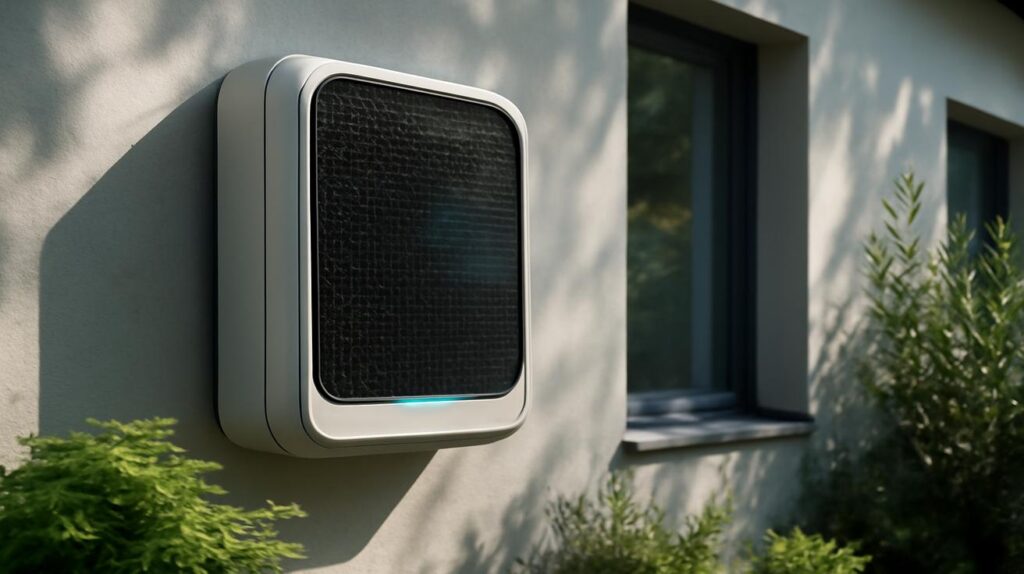
By late afternoon, the city feels like it’s breathing hot air. Pavement shimmers. Windows radiate warmth like open ovens. Inside an eighth-floor apartment, a boxy air conditioner rumbles in the corner, chewing electricity and dripping condensation onto the balcony below. It’s loud, it’s expensive, and somehow the room still feels a little too warm, a little too dry, a little too stale. You stand there, hand on the window glass, and think: there has to be a better way to stay cool than this.
The Day the Heat Stopped Winning
The story of the breakthrough cooling device that’s now outpacing traditional air conditioning doesn’t begin in a factory or a billionaire’s lab. It begins on a blistering rooftop, with a scientist staring at the sky and wondering why humans always fight the heat instead of working with it.
Up there, above the glass and concrete and humming compressors, the air feels sharper. The sunlight is harsh, but the wind has teeth. And, more importantly, the sky is doing something incredible: it’s continuously radiating heat out into the black cold of space. Day and night, our planet is shedding warmth through a narrow “window” in the atmosphere—specific wavelengths of infrared light that slip past the greenhouse gases and vanish into the universe.
The scientist had read the physics before. But standing in the sun, he realized: What if a building could send its excess heat directly into space? No compressors. No refrigerants. Just a silent, shimmering panel that pulls heat away from a room and tosses it into the cosmos like a magician’s trick.
That question lit the fuse. Years later, it would become a new kind of cooling device—one that can outperform traditional air conditioning in many conditions while using dramatically less energy. Not a fantasy. Not a distant prototype. A real object you can mount on a roof or tuck behind a home. A device that leans not on brute-force electricity, but on physics and smart materials.
The Secret: Cooling by Touching the Sky
To understand why this new device is so different, it helps to picture how conventional air conditioners work. They’re like stubborn weightlifters: a lot of effort for every small win. A compressor squeezes a refrigerant gas until it’s piping hot, then sends it through coils to shed that heat outdoors. The refrigerant expands, cools, and absorbs heat from inside your room. It’s incredibly effective—but only by burning through electricity and dumping waste heat into already-hot streets.
Now imagine a system that doesn’t fight heat in such a roundabout way. Instead, it uses a phenomenon called radiative cooling. Every object emits infrared radiation—basically, invisible heat light. On clear days and nights, some of that radiation can travel straight through the atmosphere into space, especially in a specific band between about 8 and 13 micrometers in wavelength. The sky, in that sense, acts almost like a vast heat sink.
The breakthrough came when engineers developed ultra-thin “metamaterials”—engineered surfaces that look like ordinary films or panels to your eyes, but are finely tuned at the microscopic level. They reflect almost all incoming sunlight (so they don’t heat up), yet emit a powerful stream of infrared radiation directly into that atmospheric window. In simple terms: they bounce away the sun and beam their own heat into space.
When you integrate these materials into a cooling device—paired with water loops, heat exchangers, and smart controls—you get something remarkable: a panel that can become cooler than the surrounding air, even while sitting under direct sunlight, and use that coolness to chill water that feeds into a building’s system.
How the New Device Actually Works
Picture a slim, pale panel on a flat roof, angled gently toward the open sky. Inside it, a thin layer of radiative material is backed by insulation and a network of water channels. The panel’s surface acts like a one-way heat valve, sending its heat upward into space. The water circulating beneath the surface loses heat to the panel, cools down, and is pumped into the building to absorb indoor warmth.
No compressor grinding. No refrigerant cycling between gas and liquid. At its core, this device is leveraging a natural heat highway that air conditioners completely ignore. And when you feed that cooled water into a radiant floor system, fan coils, or an air handler, you get a cooling effect that feels gentle, stable, and often more comfortable than the on-off blast of a window unit.
What It Feels Like to Live With It
It doesn’t roar to life with a clunk. It doesn’t shudder your window frame. In fact, the first thing people often notice when they switch to this new kind of cooling is the absence of drama.
There is no sudden gust of icy air. Instead, the room settles into a quiet, even coolness. The temperature drifts down not in jolts, but in a slow slide, like shade spilling across a field at sunset. You can hear the hum of a small circulation pump somewhere in the background—if you listen closely. Otherwise, sound disappears into the soft rustle of curtains and distant city traffic.
One early adopter, a teacher living in a sun-baked townhouse, described it this way: “It felt less like being air conditioned and more like the heat just…gave up.” The sticky heaviness of late afternoon diminished. The furniture stopped radiating stored warmth. Even standing near the windows, she felt only the faintest edge of heat, as if the building itself had become better at saying no to the sun.
At night, the experience becomes even more striking. Traditional AC units tend to overshoot, cycling on and off, leaving you tugging at blankets one minute and kicking them off the next. With radiative-cooling-based systems, the night sky becomes an ally. As the air clears and humidity drops, the panels ramp up their ability to shed heat into space. The building coasts along at a stable, comfortable temperature. You wake up without the usual morning grogginess that comes from dry, over-chilled air.
The Quiet Rebellion Against Energy Waste
The magic of this device isn’t just in how it feels—it’s in what isn’t happening behind the scenes. There’s no energy-hungry compressor drawing spikes of power every time the thermostat calls for cooling. Instead, the system mostly uses low-power pumps and controllers. The heavy lifting is done by physics, not by machinery.
In field tests and early installations, these radiative-cooling devices have slashed cooling energy use by 40–80% compared to traditional systems, depending on climate, building design, and how they’re integrated. In some moderate climates, they can handle nearly all of the cooling load on clear nights and mild days, with a small high-efficiency backup system stepping in only during peak heat waves.
| Feature | Traditional AC | Radiative Cooling Device |
|---|---|---|
| Main cooling method | Compressor-based refrigeration | Radiating heat to outer space + water circulation |
| Energy use | High, continuous during hot days | Low, mainly pumps and controls |
| Noise level | Moderate to loud (compressor, fan) | Very quiet (no large compressor) |
| Heat impact on city | Adds waste heat to streets and air | Minimal local heat; sends heat to space |
| Refrigerants | Often high global-warming potential | Little or no synthetic refrigerants |
| Best use | Any climate, but at high energy cost | Dry to moderately humid climates; hybrid systems elsewhere |
Why This Beats Traditional AC Where It Hurts Most
Energy bills are the bluntest reminder of how hard we force buildings to stay cool. But the real cost of traditional air conditioning spreads further: rising carbon emissions, overloaded grids, and the strange irony that the more we cool our interiors, the hotter our cities become. Each AC unit acts like a tiny heater on the street, raising ambient temperatures and fueling the very demand that keeps it running.
The new radiative-based devices flip that logic. Instead of dumping heat into alleys and rooftops, they use the sky as their outlet. From an environmental perspective, this does three critical things at once:
- Cuts electricity demand by leaning on passive physics.
- Reduces peak load on power grids during heat waves, when blackouts are most dangerous.
- Avoids potent refrigerants that can leak and trap heat in the atmosphere for years.
And purely in terms of performance, the device has a surprising advantage: in certain conditions, it can cool water below the outdoor air temperature without any mechanical chiller at all. That’s something traditional AC simply cannot do without enormous energy input. By radiating directly to the cold of deep space, these panels can reach temperatures several degrees cooler than the ambient air, providing an extra margin of comfort even when the thermometer refuses to budge.
Working With the Weather, Not Against It
There is, of course, a catch: the sky has to cooperate. Radiative cooling works best on clear, dry nights and days. Thick clouds and high humidity reduce the sky’s ability to accept that outgoing heat. But rather than being a fatal flaw, this has pushed designers into creating smarter, hybrid systems.
In many real-world installations, the radiative panels form the backbone of a cooling system, handling as much of the load as conditions allow. On perfect clear nights, they might do nearly all of the work. On sticky, overcast days, a small, high-efficiency electric chiller steps in to help, but for far fewer hours than it would otherwise. The result is a balanced approach that dramatically undercuts the energy use of conventional all-compressor systems.
The Design: Panels, Pipes, and a Different Kind of Beauty
These devices don’t shout for attention. In fact, many look like sleek solar panels or minimalist roof elements. A typical setup might include several lightweight, weatherproof panels connected to a small mechanical room that houses pumps, a storage tank, and controls. Inside the building, the cooled water can travel through:
- Radiant floors or ceilings, which cool quietly by absorbing heat from the room surfaces.
- Fan-coil units, compact boxes that blow air over chilled water coils.
- Ventilation systems, pre-cooling fresh air before it enters rooms.
There’s a kind of understated elegance here. Instead of a big metal box rattling under a window, you get a roof that seems to be in quiet conversation with the sky—a building that takes part in Earth’s own heat rhythms.
For architects and designers, this opens up new possibilities. Rooflines can host dual-purpose surfaces that both generate electricity (through solar) and dump heat into space (through radiative panels). Facades can integrate cooling elements without the industrial clutter of outdoor units. Courtyards and shaded terraces can stay cooler because the building as a whole is no longer radiating so much stored heat back into its own microclimate.
Living in Sync With the Invisible
Most of us never think about the invisible rivers of thermal radiation moving between our bodies, buildings, and the sky. We feel it only as vague impressions: the way a clear winter night bites harder than a cloudy one, or how a metal handrail still stings your fingertips long after sunset on a hot day. This new device makes those subtleties tangible.
On an ordinary evening in a home using radiative cooling, you can stand on the balcony and sense it. The air might still be warm, but your rooms behind you feel calmer, less agitated by heat. The roof above is quietly beaming yesterday’s sun back into the dark. You are, in a small way, participating in a cosmic exchange: local heat transformed into distant starlight.
Is This the Future of Cooling—or Just One Piece of It?
It’s tempting to frame any new technology as the solution. But climate and comfort are too complex for silver bullets. The breakthrough cooling device that outperforms traditional air conditioning is better understood as a powerful new tool in a growing toolkit.
In dry, sunny regions, it could become the dominant cooling strategy for homes and low-rise buildings, backed up by small high-efficiency units for extreme days. In dense, humid cities, it might work as a partner technology: cooling water at night, easing daytime peaks, or serving as a “pre-cooler” for efficient chillers. In off-grid or low-resource settings, it could offer nighttime cooling without relying on large batteries or unstable power lines.
The real promise lies in combination: radiative cooling paired with good insulation, natural ventilation, shade trees, reflective roofs, and energy-efficient appliances. Together, these approaches create buildings that not only use less energy, but also feel more gently tuned to their surroundings—less fortresses against nature, more companions to it.
From Rooftop Curiosity to Everyday Utility
For now, these devices still carry an air of novelty. Engineers and early adopters climb ladders with notebooks and infrared cameras; they measure roof temperatures at midnight and dawn. But the trajectory is familiar. Solar panels once felt experimental. Heat pumps used to be niche. Today, they’re sliding toward the mainstream.
As manufacturing scales up and building codes catch up, radiative cooling panels and their companion devices are likely to follow the same path. Costs fall. Installers get trained. Architects learn how to design with them from day one, rather than tacking them on at the end. One day, you might buy a new apartment and simply assume that somewhere above your ceiling, a quiet film is whispering heat into space.
And in a world of more frequent heat waves and growing urban populations, that quiet whisper could add up to something huge: neighborhoods that stay bearable when the grid is strained, cities that don’t trap quite as much heat between glass towers, families that don’t have to choose between relief and an unaffordable electricity bill.
Questions People Ask as They Stand in the Heat
FAQ
Q: Can this new cooling device really replace my air conditioner?
In some climates and building types, it can handle most or even all of the cooling load, especially when paired with good insulation and shading. In hotter, more humid regions, it usually works best as part of a hybrid system—dramatically cutting how often and how hard your traditional AC has to run, but not eliminating it entirely.
Q: Does it work during the day, or only at night?
It works both day and night. The key is that the special surface reflects most of the sun’s energy while still radiating heat to the sky. Daytime performance depends on clear skies and dry air, but under the right conditions, it can cool water below the outdoor air temperature even in midday sun.
Q: What happens when it’s cloudy or very humid?
Clouds and humidity reduce the effectiveness of radiative cooling because they partially “close” the atmospheric window that lets heat escape to space. The device will still provide some cooling, but less than under clear, dry conditions. That’s why many systems include a backup chiller or are designed to store cool water from better conditions for use later.
Q: Is it difficult to install in existing buildings?
Retrofits are possible, especially for buildings that already have hydronic (water-based) systems like radiant floors or fan coils. The panels go on the roof or another sky-facing surface, and the cooled water ties into your existing distribution. Purely air-based systems can still integrate radiative cooling, but may need additional equipment like fan-coil units or small tanks.
Q: How much energy can I realistically save?
Savings vary widely by climate, building design, and system integration, but many studies and pilot projects report 40–80% reductions in cooling energy use compared with traditional AC alone. Even where conditions are less ideal, using radiative cooling as a pre-cooler or nighttime booster can noticeably cut bills and peak demand.
Q: Does it require a lot of maintenance?
Maintenance needs are generally low. The panels themselves have no moving parts and only require occasional cleaning to remove dust or debris, especially in dry or polluted areas. Pumps, valves, and controls are similar to those in standard hydronic or HVAC systems and follow the same basic maintenance schedules.
Q: Will it still matter as the climate gets hotter?
Yes—perhaps even more. As temperatures and AC demand climb, the ability to cool with minimal electricity becomes crucial. While extreme humidity and haze can limit performance at times, the underlying physics of radiative cooling doesn’t disappear with global warming. In many scenarios, these devices help stabilize grids, lower emissions, and keep buildings livable during heat waves.
Someday, the idea that we once used roaring metal boxes to fight the sun may seem as strange as heating a whole house with a single open fire. For now, as another long hot season approaches, a quiet revolution is already unfolding on rooftops: a new generation of cooling that asks the sky for help—and, miraculously, gets it.