The first time I really noticed colour, I was seven years old and hiding under my grandmother’s dining table. The tablecloth was a deep, velvety green, and the sunlight that leaked in from the window painted it in shifting shades—forest, moss, emerald, almost black at the seams. Adults talked somewhere above me, their words muffled, but that green felt like a whole secret world I could climb into. Safe. Quiet. My world. When my grandmother ducked down and pulled the cloth back, she laughed. “Always the little creature of the woods,” she said. “Of course your favourite colour would be green.”
We talk about favourite colours like they’re throwaway facts, the sort of thing you might scribble onto an icebreaker form or share in a lighthearted conversation. But psychologists have been quietly paying attention to this simple preference for decades. And the more they look, the clearer it becomes: your favourite colour doesn’t just decorate your world—it hints at the way you move through it.
The Quiet Psychology Hiding in Your Crayons
The idea that colour affects us isn’t just poetic; it’s deeply biological. Long before we had words for “blue” or “gold,” we were animals reading the landscape for survival. The warm flash of ripe fruit. The threatening red of blood. The cool safety of shade. Our brains evolved to react to colour first and think about it later.
Modern colour psychology is a messy blend of biology, culture, and individual experience. There’s no one-to-one code—“if you like blue, you are X, Y, and Z”—but repeated studies show patterns. Certain colours tend to evoke specific moods or behaviours across large groups of people. And when you say, “This one, this colour feels like me,” you’re not just picking a shade. You’re choosing a mood, a way of being, a little flag you plant in the landscape of identity.
Imagine you walk into a paint store, thousands of swatches fanned out like butterfly wings. Your hand drifts, almost without thinking, toward one particular hue. Why that one? What is it whispering to you that the others are not?
Red: The Pulse of the Moment
Red is the colour that refuses to be ignored. It’s the flush of cheeks, the brake lights at midnight, the streak of a cardinal across a winter field. In psychological studies, red is consistently linked with arousal—of attention, of action, of emotion. When people see red, their hearts sometimes beat a little faster. They make quicker decisions. They notice more intensely.
If red is your favourite colour, you may be someone who secretly—or not so secretly—likes to live with the volume turned up. You might be drawn to intensity: strong opinions, bold moves, big feelings. Red people often carry a certain inner combustion, a drive that pushes them toward leadership, competition, or passionate pursuits.
But the story isn’t all fireworks. Many red-lovers also report quick tempers that cool just as quickly, a tendency to leap before looking, or a hunger for validation that makes quiet days feel oddly empty. In relationship studies, people who choose red often describe love as something they “fall into hard” and “fight to keep,” as if connection itself is a sport they’re playing to win.
Psychologists suggest that if your favourite colour is red, it might not just be because you like how it looks—it may also reflect a nervous system that craves stimulation and finds comfort in intensity. Red is the body’s exclamation point, and you might be someone who prefers life with more of those.
Blue and Green: The Calm Between Heartbeats
Blue: The Long, Deep Breath
If red is a drum solo, blue is the slow exhale afterward. It’s the colour most often named as a favourite across cultures, which fascinates researchers. Oceans, skies, lakes—the world wraps us in blue when it wants us to look up or out, to remember how wide things really are.
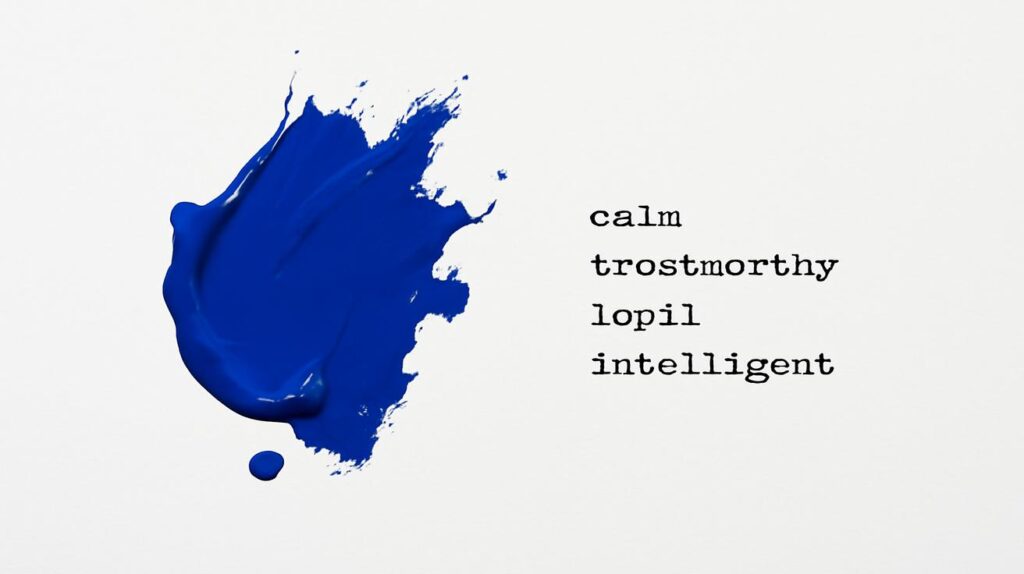
Psychologically, blue is associated with calm, trust, and reliability. Offices paint their walls blue when they want people to focus and feel stable. Healthcare logos lean on blue to signal competence. Blue light even affects our sleep cycles, telling the brain it’s daytime, time to stay alert but steady.
If blue is your colour, you might be someone who values peace over drama. You probably enjoy routine—at least a little—and people may come to you as the “grounded” one in their storm. You’re likely introspective, a thinker rather than a reactor, often finding comfort in planning, reflection, and meaningful one-on-one conversations instead of noisy crowds.
Yet this love of calm can have a shadow side. Blue-leaning personalities sometimes struggle with overthinking, spiraling into analysis when a decision demands more intuition than logic. They may also find conflict deeply draining, preferring to withdraw rather than engage in confrontation. You might be the person who says “I’m fine” while your mind is a quiet, restless ocean underneath.
Green: Where Growth Happens
Green, that tablecloth I hid beneath as a child, sits at the centre of the visible spectrum—literally a middle ground. It’s the colour of leaves, new shoots, moss-coated stones, and all the in-between spaces where life decides to keep going.
Psychologists often link green with balance, growth, and restoration. In experiments, people exposed to green environments show lower stress levels and better recovery from mental fatigue. It’s not just the trees themselves; it’s the colour that suggests “you can rest here” and “things are healing, even if you can’t see it yet.”
If green is your favourite colour, you might be a natural harmoniser. You’re likely the person who feels happiest when things are “okay between people,” who notices tension in a room the way others notice temperature. You may crave fairness and mutual understanding, and you probably have a strong connection to nature—even if it’s just a plant on your desk that you talk to more than you’d admit.
On the flip side, green-lovers can sometimes lose themselves in the role of peacemaker, smoothing over conflicts that really need to be aired, or putting other people’s comfort ahead of their own deeper wants. You might feel guilty when you choose your needs over the group’s harmony, or find it strangely hard to say no.
Yellow, Orange, and Pink: The Colours That Laugh First
Yellow: The Optimist’s Lantern
Yellow is sunlight in pigment form, and the brain responds accordingly. It’s the most visible colour from a distance—used on warning signs and school buses—and it has a complex psychological profile. On one hand, yellow is linked with cheerfulness, curiosity, and intellectual energy. On the other, too much harsh yellow can trigger anxiety or agitation.
If yellow is the shade your heart leans toward, you might be the kind of person who instinctively looks for the sliver of light in any situation. Optimism, often, but not always, hard-won. You’re likely playful, mentally quick, and easily bored by routines that feel too rigid. You may thrive in ideas: brainstorming, dreaming, inventing.
Many yellow-lovers report needing people—but also needing time away from them. Your mind may run fast, sometimes leaving your emotions scrambling to keep up. You might be the friend who volunteers for everything, then lies awake at night wondering why you’re exhausted and oddly lonely.
Orange: The Social Spark
Orange is what happens when red’s passion and yellow’s optimism decide to throw a party together. It’s the colour of sunsets that make people pull out their phones, autumn leaves that crunch underfoot, ripe citrus bursting with scent the moment you peel it.
Researchers often connect orange with enthusiasm, sociability, and appetite—for food, for experiences, for life. If you’re drawn fiercely to orange, you may be someone who recharges through connection. Group adventures, shared meals, collective laughter: these are your oxygen.
That doesn’t mean you’re shallow; many orange-lovers are deeply heartfelt. But you probably struggle in environments that feel too controlled, too quiet, too rule-bound. You might flit between hobbies and projects, energised at first and then, sometimes, moving on when the initial excitement fades.
Pink: Softness With a Backbone
Pink started its life centuries ago as a bold, even masculine colour. Over time, culture painted it with new meanings—romance, sweetness, softness. But psychologically, it’s more layered than that. Certain shades of pink have been used in environments like sports locker rooms and holding cells because they seem to temporarily reduce aggression.
If pink is your favourite, you might value gentleness in a world that often celebrates sharp edges. You’re likely deeply attuned to emotional subtleties, picking up on tone, expression, and the small details others miss. Many pink-lovers report an almost fierce protectiveness over the people and spaces they love—a kind of “tender but unyielding” energy.
You may sometimes be underestimated, written off as delicate or overly sentimental. Yet under that softness often lives a quiet resilience, a belief that kindness is not a weakness but a deliberate stance. You might find yourself drawn to roles where you can care, create, or comfort—but you’re not easily fooled by surface-level charm.
Purple, Black, White, and Grey: The Quiet Rebels
Purple: The Inner World Builder
Purple sits where blue’s calm meets red’s intensity, and its history drips with symbolism: royalty, spirituality, mystery. It was once rare and expensive, a colour for those set apart.
If purple is the hue that feels like home to you, you might be someone who lives largely in the inner world—of imagination, intuition, or meaning. You’re likely sensitive, sometimes to a fault, and drawn to questions that don’t have easy answers: What is my purpose? What’s under the surface of what people say?
Purple-lovers often carry a sense of being a little out of step with the mainstream, whether they show it loudly or keep it quiet. You may gravitate toward art, spirituality, or anything that lets you blend logic with wonder. At your best, you’re deeply insightful. At your worst, you may feel misunderstood, or retreat so far into your private world that others can’t follow.
Black: The Architect of Boundaries
Black absorbs all visible light; it’s where colour goes when it disappears. In many cultures, black signals power, formality, and mystery. In others, it carries the weight of grief. Psychologically, black often shows up when people want to feel protected, in control, or harder to read.
If black is your favourite “colour” (yes, physicists, we know), you might be someone who likes clarity of line, simplicity of shape, and emotional privacy. You may present a composed exterior, keeping your vulnerabilities carefully curated and shared only with a trusted few. There’s often a streak of independence, sometimes even defiance: “I define myself, not you.”
Black-lovers can be deeply loyal and focused, but they may also wrestle with perfectionism or all-or-nothing thinking. You may find messy emotional scenes uncomfortable, preferring quiet depth and unspoken understandings.
White and Grey: Space to Breathe
White and grey are often overlooked in colour psychology, filed away as “neutrals,” but the people who love them usually aren’t neutral at all.
If white pulls at you, you may crave clarity, freshness, and possibility. White is the blank page, the empty room, the first snowfall that erases all footprints. Psychologically, it often appeals to those who like order and new beginnings, who feel soothed by simplicity and overwhelmed by clutter—both physical and emotional.
Grey, on the other hand, is the colour of in-between. Storm clouds before they decide, the mist that blurs hard edges. People who love grey are sometimes painted as indecisive, but more often they’re comfortable with ambiguity. You might be a quiet observer, someone who sees multiple sides of a situation and resists quick labels. Safety, balance, and subtlety matter to you more than spectacle.
Yet for both white and grey-lovers, the shadow side can be avoidance: of emotional mess, of risks that might disrupt hard-won calm, of letting people see how vividly you actually feel beneath the serene surface.
How Your Colour Shows Up in Everyday Life
Perhaps you already recognise yourself in one of these shades. Or maybe you’re thinking, “But I like more than one colour.” Most of us do. Our personalities aren’t single notes; they’re chords.
Psychologists suggest that while your favourite colour isn’t a diagnostic tool, it does act as a kind of emotional shorthand. Look closely at the spaces you control—your bedroom, your phone case, your wardrobe, the mug you always reach for. They’re often quieter, more honest storytellers than the answer you give when someone casually asks, “So, what’s your favourite colour?”
| Colour | Core Drive | Likely Strength | Potential Blind Spot |
|---|---|---|---|
| Red | Intensity & action | Courage, passion | Impulsiveness, conflict |
| Blue | Stability & trust | Reliability, depth | Overthinking, avoidance |
| Green | Balance & growth | Empathy, harmony | People-pleasing |
| Yellow | Curiosity & optimism | Creativity, hope | Restlessness, anxiety |
| Orange | Connection & excitement | Sociability, spontaneity | Inconsistency, distraction |
| Pink | Care & tenderness | Compassion, resilience | Overgiving, sensitivity |
| Purple | Meaning & uniqueness | Insight, imagination | Feeling misunderstood |
| Black | Control & protection | Focus, independence | Emotional distance |
| White | Clarity & renewal | Simplicity, hopefulness | Perfectionism, avoidance |
| Grey | Safety & neutrality | Calm, objectivity | Emotional detachment |
Notice how the table doesn’t say, “You are this and only this.” Instead, it offers tendencies, like the way you might lean when you’re tired or unguarded.
When Your Favourite Colour Changes
Here’s something researchers and therapists both observe: favourite colours aren’t always fixed. You might go through a “blue phase” in your twenties, a “white phase” after a breakup, a surprising sudden love for green when you move to a quieter town or start growing herbs on your windowsill.
These shifts can mirror your inner landscape. A person who’s been all-in on red for years might find themselves newly drawn to blue during a time when they’re craving stability over excitement. Someone who always loved black might wake up one day choosing yellow flowers, almost bewildered by their own tenderness toward something so bright.
When this happens, it can be helpful to ask yourself gentle questions:
- What does this colour give me that I feel short on right now?
- Where do I see this colour in my memories, my childhood, my dreams?
- How do I feel in my body when I’m surrounded by it—more awake, more safe, more open?
Your answers won’t be scientifically scored, but they may reveal something about what your psyche is quietly reaching toward. Colour can be a compass, if you learn to read it.
Living More Honestly in Your Own Palette
Somewhere in your home, there’s an object in your favourite colour that you’ve stopped really seeing. A jacket draped over the back of a chair. A chipped mug with a ring of coffee at the bottom. A blanket, soft from years of washing, that you reach for without thinking when you’re sad or cold.
Pick one of those objects in your mind for a moment. Picture the exact shade. Let yourself remember why you chose it in the first place, before it became part of the background. Who were you then? What were you quietly saying about yourself, or hoping for, when you brought that colour into your life?
According to psychology, that favourite colour isn’t a party trick or a decorative afterthought. It’s a language your body has been speaking longer than your mind has had words. It tells stories about what calms you, what excites you, what you long for when you’re too tired to pretend otherwise.
Maybe you’re a red heart learning when to rest. A blue soul slowly making peace with uncertainty. A green spirit reclaiming your right to grow at your own pace. A purple daydreamer who’s finally willing to share the worlds inside your head. Or maybe you’re a whole shifting spectrum, changing with the seasons of your life.
Next time someone casually asks, “What’s your favourite colour?” you could just smile and say “blue” or “yellow” or “black.” Or you could take a quiet breath and think, for just a second, of everything that small answer holds: the forests you’ve loved, the skies you’ve cried under, the doors you’ve painted shut and the ones you’ve finally opened.
Because somewhere beneath the surface, your favourite colour has been watching you all along—patient, steady, waiting for the moment you realise: this isn’t just what you like to look at. In some small but honest way, this is who you are.
FAQ
Does my favourite colour really say something about my personality?
It can, but not in a rigid or absolute way. Research shows that colours tend to evoke certain emotions and behaviours across many people. When you choose a favourite colour, you’re often choosing a mood or quality you’re drawn to—like calm, intensity, or optimism. It’s a clue, not a complete psychological profile.
What if I have more than one favourite colour?
That’s very common. Many people resonate with a small palette rather than a single shade. Each favourite colour may reflect a different side of you—your public self, your private self, your “ideal” self, or who you are when you feel most at home. Paying attention to where and when you choose each colour can be especially revealing.
Can my favourite colour change over time?
Yes, and those changes often mirror life transitions. People may shift toward calming colours (like blue or green) during stressful periods, or toward brighter ones (like yellow or orange) when they feel more hopeful or free. A change in favourite colour can signal evolving needs, values, or emotional states.
Is colour psychology scientifically proven?
There is solid evidence that colours influence mood, perception, and behaviour. However, cultural background, personal experiences, and context all play major roles. Colour psychology is best seen as a pattern of tendencies supported by research—not as a strict, universal code that defines everyone the same way.
How can I use my favourite colour in everyday life?
You can lean into it in intentional ways: incorporate it into your workspace for motivation or calm, wear it when you need confidence or comfort, or decorate personal spaces with it to feel more like yourself. You can also notice when you crave different colours—that shift often highlights needs you haven’t yet put into words.