The kettle clicks off, and the soft whistle of its cooling metal curls around the quiet kitchen. Outside the window, the maple leaves shrug off the last of the morning rain, glinting like coins in the sudden sun. At the small table by the window sits a woman in her late sixties, fingers curled around a chipped mug she’s had for decades. She watches the way the steam moves, slow and ribbon-like, and realizes she isn’t in a hurry to be anywhere else. The tea, the light, the rhythmic tick of the old clock on the wall—these are enough. Once, this moment would have been invisible to her, swallowed by a to‑do list. Now it feels like a small, private treasure.
The Quiet Shift That Sneaks Up On You
Somewhere between the last office farewell party and the first discounted bus pass, a shift happens—subtle, almost shy. People over 65 often describe it as a softening, a loosening of the rope that used to pull them constantly toward the next goal. For the first time in a long time, they can hear themselves think. And what they hear isn’t always a grand ambition or some long‑buried dream; it’s more modest, more grounded.
They notice the robin on the fence instead of the email they forgot to send. They sit a little longer over breakfast because the jam is particularly good today. They take the scenic route home purely because the evening light looks generous and golden. These aren’t the dazzling experiences that make it onto bucket lists and inspirational posters. They’re the small, quiet pleasures that many discover—or rediscover—after 65, often with a sense of surprise.
For much of adult life, simple pleasures are background noise. Work deadlines, family responsibilities, financial pressures—they all crowd out the tiny joys that drift through the day like dust motes in a sunbeam. But when the pace slows, what once seemed trivial starts to glow with new importance. A ripe peach. A chair that fits your back just right. The layered smell of rain on hot pavement. The absurdity of a pigeon trying to walk with dignity.
Ask someone in their seventies what made their day, and they might answer: “The neighbor’s dog fell asleep on my feet,” or “I sat on the porch and counted six different kinds of clouds.” It’s not that life suddenly becomes easier or simpler—growing older comes with its own bristling set of challenges. It’s that, in the wide shadow of those challenges, the smallest moments of ease and beauty can feel almost luminous.
Time, At Last, Stops Running the Show
Time is a strange creature in our culture. For most of adulthood, it’s treated like a scarce resource to be maximized, optimized, sliced into productivity blocks. But beyond 65, especially for those who have retired or stepped back from full‑time work, something gentler emerges: time as a place to inhabit, not a problem to solve.
There is a kind of deep exhale that happens when the alarm clock becomes optional. Mornings stretch. Afternoons meander. You can spend thirty minutes watching sunlight rearrange itself on the living room rug without feeling guilty. In that loosened relationship with time, the world reveals textures that were always there but previously blurred.
The pleasure of unhurried time is often not spectacular; it’s steady, like a quiet river. It might look like sitting at the kitchen table, peeling an orange slowly enough to keep the skin in one long curling ribbon. Or like working on a puzzle with the radio humming in the background. Or like deciding on a whim to bake bread because the day has enough space for the messy, flour‑dusty process.
Many people over 65 describe a new kind of attention that arrives with this extra time. Things that used to be rushed—meals, walks, conversations—are now stretched, examined, savored. Waiting for the kettle to boil becomes a small ritual. Walking to the mailbox becomes an opportunity to feel the air’s temperature, to notice how the neighbor’s roses are doing, to exchange a wave with the teenager speeding past on a bike.
There is also a quiet defiance in this slower pace. In a culture that worships speed and efficiency, choosing to linger is almost radical. It’s a way of saying, “I refuse to let my remaining days be measured only in output. I will measure them in flavors, in birdsong, in the warmth of a sunlit chair.”
The Body’s Whisper: Limits That Open New Doors
Of course, time isn’t the only thing that changes with age. The body, once obedient or at least negotiable, becomes a more assertive conversation partner. Knees protest on the stairs. Eyes need more light. Sleep patterns shift, or wander off entirely. Health appointments multiply like dandelions. And yet, woven through these frustrations is an odd gift: the need to slow down can turn life into a series of simpler, more elemental pleasures.
A long hike up a steep hill might no longer be possible, but a slow stroll around the block can reveal ten species of plants that went unnoticed for decades. Running to catch a train may be out of the question, but sitting on a park bench and watching the flow of humanity can feel like front‑row seats to an endless, unscripted play. As the menu of available activities narrows, each remaining option grows more vivid.
There is pleasure in finding the chair that supports your back just right and declaring it yours. In perfecting the timing of your afternoon nap so that you wake feeling restored, not groggy. In learning which shoes make your feet happiest and giving up, finally, on styles that only impress other people. The body’s constraints become a gentle (and sometimes not‑so‑gentle) funnel, guiding attention toward comfort, toward ease, toward what actually feels good.
And there are sensory rewards: the hot compress on a stiff shoulder; the first sip of water after a walk; the earthy smell of the ointment your grandmother once used, now sitting on your own bedside table. Small reliefs turn into little celebrations. Pain and fatigue make the sweet spots more precious. This doesn’t romanticize aging; it simply acknowledges that when everything hurts a little more, the moments that don’t hurt can feel almost luxurious.
| Simple Pleasure | How It Often Feels After 65 |
|---|---|
| Morning cup of tea or coffee | A grounding ritual, not a rushed caffeine fix |
| Short walk in the neighborhood | A chance to greet people, trees, and the day itself |
| Cooking a simple meal | A creative act of care, for self and others |
| Listening to favorite music | A time‑travel machine to younger selves |
| Sitting in a sunny spot | A full‑body sigh of comfort and contentment |
When the Past Stops Competing With the Present
By the time someone reaches their late sixties or seventies, their life story is rich with chapters: careers launched and ended, relationships kindled and extinguished, homes moved into and out of, children raised, crises weathered. With all that behind them, many people over 65 find themselves looking back more often—but not always in the way you might think.
Nostalgia can be a double‑edged thing, but in its gentler form, it trains people to notice small joys in the present. The taste of a fresh tomato might suddenly pull someone back to their grandmother’s garden, to hot soil and buzzing bees and the sound of canning jars clinking on a wooden table. A long‑forgotten song might drift out of a radio and instantly call forth the smell of hairspray and the feel of a crowded dance floor.
These echoes make today’s simple pleasures feel layered, as if time has folded over on itself. A walk in the park isn’t just a walk; it’s every walk they’ve ever taken, from schoolyard shortcuts to stroller‑pushing circuits with their own babies, now grown. A grandchild’s laughter loops back to the giggles of their children, and maybe even further, to a remembered game with a younger sibling in a dimly lit hallway.
Psychologists talk about a shift in priorities with age, a tendency to value emotional meaning over novelty or achievement. The clock, in a sense, runs both ways: toward an unknown future, but also back through a very real and fully lived past. This dual awareness often nudges older people toward the small, sure joys they can grip in the present: a shared joke, a properly buttered slice of toast, the feel of cool sheets at night.
It becomes less about collecting experiences and more about savoring them. The pressure to “make something of yourself” eases into a quieter question: “How can I be here, fully, for this?” The answer is rarely a grand adventure. More often, it’s a gentle yes to what’s right in front of them.
The Freedom of Not Needing to Prove Anything
One of the quiet revolutions of aging is the gradual dropping away of pretense. After 65, many people find that they are less interested in impressing anyone—bosses, neighbors, distant relatives, even their younger selves. The armor they once wore—a carefully curated identity, a polished opinion, a defensively busy schedule—starts to feel heavy and unnecessary.
In that shedding, simple pleasures become easier to claim. You no longer need to pretend you like crowded parties if what you really love is sitting in a corner reading. You don’t have to force yourself to stay up late if your favorite part of the day is dawn, when the world is as quiet as your thoughts. You might admit, finally, that your idea of a perfect afternoon is organizing the junk drawer and then making a sandwich.
This honesty opens unexpected doors. A man who spent his life in finance realizes that what makes him happiest is pottering in the garden, talking to his tomatoes. A woman who spent decades managing other people’s needs discovers that a solo trip to the local café with a crossword puzzle brings her disproportionate joy. These aren’t dramatic reinventions—they’re gentle realignments around what feels authentic.
The freedom from constant self‑evaluation is its own pleasure. You can wear the same soft sweater three days in a row because it feels good on your skin. You can say no to invitations without elaborate excuses. You can laugh too loudly, sing off‑key, mispronounce the name of some new technology—and feel no deep shame about it.
With less need to prove worthiness, attention shifts from “How am I being perceived?” to “What actually delights me?” The answers tend to be small, sincere, and surprisingly stable: a favorite mug, a reliable chair, a particular walking route, the smell of onions sautéing in butter. Life, stripped of performances, becomes textured with these quiet, repeating joys.
Connection in Its Softest, Truest Forms
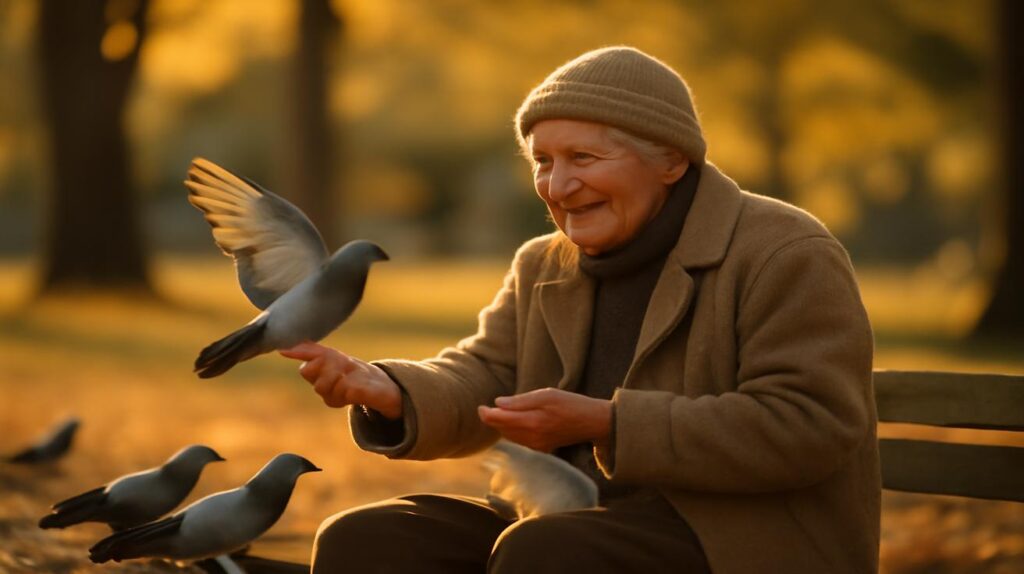
If you sit long enough in a park on a weekday morning, you’ll often see them: older friends walking side by side, sometimes arm in arm, at a gentle pace that allows for both breath and conversation. There might be a thermos shared between them, or a small bag of seeds for the birds. Their talks are not always profound; sometimes they’re about aching joints or the price of vegetables. But threaded through nearly every word is a form of simple pleasure: being known.
After 65, relationships often distill. The crowded social calendars of earlier years—networking events, children’s birthday parties, obligatory gatherings—give way to fewer but deeper connections. A weekly phone call with a sibling. A neighbor who drops by with soup. A grandchild’s quick video chat that turns into fifteen minutes of giggles and sideways camera angles.
The pleasures of these connections are sometimes almost microscopic: the way a loved one says your name; the relief of being able to complain about something minor without being told to “stay positive”; the comfort of a shared silence that doesn’t need to be filled. A simple hand on the shoulder can mean more than a thousand motivational quotes.
Many older people also rediscover the pleasure of small civic rituals: chatting with the librarian while checking out books, exchanging a few friendly words with the pharmacist, greeting the mail carrier by name. These tiny, seemingly transactional encounters become little anchors in the week, proof that they are still woven into the fabric of a community.
And then there are the intergenerational moments: teaching a grandchild how to knead dough, or explaining to a teenager how to sew on a button, or just sharing a favorite story at the dinner table. In passing along something simple, they feel their own continuity. The pleasure is double: the act itself and the quiet sense that some part of them will ripple forward.
Nature As a Familiar Old Friend
As people age, the natural world often moves from the periphery of attention to the center. Maybe it’s because the rhythms of the body—sleep, appetite, energy—start to feel more closely linked to the rhythms outside: daylight, temperature, seasons. Or maybe it’s simply that with more time and fewer distractions, the sky, the trees, and the birds finally have a chance to introduce themselves properly.
A person over 65 might start to notice small patterns that were always there: the precise week when the first crocuses appear each year, the way the late‑summer air thickens with the smell of ripe fruit, the exact moment when the day’s light begins to tilt toward autumn. These observations become their own quiet pleasures, recurring like favorite lines in a poem.
There’s comfort in repetition: the same park bench, the same tree, the same stretch of shoreline visited over and over. Over time, these places become companions, holding years of thoughts and moods. That patch of wildflowers knows your worries; that particular bend in the path has heard your laughter a hundred times.
Nature offers a scale that can be strangely reassuring. Watching waves roll in and out, or clouds rearrange themselves, can make personal anxieties feel both valid and very small. For many older people, simply sitting outside—on a stoop, a balcony, a patch of grass—becomes a favorite pastime. The wind does the talking. The birds provide the soundtrack.
And there is, quietly, an unspoken kinship with the natural cycles of aging and decay. The fallen leaves, the gnarled branches, the plants that bloom later and more slowly—all of it mirrors their own bodies and lives. In that mirroring, there can be a deep, tender acceptance. The world is changing; so are they. Still, there is beauty.
FAQ: Simple Pleasures After 65
Why do many people over 65 seem more content with simple things?
With age often comes a shift in priorities. Instead of chasing status or constant achievement, many older adults value emotional meaning, comfort, and connection. Slower schedules and accumulated life experience make it easier to notice small, everyday joys that were once overlooked.
Is this rediscovery of simple pleasures just about retirement?
Retirement helps, because it frees up time and reduces certain stresses, but it isn’t the only factor. Even people who keep working, or who never had traditional careers, often experience internal changes—like greater self‑acceptance and a stronger focus on relationships—that make simple pleasures more appealing.
What are some examples of simple pleasures people over 65 often enjoy?
Common examples include a quiet morning with tea or coffee, leisurely walks, time in nature, reading, listening to favorite music, gentle hobbies like gardening or knitting, and unhurried conversations with friends or family. Small routines—like feeding birds or watching the sunset—often become deeply meaningful.
Does focusing on simple pleasures mean giving up on bigger goals?
Not necessarily. Many people over 65 still pursue travel, creative projects, or new skills. The difference is that these “big” goals often sit alongside, rather than above, the smaller daily joys. Simple pleasures become the steady background music to whatever else life still holds.
How can younger people learn from this and enjoy simple pleasures earlier in life?
You don’t have to wait until 65. You can experiment now by slowing down small parts of your day: eat one meal without screens, take a short walk just to notice your surroundings, linger a bit longer over a favorite song, or call someone you care about for no particular reason. The art of savoring is available at any age; older people simply have more practice, and more reason, to embrace it.