The moment you open the jar, you know something is wrong. The curry you’ve been dreaming about all afternoon is bubbling on the stove, the onions are perfectly browned, the garlic smells like a promise—and then you throw in a generous spoonful of ground cumin. Nothing. No warm earthiness, no smoky whisper of the spice markets it once came from. Just… powder. You lean over the pot, stir, wait, taste. Still flat. Still missing that vibrant, almost electric spark that makes spices feel alive. You blame the supermarket, maybe the brand, maybe the recipe. But the quiet culprit is far more ordinary, sitting silently behind a closed door: your pantry habit.
The Habit Hiding in Plain Sight
For years, I thought I was doing everything right with my spices. They were all tucked neatly in a cabinet just above the stove—convenient, organized, close at hand. A tidy row of glass jars and little metal tins, their labels worn smooth from years of turning in my fingers. Each time I cooked, I’d reach up with a flourish, twist open the lids, and scoop out generous pinches, the way I’d seen in cooking shows.
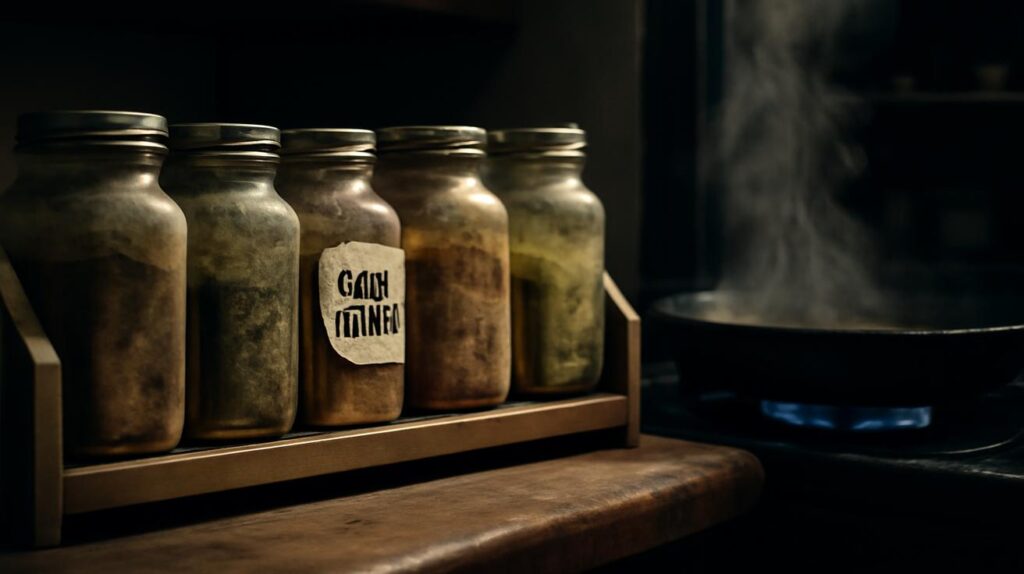
But there’s a quiet, invisible ritual happening every time many of us cook, a small habit repeated so often we’ve stopped noticing it. The stove burners flare, the oven door opens with a rush of heat, steam billows from simmering pots, and our hands keep reaching for the same spices stored right in the path of all that warm, moist air. We uncap, we shake, we stir, we leave the jars out on the counter where they bask in light and warmth while dinner comes together.
Then, as the meal cools, as the house darkens and relaxes, we slide those jars back to their “home” near the oven, in that cupboard that always feels just a bit warmer than the rest. We think nothing of it. But our spices remember.
The Overlooked Pantry Habit: Heat-Cycling Your Spices
The overlooked pantry habit that quietly steals flavor? Storing spices in warm spots—especially near the stove or oven—and repeatedly exposing them to temperature and humidity swings. This “heat-cycling” is the culinary equivalent of slowly bleaching a photograph until the colors vanish.
Spices are tiny vaults of volatile aroma compounds—delicate oils and molecules that give cinnamon its sweetness, paprika its smokiness, coriander its citrusy lift. Those compounds are shy about heat and enemies with moisture. Every time you store your spices in a warm cabinet, on an open shelf near the oven, or on a sunny windowsill, you invite those compounds to evaporate or break down twice as fast as they would in a cooler, darker place.
Now add steam to the mix. Think about the last time you opened a jar of ground turmeric or paprika right above a steaming pot. Invisible wisps of moisture drift upward, slipping into the jar. They cling to the powder, creating micro-clumps you may not see right away. That moisture wakes up enzymes and invites slow, quiet degradation. Over time, the spices cake, dull in color, and lose that clean, upfront aroma. You haven’t just lost fragrance—you’ve lost complexity, nuance, the layers that make homemade food taste like more than the sum of its ingredients.
We tend to assume spices simply “go bad over time,” as if it’s just the calendar to blame. But two kitchens can buy the same jar of cumin on the same day, and one will still be rich and fragrant a year later while the other will be a ghost of itself after a few months. The difference is rarely magic. It’s often this one everyday behavior: where and how we store and use them in the flow of our cooking.
What Your Spices Experience in a Day
Imagine the life of your paprika jar in a busy home kitchen. Morning: the oven warms for toast or granola. That overhead cabinet where paprika lives grows a few degrees warmer, then cools down again as the oven turns off. Noon: a quick reheat of leftovers, more waves of heat surging upward. Evening: the real storm. Water boils, sauce simmers, a sheet pan of vegetables roasts at 425°F. The stove top pulses, the oven door opens and closes, steam rides up the wall, and that cabinet becomes a mini sauna—warm, slightly humid, sometimes even smelling faintly of whatever’s cooking.
Inside that cabinet, the paprika sits. With each temperature spike, the aromatic oils in the ground spice gain energy and more easily escape into the air, even through a closed lid. The friction of tiny particles against each other, the soft porousness of the powder—all of it creates little pathways for aroma compounds to wander off. If the lid isn’t perfectly tight, each shake is a tiny exhale of fragrance, like a sigh you can’t hear.
Now imagine you grab that same paprika and pop the lid open right above a pot of tomato sauce sending up clouds of steam. Some of that moisture slips in and doesn’t leave. Over time, subtle changes unfold: color shifts from intense brick-red to a muted rust, the scent that once rushed up your nose now lingers weakly at the bottom of the jar. You don’t see the moment it “dies”; you just notice that dishes that used to taste vibrant now need more and more spice to reach the same level of flavor.
Whole spices—like coriander seeds, cumin seeds, or cloves—are a bit more resilient, since their oils are tucked inside tough outer shells. But ground spices are like open doors. The finer the grind, the more surface area is exposed to air, heat, and moisture. If you’re storing those powders in warm spots and letting steam visit them often, their clock runs faster—often twice as fast as the usual “best by” expectations.
How Fast Are You Really Losing Flavor?
It’s tempting to think, “Well, spices are dry; they last for years.” Dryness helps, but it isn’t a force field. Under ideal conditions—cool, dark, dry, tightly sealed—whole spices can often keep their character for three to four years, and ground spices for about one to two. Shift them into a warm, fluctuating environment, and those windows shrink dramatically.
Many kitchen tests and sensory comparisons show a simple truth: heat and humidity can cut functional flavor life roughly in half. That means your chili powder stored in a temperate, shaded drawer might still be big and bold after 18 months, while the same jar kept in a cabinet over the stove may feel flat after 8–10 months, sometimes sooner if frequently opened near steam.
To make this more concrete, imagine two parallel kitchens—all else equal, except for where they stash their spices:
| Spice Type | Cool, Dark Storage | Warm, Near-Stove Storage |
|---|---|---|
| Whole spices (coriander, cumin, cloves) | Peak flavor ~3–4 years | Peak flavor often drops closer to ~1.5–2 years |
| Ground spices (cumin, turmeric, cinnamon) | Peak flavor ~1–2 years | Often noticeably dull within ~6–10 months |
| Delicate herbs (basil, dill, parsley) | Best within ~1 year | Can taste tired in as little as ~4–6 months |
| High-oil spices (paprika, chili powder) | Vibrant ~1 year+ | Fades faster and can develop stale notes <1 year |
These aren’t rigid rules so much as quiet tendencies, revealed when people line up jars from different environments and simply smell them side by side. One paprika smells like a walk through a smoky market stall; the other is faintly red dust. One jar of cumin practically leaps from the jar; the other hovers weakly, like a memory instead of a presence.
Your nose is the simplest truth-teller. Rub a pinch of any ground spice between your fingers and inhale. If you have to go hunting for its personality, if the scent is thin or dusty instead of immediate and vivid, the spice has already spent too much of itself. Heat and moisture didn’t just nudge it along—they pushed it.
Reimagining Where Spices “Live”
The good news is that changing the fate of your spices doesn’t require expensive gear or elaborate rituals. It’s mostly about rethinking where they live and how they move through your kitchen. The story is less about “never do this” and more about quietly redirecting your habits so they work in your favor.
Start with location. Instead of above or right beside the stove, picture your spices somewhere a bit further away from the heat—the inside of a cool pantry, a drawer, or a cabinet on a wall that doesn’t constantly warm up. Somewhere that doesn’t breathe steam every time a pot boils.
Think in terms of zones. There’s the “heat zone,” where the stove, oven, and dishwasher live. Then there’s the “spice zone,” which ideally lives just outside that. Not inconvenient—just one extra step. A drawer across from the stove, a small shelf inside a nearby pantry, even a low cabinet that stays consistently cool. The goal isn’t perfection, just less drama in temperature and humidity.
Next, pay attention to what happens when you actually cook. That familiar choreography—open jar, hold it over the steaming pot, tap-tap-tap—looks efficient, but it’s like giving your spices a tiny sauna every time. A simple swap can change that: step slightly aside, away from the steam, measure or pinch onto a spoon or into a small dish, then add it to the pot. The spice never hovers over the vapor. The jar lid spends less time open. Those are small acts, but over months they add up to weeks and even months of extra flavor life.
Containers, Clues, and Little Rituals
After location and heat, the next quiet player is air. Oxygen isn’t exactly an enemy, but it’s a slow thief. Every time you leave a lid loose, forget to fully close a cap, or store spices in a wide, half-empty jar with lots of open headspace, you make it easier for flavor compounds to drift off into the air.
Your spices don’t need elaborate, airtight vaults—simple, well-fitting lids on small containers work beautifully. Glass jars with tight screw caps, tins that actually snap shut, or opaque containers that block light all help. The less light, the less heat, the less air exchange, the more your cardamom and cumin will reward you.
Then there’s the small spoon habit. Dipping a damp spoon straight into the jar can introduce moisture faster than almost anything else. Even invisible traces of water or oil from a sauce or marinade cling to the metal and transfer inside. Over time, that creates little pockets of clumping and dullness, especially in salt blends, garlic powder, onion powder, and paprikas. Keeping a tiny dry spoon nearby, or sprinkling instead of scooping, becomes a kind of respectful ritual—a quiet nod to the journey these spices have taken to reach your shelf.
As you tune into these details, you might find yourself paying closer attention to color and scent. Fresh thyme should still look green, not grayish. Turmeric should glow almost neon gold. Smoked paprika should smell like a campfire at dusk, not like chalk. These sensory flashes become little check-ins, reminders of how well you’re caring for them.
Letting Spices Tell Their Story Fully
There’s a kind of intimacy in cooking with spices that are still near the peak of their powers. Toast a handful of cumin seeds in a dry pan and they’ll crackle softly, releasing a fragrance so deep and warming it almost feels like a texture. Grind them just before they hit the pot and the difference is almost shocking, especially if you’re used to the sleepy powders from the back of the cabinet.
When spices are handled gently—stored away from the oven’s breath, spared from rising steam, sealed well between uses—they don’t just “last longer.” They tell their story more clearly. Cinnamon opens up with soft, floral edges instead of a single flat note. Dried oregano suddenly has a green, almost wild quality, hinting at the plant it once was. Even something as humble as black pepper feels more alive, its bite sharp but layered with citrusy and woody hints you may have never noticed before.
And the funny thing is, once you’ve tasted that difference a few times, there’s no going back. You notice when a restaurant’s spice cabinet is tired. You notice when your own jars are ready for retirement. You stop seeing spices as purely “shelf-stable” commodities and start seeing them as fleeting, fragrant snapshots of soil, sun, and time—a kind of preserved weather that you can invite into dinner.
All because you moved them a few feet away from the stove. All because you stopped letting steam drift into their jars. All because you traded one habit—heat-cycling without noticing—for another: a quiet, almost reverent way of keeping them a little cooler, a little drier, a little more protected.
FAQs
How can I tell if my spices have lost too much flavor?
Crush or rub a small pinch between your fingers and smell it. If the aroma is faint, dusty, or you have to really hunt for it, the spice is past its prime. Bright color and an immediate scent are good signs of life. If there’s no scent at all, or it smells musty or stale, it’s time to replace it.
Is it dangerous to use old spices?
Most of the time, old spices aren’t harmful; they’re just weak. They may make your food taste flat, but they’re unlikely to make you sick if stored reasonably well. The exception is if they smell rancid, moldy, or sour, or if you see visible mold or insect activity—those should be discarded immediately.
Are whole spices really that much better than ground?
Whole spices generally keep their flavor longer because their aromatic oils are protected inside the seed or pod. When you grind them just before use, you release a burst of fresh aroma that pre-ground spices can’t quite match. For spices you use often—like cumin, coriander, or pepper—buying whole and grinding small amounts as needed can be transformative.
Can I store spices in the fridge or freezer to keep them fresh?
You can, but it requires care. Cold storage can help preserve delicate, high-oil spices like certain chili powders or paprika, but only if the containers are very well sealed and you let them come to room temperature before opening to avoid condensation. For most home kitchens, a cool, dark cabinet away from heat sources is simpler and effective.
How often should I replace my spices?
As a loose guideline, replace delicate dried herbs every year, ground spices every 1–2 years, and whole spices every 3–4 years—sooner if they’re stored near heat. But your nose is the best judge. If the scent no longer rushes up to meet you when you open the jar, it’s probably time to let that spice go and invite a fresher version into your kitchen.