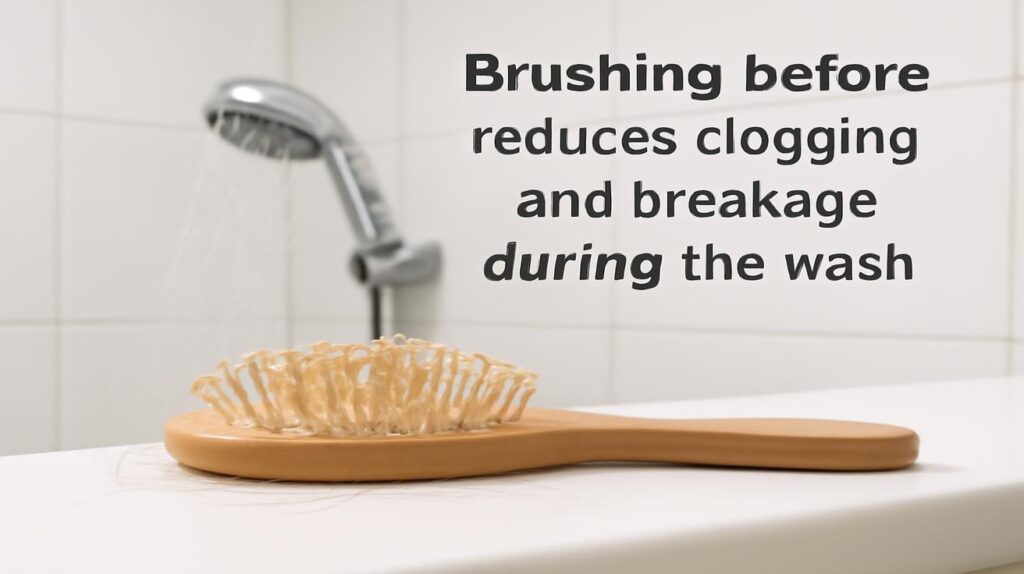
The first thing you’ll notice is the sound. Not the roar of a dryer or the soft hiss of a curling iron—but a gentle, rhythmic whisper: bristles gliding through hair, a quiet, steady shhh-shhh that seems to slow time. It’s early, the salon still smells faintly of last night’s citrus cleaner, mingling with the earthy sweetness of argan oil. Sunlight slips in through the front window and lands on the chair where my first client settles in, clutching her tote bag, already apologizing for… her hair.
“I didn’t have time to brush it. It’s a mess. Sorry.” She laughs, self-conscious, fingers tugging at the ends.
I smile, pick up my favorite brush—the one with the flexible cushion and soft, forgiving pins—and begin at the very ends of her hair. The tangles are there, of course. They always are. But as the knots loosen and the strands fall straight and smooth, I feel that familiar urge: to explain what most people never think about, the thing that can quietly save their hair from years of avoidable damage.
“You know,” I say, pausing to let a strand fall through my fingers, “there’s one thing I wish everyone would do before they step into the shower: brush their hair. Every. Single. Time.”
The Secret Ritual Before the Water Touches Your Hair
You’ve probably been told how often to wash your hair, what shampoo to buy, whether sulfates are friend or foe. But very few people talk about what happens in the two minutes before the water even turns on—the tiny, often-skipped ritual that can completely change how your hair behaves.
Brushing your hair before washing it isn’t just a neat little “stylist tip.” It’s the difference between hair that feels like silk under your fingers and hair that breaks, frizzes, and gains a stubborn life of its own. It’s the difference between spending five calm minutes brushing before a shower, or twenty frustrated minutes wrestling knots out of wet, stretch-prone strands afterward.
Think about what your hair has done all day. It’s been dragged through collars and scarves, scraped under bag straps, whipped around by wind, twisted into messy buns, rolled against your pillow. Oils from your scalp have slowly crept down the shaft, dust and tiny particles have settled in, and the ends have probably rubbed against fabric all day long. By the time you say, “Okay, time to wash,” your hair is a little world of tangles, oils, and invisible debris.
Now imagine stepping directly into the shower with all that, letting water soak those knots and weigh them down. The hair swells, the cuticle (the protective outer layer) lifts, and the strands become at their most vulnerable—stretchy, elastic, and easy to snap. Brushing beforehand isn’t just about detangling; it’s about preparing your hair for what’s coming, much like warming up your muscles before a run.
What Really Happens When You Brush Before You Wash
When I glide a brush through a client’s dry hair before washing, I’m doing far more than making it “look neat.” I’m redistributing the oils that have pooled near the scalp and spreading them down the shaft—nature’s own conditioner meeting the dry mid-lengths and ends that crave it. I’m shaking loose the tiny bits of buildup, dead skin flakes, and everyday grit so that the shampoo doesn’t have to fight layered tangles and gunk all at once.
And perhaps most importantly, I’m removing knots while the hair is strong and dry, not swollen and fragile with water. Dry hair can snap too, of course—but wet hair is like softened taffy: easier to stretch, easier to tear.
There’s something deeply grounding about that pre-wash brushing—a small, tactile moment of care. The bristles move like a rake through a garden after a storm, clearing out leaves before the rain falls again. It’s practical, yes. But it also feels like a pause, a breath. And your hair notices.
Inside the Shower: Where Most Hair Damage Actually Begins
If the salon is my forest, the shampoo bowl is the quiet creek where all stories begin and end. I’ve seen every kind of hair in that tilted black basin: coils, waves, sleek straight sheets of hair that fall like water themselves. The one thing they share is how quickly they can go from manageable to mangled if brushed at the wrong time—or not at all.
Picture this: hair that hasn’t seen a brush all day, tossed up into a loose bun, then taken straight into the shower. The water hits, the strands swell, the knot at the nape tightens. You scrub in shampoo at the scalp, fingers moving in little circles, unknowingly swirling long hair into a rope of tangles below. Then you rinse, squeeze out the excess water, and finally, standing on a damp mat, you reach for a comb.
This is where the damage happens.
Wet, tangled hair is a fragile web. Each stroke of a comb or brush can snap tiny fibers you don’t see until months later, when your ends seem frayed, your lengths feel rough, and you blame the weather, your hormones, or that one time you tried bleach three years ago. Wet detangling has its place—especially for curls—but going into the shower already knotted is like hiking into the woods with shoelaces tied together.
Why Your Ends Keep Splitting (And It’s Not Just the Heat Tools)
Clients sit in my chair and ask the same question in a dozen different ways: “Why do my ends always look so tired? I use good shampoo. I get trims. I don’t even straighten it every day.”
Often, the reason isn’t something dramatic. It’s not a villainous styling tool or one catastrophic coloring session. It’s the small, repeated stress: washing tangled hair, yanking a brush through it when it’s dripping, scrubbing the ends when shampoo really only needs your scalp.
Every time a knot tightens under hot water, every time you tug from root to tip instead of gently working from ends upward, you leave microscopic scars along the hair shaft. Eventually, they add up: split ends, rough textures, frizz that laughs at your serums.
Brushing before you wash interrupts that cycle. It gives you a smoother “canvas” going in, so your shampoo spreads evenly across a calm surface instead of fighting through a wild, matted landscape. Your conditioner can coat neatly separated strands instead of clinging to tangled clumps.
The Brush, The Scalp, and That Quiet Little Massage
There is a very particular feeling when a brush passes over the scalp in slow, even strokes—something almost ancestral, like someone weaving through your hair by a fire. It’s intimate, soothing, oddly clarifying. And beneath that comfort lies real, physical benefit.
When you brush your hair before washing, you’re also brushing your scalp. Not with harsh scratching or violent raking, but with firm, patient strokes that wake up the skin. You’re loosening dead skin cells that would otherwise sit stubbornly under layers of sebum and styling products. You’re encouraging blood flow to the follicles—tiny roots under the surface, resting or working, always alive.
Think of it as grooming the soil before a soft rain. The shower will come; the shampoo will cleanse. But that preliminary stirring at the surface makes everything more receptive.
What Kind of Brush Matters (And How You Use It Matters More)
When people ask, “What’s the best brush?” I don’t reach for a single magic tool. Instead, I think about hair like landscape: fine hair is a meadow; thick hair is a dense forest; curls are winding trails that need maps, not machetes.
Here’s a simple guide that I share, one that fits neatly into a single screen and a single quiet moment before you step into the shower:
| Hair Type | Best Pre-Wash Tool | How to Use |
|---|---|---|
| Fine / Straight | Soft paddle brush or cushioned detangler | Brush from mid-lengths to ends first, then roots to tips in long gentle strokes. |
| Thick / Wavy | Flexible detangling brush or wide-toothed comb | Section hair, work in layers, always starting at the ends and moving upward. |
| Curly / Coily | Wide-toothed comb or fingers (on lightly oiled or conditioned dry hair) | Gently separate curls, remove shed hairs, avoid over-brushing to keep pattern intact. |
| Damaged / Fragile | Ultra-soft detangling brush or wide comb | Use extra patience, hold sections near the root to reduce tension on the scalp. |
Technique is everything. Always begin at the ends, where tangles live. Work upward, bit by bit, like carefully untying a necklace chain. Rushing is the enemy; power-brushing from roots to ends in one go is the quickest way to create more knots and more breakage.
A Hairdresser’s Eye: What I See When You Don’t Brush
There’s a pattern I can spot almost instantly when someone sits in my chair. The hair with the tiny white dots near the ends—little stress fractures from constant snapping. The fine hairs around the nape, broken and fuzzed from rough towel-drying and hurried detangling. The mid-lengths that feel oddly rough compared to the new growth closer to the scalp.
And then there’s the other pattern: the hair that glides through the brush like water. The strands that, even if dry or color-treated, fall apart and back together easily. The ends that separate cleanly instead of fraying into feathery wisps. This hair rarely belongs to the person with the most expensive products. More often, it belongs to the person who has a quiet, consistent ritual.
One of my regulars, a nurse who works brutal night shifts, once told me: “Brushing before the shower is the one girly thing I always do, even when I’m dead tired.” She doesn’t always remember hair masks. She sometimes falls asleep with damp hair. But she never steps under the water with knots.
Her hair, despite the stress of sleeplessness and fluorescent hospital air, remains remarkably resilient. When I brush before washing her hair at the salon, the brush moves easily, the strands stay together, and the ends, though occasionally dry, are rarely shredded. Tiny habits, repeated quietly, leave fingerprints.
But What If I Have Curls? Won’t Brushing Ruin Them?
Curly hair has its own rules, and they deserve respect. If you wear your curls defined and springy, you’re right to hesitate at the thought of aggressive pre-wash brushing. But the principle still matters—only the method shifts.
Instead of a paddle brush, you might use your fingers or a wide-toothed comb. Instead of dragging through completely dry curls (which can cause frizz and disrupt the pattern), you might lightly mist your hair with a bit of water or apply a touch of lightweight oil first, then gently separate clumps and remove shed hairs.
The goal is the same: do not march into the shower with a nest at the nape, a knot behind your ear, or a tight ball of shed hair tucked inside a curl. Those become impossible tangles when soaked, and getting them out afterward often costs you whole chunks of curl families.
Turning a Chore into a Small, Sacred Habit
The most powerful beauty rituals are rarely glamorous. They’re small and repeatable, happening in quiet corners of your day. Brushing your hair before washing can be one of those—less a chore, more a quick check-in with yourself.
Imagine this as a simple sequence, not another overwhelming routine:
- You stand in your bathroom, water still off, hair loose around your shoulders or released from whatever held it all day.
- You take your chosen brush or comb and split your hair into two or three loose sections.
- You start at the ends of one section, easing out any knots slowly, then move upward, feeling the resistance soften.
- With each stroke from roots to ends, you feel the scalp awaken, the lengths aligning like threads being smoothed on a loom.
In less than three minutes, your hair is ready. You step into the shower not with a problem to fix, but with something already cared for, already respected.
Your shampoo works better because it doesn’t have to battle tangles and buildup. Your conditioner glides more easily and rinses more cleanly, because it’s not just sitting on a matted clump. Afterward, when you towel-dry gently—no rough rubbing, just squeezing—and pass a wide-toothed comb through damp hair, it responds like a well-trained river, flowing in the direction you guide it.
The Long Game: What Your Future Hair Will Thank You For
Months from now, you might not remember the exact morning you decided to start brushing before washing. There won’t be fireworks or sudden transformation overnight. But slowly, like the way seasons shift almost invisibly, your hair will begin to tell the story.
You’ll notice fewer broken pieces on your pillow and in your sink. Ponytails will feel fuller. Ends will hold onto trims longer, staying soft instead of fraying into thirsty whispers two weeks later. Your hair won’t catch on your fingers quite as much. Blow-drying—or air-drying—will feel easier, less like negotiating with a wild animal and more like a calm collaboration.
As a hairdresser, I can trim, shape, color, gloss, and guide. But the health of your hair lives mostly in the small things you do when no one is watching. Brushing before washing is one of the simplest, most underrated acts of care you can give your hair. No special tools. No elaborate instructions. Just you, a brush, and a few mindful strokes before the water runs.
Next time you reach for the shower handle, pause. Feel your hair between your fingers. Ask: Did I give it two minutes of kindness first? Your future hair—the version you’ll tie, braid, curl, or let loose in the wind months from now—will quietly, steadily, thank you.
Frequently Asked Questions
Do I really need to brush every time before I wash my hair?
Yes. Brushing before every wash helps reduce tangles, breakage, and stress on the hair. It doesn’t have to be long—1–3 minutes of gentle brushing is enough for most hair types.
Won’t brushing dry hair cause more breakage than brushing it wet?
Brushing aggressively on any hair can cause breakage. But gently detangling dry (or mostly dry) hair is generally safer than yanking through wet, swollen strands. Use a suitable brush and start at the ends to minimize damage.
What if I have curly or coily hair and never brush it dry?
For curls and coils, you can adapt the ritual. Lightly mist hair with water or apply a bit of oil, then use your fingers or a wide-toothed comb to gently remove shed hair and major tangles before washing. The key is not to enter the shower with big knots.
Should I brush my hair in the shower too?
You can, but be careful. If you detangle in the shower, apply conditioner first and use a wide-toothed comb, working from ends upward. Still, starting with pre-washed, mostly detangled hair makes this process gentler and faster.
How often should I replace my hairbrush?
Most brushes last 6–12 months with regular use, depending on quality. Replace yours if the bristles are bent, missing, or scratching your scalp, or if it’s difficult to clean product and shed hair from it.
Can brushing before washing help with oily roots?
It can. Gentle brushing helps redistribute scalp oils down the hair shaft, so they don’t sit heavily at the roots. Combined with proper scalp-focused shampooing, this can make hair feel fresher and lighter.
Is it okay to brush my hair multiple times a day?
Yes, as long as you’re gentle. A few mindful brushing sessions—morning, before washing, and before bed—are usually enough. Over-brushing with too much force or the wrong tool can cause damage, so focus on quality, not endless repetition.