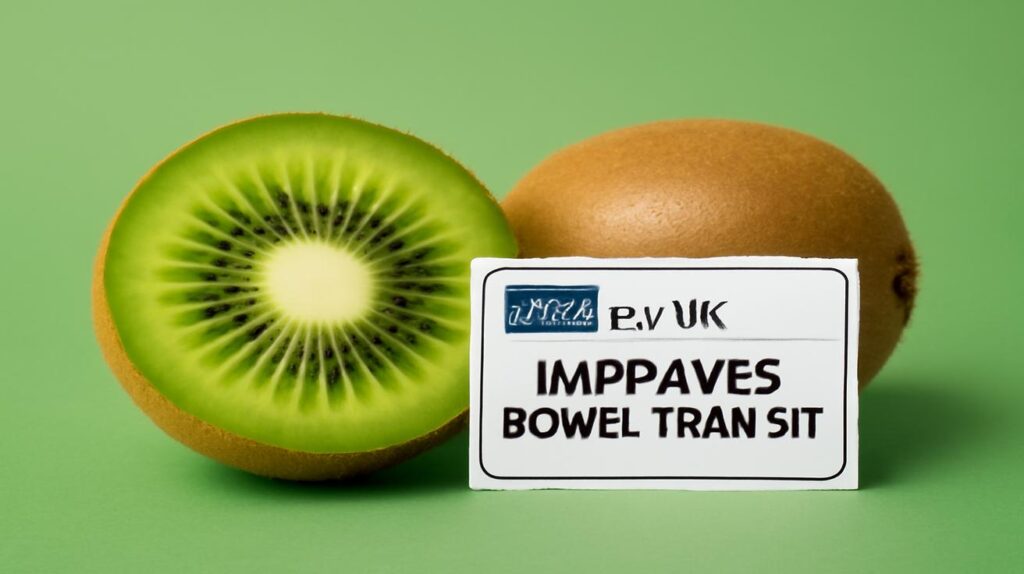
The first time I learned that kiwi had been officially recognised by the European Union and the UK as the only fruit proven to improve bowel transit, I was standing in my kitchen, holding one like it was a small, furry mystery. I’d always thought of kiwi as a zingy little garnish, the thing that shows up on top of a fruit tart or alongside hotel breakfast buffets. I’d never once considered that inside this emerald globe lay the quiet power to change one of the most fundamental rhythms of the human body: the way we go to the bathroom.
The Little Green Revolution in Your Fruit Bowl
Picture a kiwi in your hand. It’s not glamorous. It doesn’t glow like a mango or perfume the air like a perfectly ripe peach. Its skin is rough and shy, like it’s trying not to be noticed. Yet behind that humble disguise lies a story that has reached the halls of European regulators, nutrition scientists, and now, everyday kitchens.
For years, researchers had been quietly studying kiwi and its relationship with digestion, particularly bowel transit—the journey your food takes from plate to exit. Study after study began to show something unusual: people who regularly ate kiwi experienced smoother, more comfortable, and more frequent bowel movements, especially those struggling with constipation. Not in a dramatic, emergency sort of way, but in a gentle, regulated, “oh, this feels right” kind of way.
Eventually, the evidence became so consistent that the European Union and the UK granted kiwi a rare honour: an official health recognition as the only fruit scientifically proven to improve bowel transit. In a world where health claims are often vague, exaggerated, or wishful, this was a big deal. It meant kiwi had stepped out of the realm of folklore and into the realm of hard evidence. Not “maybe,” not “possibly,” but proven.
And that makes this small fruit one of the quiet revolutionaries of everyday health—a soft, green ally with unexpected powers.
The Science Hidden in Those Tiny Black Seeds
We tend to think of fruit as simple: sweet, juicy, full of vitamins. But kiwi is more like a self-contained digestive toolkit. Its impact on bowel transit is not magic, and it’s not just “because of the fiber.” The story is richer and much more interesting.
First, yes, kiwi is a good source of fiber. But not all fiber is created equal. Kiwi delivers both soluble and insoluble types, which work together like a well-coordinated clean-up crew. The insoluble fiber adds bulk to the stool, helping it move along the intestines. The soluble fiber absorbs water, making stools softer and easier to pass. This isn’t about forcing your system; it’s about restoring movement, like oiling a stiff hinge.
Then there are the enzymes. Kiwi contains a special enzyme called actinidin, a natural protein-digesting compound. Imagine your digestive tract as a long, winding river. Actinidin helps speed up the breakdown of proteins, which can reduce that heavy, sluggish feeling after a meal. While your body already produces its own digestive enzymes, actinidin is like a friendly assistant, stepping in to share the workload.
There’s also the water content. Kiwi is juicy—quietly so. It delivers hydration in a way your gut loves, helping to keep things moving without the sharp jolt of a laxative. And then, in that vivid green flesh, there are bioactive compounds and antioxidants, which may help maintain a healthy gut lining and support a balanced microbiome.
Put together, it’s not one single superpower but a whole team of them, working in concert. This synergy is exactly what scientists began to see in clinical research. Kiwi wasn’t just “high in fiber.” It was, in practice, changing bowel patterns—reducing straining, increasing stool frequency, and improving comfort for people with sluggish digestion and even certain chronic bowel issues.
How Much Kiwi Makes a Difference?
In many of the studies that convinced European and UK regulators, the sweet spot hovered around two to three kiwis per day. Not a truckload. Not a cleanse. Just a modest, daily habit. Participants often began noticing changes within a couple of weeks—less bloating, easier bathroom visits, a sense that their body was finally getting back in rhythm.
Perhaps the most striking thing? Kiwi wasn’t acting like a harsh remedy. It didn’t push the body to extremes. It simply helped restore what should have been normal in the first place.
A Morning Ritual: One Fruit, One Small Act of Care
Think about your mornings. The shuffle to the kettle, the stretch of your back, the checking of your phone. Now imagine adding one tiny ritual: cutting open a kiwi.
The knife slides through that fuzzy skin, revealing a cross-section of lime-green sunburst. Black seeds form a halo, perfectly spaced, like someone designed it in a studio. The scent is faint but fresh, something between citrus and melon. When you scoop out the flesh with a spoon, there’s that first soft crunch—the gentle resistance of the fruit giving way under your teeth, then dissolving into a tangy, sweet rush.
This isn’t just about nutrients. It’s about a relationship with your body, a small act of care that says: I’m going to help you today, gently, consistently, without forcing or punishing you. When you repeat that ritual day after day, your digestive system tends to remember. Bowels like rhythm. They respond to predictability. Kiwi becomes not a one-off fix, but a quiet promise you keep to yourself.
The Emotional Weight of Digestive Discomfort
We don’t talk enough about what happens when our digestion fails us. Constipation, bloating, that feeling of heaviness—these are not just physical sensations. They can colour your mood, your confidence, your sense of ease in your own skin. You might feel sluggish at work, irritable at home, less inclined to move, less interested in intimacy. It’s like carrying an invisible backpack full of bricks.
So when something as simple as a fruit starts to shift that landscape, the impact can feel disproportionately big. People who began eating kiwi daily often report not only easier bowel movements, but a sense of lightness in their whole day. It’s not a cure for every problem, of course. But it’s one of those rare, natural interventions that’s both accessible and genuinely effective.
Why Kiwi Stands Alone in the Eyes of Regulators
With supermarket shelves full of fruit, why is kiwi the one that earned this rare official recognition for improving bowel transit in both the EU and the UK?
The answer lies in how strict those regulatory systems are. To make a claim about a health effect, you don’t just need theories, tradition, or a couple of encouraging anecdotes. You need rigorous human studies, consistent results, and clearly defined outcomes. It’s not enough for a fruit to be “good for digestion” in some vague way. It has to be shown, in controlled conditions, to produce measurable improvements.
Kiwi, specifically green kiwi in many of the studies, cleared that bar. Researchers saw clear changes in how often participants passed stools, how hard or soft they were, and how much straining was involved. They saw improvements in people with constipation-predominant issues, like those suffering from chronic sluggishness. And they saw these benefits without harsh side effects.
Other fruits are healthy, of course. Prunes, pears, figs, berries—they’re all valuable, fiber-rich allies. But as of now, kiwi is the only fruit that has gone all the way through the demanding process of scientific scrutiny and regulatory approval for a formal claim on bowel transit improvement in these regions.
In a way, kiwi is the quiet student in the back of the class who did all the homework, passed every exam, and suddenly gets called to the front to receive an award. It doesn’t mean the others aren’t talented. It just means kiwi is the one whose work is fully documented.
From Orchard to Intestine: Nature’s Design at Work
There’s something almost poetic about this recognition. Here we have a fruit born from tangled vines, fuzzy and unassuming, carrying inside it a design that seems almost engineered for human digestion. You could say it’s coincidence. Or you could say this is what happens when nature and biology meet in long, quiet partnership.
When you cut into a kiwi, you’re not just getting a burst of green delight—you’re accessing a structure of fibers, enzymes, water, and phytochemicals tuned, over generations, to survive, nourish, and interact with living systems. Our gut, in its own way, knows exactly what to do with it.
Bringing Kiwi into the Flow of Everyday Life
You don’t have to overhaul your entire diet to tap into kiwi’s bowel-friendly benefits. In fact, the beauty of this fruit is how easily it slips into the patterns you already have.
Simple Ways to Eat More Kiwi
- The spoon method: Slice a kiwi in half and eat it straight from the skin with a spoon—no fuss, no mess.
- Morning yogurt swirl: Dice a kiwi over plain or Greek yogurt. The tang of the fruit wakes up the creaminess.
- Oat companion: Stir kiwi chunks into warm oats or overnight oats for brightness and texture.
- Salad surprise: Add sliced kiwi to a green salad with cucumber, mint, and a light vinaigrette.
- Evening ritual: Make kiwi your post-dinner dessert, a refreshing end to the day that quietly supports tomorrow’s digestion.
Consistency matters more than perfection. Maybe some weeks you manage kiwi every day, other times only a few days. Your body will still notice the gesture. The key is to make it familiar, something your hands know how to do without thinking: reach, rinse, slice, scoop.
A Quick Comparison with Other Bowel-Friendly Foods
Kiwi doesn’t need to stand alone on your plate. It plays well with others. Here’s how it stacks up next to some common “gut helper” foods.
| Food | Key Digestive Benefit | What Makes Kiwi Different |
|---|---|---|
| Prunes | High in fiber and sorbitol; known natural laxative | Kiwi tends to act more gently, with less risk of urgency or cramping for many people. |
| Apples | Rich in pectin (soluble fiber) | Kiwi combines mixed fibers with enzymes and has specific evidence for bowel transit. |
| Yogurt (with live cultures) | Supports gut bacteria balance | Kiwi works more directly on stool volume, softness, and movement. |
| Leafy Greens | Provide fiber and magnesium | Kiwi offers targeted, studied effects plus an easier “grab-and-eat” habit. |
Think of kiwi as one tool in a small, reliable kit—a fruit that’s earned its badge, and now simply needs a place on your counter.
When Your Gut Whispers, Kiwi Answers
Our bodies rarely shout at first. They whisper. A little heaviness after meals. A skipped day in the bathroom that becomes two, then three. Occasional bloating that starts to feel like a regular guest. It’s easy to brush these off as “just how I am,” or “just stress,” or “just getting older.”
But digestion is one of the most honest mirrors we have. When something’s off, we feel it, even if we don’t say it out loud. That’s why there’s something oddly moving about a small, approachable change like adding kiwi. It doesn’t ask you to become someone else. It doesn’t demand strict diets or complex routines. It simply invites you to listen—to the shifting of your internal rhythms, to the way your body feels in the morning, to the quiet relief of regularity.
You might start to notice that a sense of stuckness—physical and emotional—begins to loosen. The day feels a little lighter. Clothes feel a bit more comfortable. That subtle anxiety about “when was the last time I…?” fades into background silence.
All this, from a fruit that fits in your palm.
A Gentle Note of Caution and Respect
Even with something as natural as kiwi, it’s worth remembering that every body is different. If you live with complex bowel conditions, have allergies, or are on specific medications, kiwi is still a conversation you might want to have with a healthcare professional. What’s remarkable is that, for many people, kiwi is well tolerated, and its benefits unfold without drama—but respect for your own unique system always comes first.
Meanwhile, for the vast number of people living with everyday sluggishness, occasional constipation, or just a feeling that their digestion could be… better, this humble fruit now comes with more than a reputation. It comes with official recognition from two of the world’s most demanding regulatory systems.
Next time you’re walking through the produce aisle and your eyes pass over a basket of brown, fuzzy ovals, maybe you’ll see them differently. Not as background characters, but as small, green invitations to comfort, rhythm, and relief.
Slice one open. Take a bite. Let the sharp-sweet juice wake up your tongue. Somewhere deep inside, your gut might just sigh in quiet gratitude.
Frequently Asked Questions
How many kiwis should I eat to help my bowel transit?
Many studies have used about two to three green kiwis per day to support bowel transit. For most adults, starting with one to two kiwis daily and seeing how your body responds is a practical approach.
How long does it take for kiwi to have an effect on digestion?
Some people notice changes within a few days, but more consistent improvements in bowel transit are often observed after one to two weeks of daily consumption.
Is kiwi better than prunes or other fruits for constipation?
Kiwi is the only fruit officially recognised by the EU and the UK as proven to improve bowel transit, based on rigorous evidence. Prunes and other fruits can also help, but kiwi has a unique combination of fibers and enzymes and a strong research base.
Can I eat kiwi if I have a sensitive stomach?
Many people with sensitive digestion tolerate kiwi well, especially when eaten with other foods. However, if you have known allergies, irritable bowel flares, or specific digestive conditions, it’s wise to start with small amounts and, if needed, consult a healthcare professional.
Do I need to eat the skin of the kiwi for full benefits?
The skin is edible and contains additional fiber, but most studies that led to official recognition did not require you to eat the skin. If you prefer, you can peel the kiwi or scoop out the flesh and still gain digestive benefits.
Does it matter if I eat gold kiwi instead of green?
Both types are nutritious, but much of the research on bowel transit has focused on green kiwi varieties. Gold kiwi is still healthy, but if your main goal is bowel transit support based on existing evidence, green kiwi is the safer bet.
Can children eat kiwi for digestion support?
Many children enjoy kiwi, and its fiber and vitamin content can support healthy digestion. However, always consider age-appropriate portion sizes and watch for any signs of allergy or discomfort. For ongoing issues or if you’re unsure, speak with a pediatrician before relying on kiwi as a regular digestive aid.