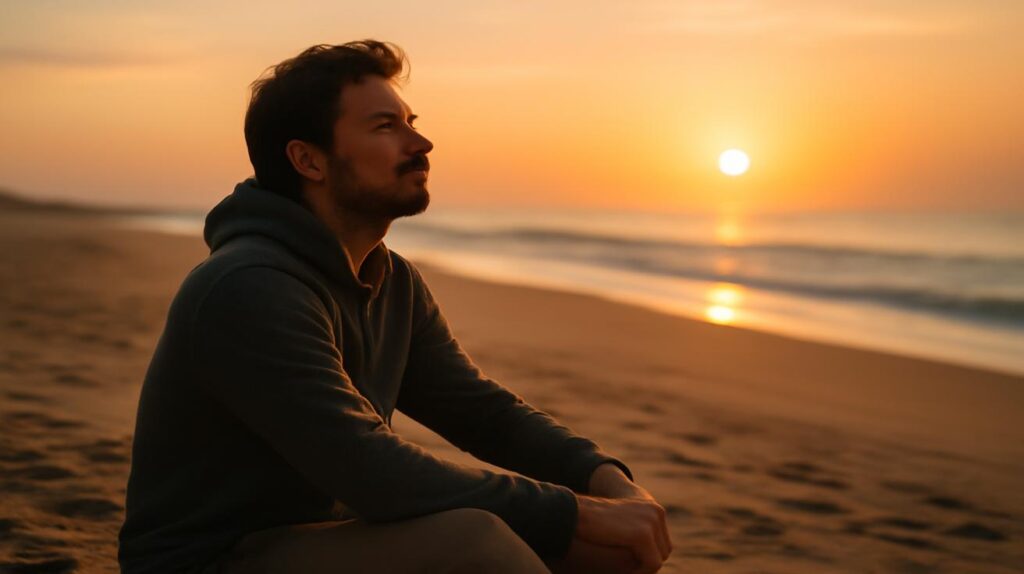
The first thing you notice is the quiet. Not the heavy, awkward kind that settles when a conversation dies, but the gentle, humming quiet of a room that’s finally exhaled. The door clicks shut behind you. Shoes off, phone tossed in a loose arc onto the couch, keys in the bowl with a familiar clink. Outside, life goes on—cars moving, people laughing somewhere down the street, music leaking faintly from a neighbor’s window. But in here, it’s just you. The silence wraps around your shoulders like a soft blanket, and your lungs expand in a way they somehow couldn’t all day. You’re not hiding. You’re not lonely. You’re simply…home.
The Secret Life of the “Quiet One”
You probably know someone like this. Maybe you are someone like this. You’re the person who enjoys the party but secretly savors the moment you step outside into the cool night air, letting the sounds dull into a muffled background hum. Or the friend who shows up fully, laughs loudly, listens intensely—then disappears for a while afterward, not because anything’s wrong, but because you’re quietly stitching yourself back together.
From the outside, it’s easy for people to misunderstand. You cancel plans, choose a solo walk over a group hike, pick the corner seat at the café instead of the big table with everyone else. Some will call it “antisocial,” others whisper “loner” with a tilt of concern. The story they tell themselves is simple: people who like being alone must be withdrawing from the world.
Psychology paints a very different picture.
Spending time alone, for many people, isn’t an escape from humanity—it’s a return to themselves. It’s not about rejection; it’s about restoration. To understand this, we need to step into the quiet inner world of the people who prefer solitude and see what’s really happening there.
The Battery You Can’t See: Why Some People Drain Faster
Think of your social energy like a battery you carry around in your chest. For some, that battery charges in crowded rooms, group chats, and shared laughter. The more people, the brighter the glow. For others, the battery works differently: it drains with each interaction, even the happy ones, and refills not with more people, but with space, softness, and silence.
Psychologists have long studied this difference through the lens of introversion and extraversion. Introverts, broadly speaking, are more sensitive to stimulation—noise, conversation, lights, emotions, ideas. Their nervous systems light up faster, like a car that reaches top speed with a gentle tap on the gas. That sensitivity isn’t a flaw; it’s an intricate, finely tuned instrument. But it means that crowds and conversations, while enjoyable, can be energetically expensive.
So when someone who prefers being alone steps back from the social scene, their brain isn’t broadcasting “I don’t like you.” It’s whispering, “I need a minute.” A moment to process. A moment to breathe. A moment to let the internal noise settle.
It’s similar to walking out of a bright movie theater into the open night sky. You close your eyes, give them a second to adjust, and only then can you see the stars.
The Science of Solitude: What the Brain Is Really Doing
Alone time isn’t just a feeling; it shows up in brain activity. When we retreat from the whirl of external demands, a network in the brain known as the “default mode network” activates. This system fuels daydreaming, self-reflection, creativity, and meaning-making. It’s what allows you to replay a conversation and realize what you really felt, or mentally rehearse that big decision before you speak it into the world.
For people who prefer solitude, this inner world is rich, alive, and constantly humming. They often need frequent access to it—like dipping into a private ocean where ideas, emotions, and half-formed thoughts drift by. Without that access, they can feel disoriented, scattered, or strangely disconnected from themselves, even if they’re surrounded by people they love.
So when they say, “I just need some time alone,” what they might really mean is, “I need to go tune back into the station of my own mind for a while.” Not because your company is unwelcome, but because their internal landscape needs tending.
Recharging, Not Rejecting: The Emotional Truth of Being Alone
There’s a specific sensation that comes when alone time hits just right. Perhaps you know it: the house is quiet, maybe there’s a mug warming your hands, a book half-opened, music low or no sound at all. Your breathing slows, your shoulders drop from somewhere near your ears back to where they were meant to live. The edges of your thoughts, jagged from a long day of being “on,” begin to soften.
This is what emotional recharging feels like for people who prefer solitude. It’s a recalibration of mood and mind. They aren’t rejecting the people in their lives; they’re actually protecting the quality of their presence. They want to show up as the best version of themselves—patient, warm, engaged—and to do that, they have to periodically duck out and plug into their own internal outlet.
Psychologically, this is a form of self-regulation. All day long, we absorb noise—literal and emotional. The coworker’s bad mood. The tension in the room. The running to-do list. The pressure to look fine, sound fine, be fine. Alone time creates a pocket where that pressure can release. It’s the emotional equivalent of loosening a too-tight shoe and finally letting your feet breathe.
From the outside, this can look like withdrawal. But the inner reality is quieter, kinder, and much more intentional. They’re not closing the door on others; they’re opening a window inside themselves.
Solitude vs. Loneliness: The Difference You Can Feel
It’s easy to confuse liking being alone with being lonely, but the two live in very different corners of the heart.
Loneliness feels like an ache—like calling out into a canyon and hearing no echo. You want connection, but it feels just out of reach. You scroll through messages, linger on other people’s photos, wonder where you fit. Time alone in this state doesn’t recharge; it stings.
Solitude, on the other hand, feels full. It’s deliberate. There’s a quiet satisfaction in the air, a sense that you choose to be here, with yourself, in this moment. The silence doesn’t feel empty; it feels fertile, like soil where something unseen is growing roots.
People who prefer solitude are usually seeking this second experience. They’re not drifting, untethered and unseen; they’re actively nesting inside their own company. And when they step back into the social current, you can often feel the difference: there’s a groundedness to them, a calm, a centered gaze that says, I know where my anchor is.
How Alone Time Actually Makes Relationships Stronger
It might sound counterintuitive, but those stretches of chosen aloneness can be the very thing that deepens someone’s connections with others. Picture a friend who takes off for a solo walk in the woods every weekend. They come back wind-flushed, eyes clearer, thoughts untangled. When you talk to them afterward, they’re more present. Less distracted. More able to listen without rushing to fill every silence.
When someone respects their own need to recharge, they’re far less likely to build up quiet resentment. They won’t feel trapped by plans they didn’t have the energy for, or silently wish for an early exit. Instead, they arrive on purpose, not by obligation.
That kind of presence is a gift. It tells you: I’m here because I want to be, not because I don’t know how to say no.
In relationships, this can look like partners who take separate evenings to do their own thing and then return to each other with more to share. Or friends who understand that not answering every call immediately doesn’t mean disinterest; it means they’re protecting the quality of the time you do spend together.
Healthy solitude is not a wall; it’s a garden fence—porous, protective, and openable. It keeps out what overwhelms and lets in what nourishes.
Quality Over Quantity: Rethinking “Social Success”
We live in a culture that rewards visibility: big circles of friends, packed social calendars, constant connection. It’s easy to assume that the more social you are, the happier you must be. But psychology suggests something quieter: it’s not the number of interactions that matters most; it’s the depth and authenticity of them.
People who prefer being alone often instinctively edit their social lives. They might have fewer close friends, but those friendships tend to be deep-rooted. They’d rather have one real conversation than a dozen surface-level check-ins. They’re drawn to people with whom silence is safe, where not talking doesn’t have to mean something’s wrong.
In their world, social success isn’t about being seen everywhere; it’s about being truly known somewhere.
A Glimpse Inside: What “Recharging” Can Look Like
Recharging alone doesn’t follow a single script. It’s not always a candlelit bath or a silent meditation (though it can be). Sometimes it’s messier, stranger, more ordinary.
It might be:
- Cooking a slow, simple meal with music turned low and no one to impress.
- Walking through the same park, the same route, watching how the light changes week to week.
- Lying on the floor, staring at the ceiling, letting thoughts unspool without needing to catch them.
- Reading two pages of a book, drifting off into your own thoughts, then reading the same two pages again.
- Sitting in a café alone, headphones in or out, feeling the presence of others without the demand to interact.
To an outside eye, these moments may look uneventful, even boring. But inside, there’s a sorting process happening—like clearing a desk piled high with papers, deciding what matters, what can wait, what never belonged there in the first place.
This simple table offers a glimpse into the inner contrast between social time and alone time for many people who prefer solitude:
| Experience | In Social Settings | In Alone Time |
|---|---|---|
| Energy Level | Gradually drains, even when it’s fun | Slowly refills; calm and steady |
| Thoughts | Fast, responsive, focused on others | Reflective, spacious, focused inward |
| Emotions | Rich but sometimes overwhelming | Settling, integrating, soothing |
| Sense of Self | Slightly scattered, externally oriented | Grounded, clear, re-centered |
When you see it this way, the choice to be alone starts to look less like avoidance and more like a necessary part of emotional hygiene.
Alone, Not Against: Communicating Your Needs
Still, there’s a real and tender challenge here. People who need a lot of solitude can be misunderstood, especially by loved ones who recharge socially. One person craves closeness; the other craves space. If those needs aren’t named, it’s easy for hurt feelings to grow in the dark.
Sometimes, all it takes is a slight shift in language. Instead of saying, “I don’t feel like hanging out,” you might say, “I really want to be present with you, and I’m running low on energy right now. Can we meet tomorrow when I’ve had some time to recharge?”
Or, “If I go quiet for a bit after a busy week, it’s not because I’m upset with you or pulling away. It’s how I reset. I’ll reach out once I’ve had that time—I appreciate your patience.”
These simple explanations help the people in your life understand that your solitude is not a door slammed shut; it’s a light being turned back on from within.
Making Peace With Your Own Rhythm
If you’re someone who often prefers being alone, you might have spent years feeling slightly “wrong” in a world that glorifies constant connection. Maybe you forced yourself into more plans than you wanted, stayed longer than you had the energy for, laughed louder than you felt, because you thought that’s what “normal” looked like.
Psychology offers a gentler truth: your rhythm is not a problem to fix. It’s a pattern to respect.
There’s a deep self-trust that grows when you stop apologizing for needing space. When you understand that your alone time isn’t a sign of brokenness but a kind of internal maintenance. The way you step away from the crowd can be the way you stay true to yourself, and paradoxically, the way you stay truer to others.
You don’t have to explain your every quiet evening or justify every declined invitation. But you can hold in your mind this quiet, sturdy understanding: wanting to be alone is often an act of care, not rejection. A way of watering the roots, not abandoning the forest.
Some people recharge in rooms buzzing with life. Others recharge in the stillness of their own company. Both are human. Both are valid. Both are ways of saying yes—to life, to connection, and to the simple, profound act of returning to yourself so you have something real to offer when you step back out into the world.
FAQs
Does preferring to be alone mean I’m antisocial?
No. Preferring to be alone often means you’re selective about how and with whom you spend your energy. You can value relationships deeply and still need frequent solitude to feel balanced. Being antisocial usually refers to a lack of regard for others, which is very different from needing space.
How can I tell if I’m recharging or just isolating?
Notice how you feel afterward. If alone time leaves you calmer, clearer, and more able to connect, you’re likely recharging. If it leaves you feeling heavier, numb, or more disconnected and hopeless, it may be isolation, and reaching out for support could help.
Is it normal to feel tired after socializing, even when I had fun?
Yes. Many people, especially introverts or highly sensitive individuals, find social interaction energetically draining, even when it’s positive. Enjoyment and exhaustion can coexist. That’s why rest afterward can feel so necessary.
How can I explain my need for alone time to friends or a partner?
Be honest and specific. You might say, “Time alone helps me show up as my best self,” or “I recharge by having quiet evenings. It doesn’t mean I don’t care; it’s how I refuel.” Share that your need for solitude is about your energy, not your feelings about them.
Can too much alone time be unhealthy?
Yes, if solitude turns into chronic avoidance or loneliness. Healthy alone time feels chosen and restorative. If you find yourself consistently avoiding people, feeling anxious about contact, or sinking into sadness, it may be helpful to gently increase safe social contact or talk with a mental health professional.