The day I realized my attention had become a flock of startled birds, it was because of an orange. Or rather, because I had no idea what the orange I’d just eaten actually tasted like. I was standing over the sink, phone wedged between my shoulder and my ear, laptop humming on the counter, half-reading an email, pretending to listen to a coworker, and mechanically chewing. When the call ended and the email was sent, I glanced at the peel in my hand and felt a strange, hollow confusion: Had I even tasted this?
The Season of Doing Everything, and Missing All of It
For years, my days were stacked like a messy tower of browser tabs. I wore multitasking like a medal. Two screens, three conversations, four unfinished tasks, all spinning at once like a circus act I was sure I had mastered. If I could answer emails while sitting in meetings, listen to an audiobook while making dinner, and scroll news feeds while brushing my teeth, didn’t that mean I was winning at modern life?
On paper, it looked efficient. Inside my body, it felt like static. My mind buzzed, but rarely settled. I would arrive at the end of a long day with the distinct feeling that I had sprinted without moving. I’d forget what people had said to me only minutes before. I’d reread the same line of a book three times. I’d walk into a room and stand there, blinking, unsure of why I’d come.
The strangest part was how normal it all felt—like living in constant low-grade turbulence. Everyone around me seemed to be doing it too: answering Slack messages at red lights, texting while walking their dogs, checking calendars in the middle of conversations. We held coffee cups but not eye contact. We moved, fast, but we were rarely fully anywhere.
I told myself it was necessary. The world was fast; I needed to be faster. There were deadlines, expectations, and a long list of things I wanted to learn, read, become. Multitasking was the only way to fit it all in, I thought. What I failed to notice was the very simple math: the more I divided my attention, the smaller each piece became.
The Day My Brain Quietly Raised a White Flag
One afternoon, deep in my multitasking era, I sat down to “catch up” on work. That meant: inbox open, spreadsheets open, messaging app blinking, a podcast murmuring in the background, and my phone within reach, face up, like a restless pet demanding to be picked up every few minutes. I was, theoretically, on fire.
After an hour, I checked off precisely one tiny item from my list. One. I felt tired in a way that went beyond physical fatigue—like I had been holding my breath without realizing it. My thoughts were scattered crumbs. My shoulders ached. I stared at the glowing screen and, for a flicker of a second, admitted something I’d been avoiding: this wasn’t working. Not really.
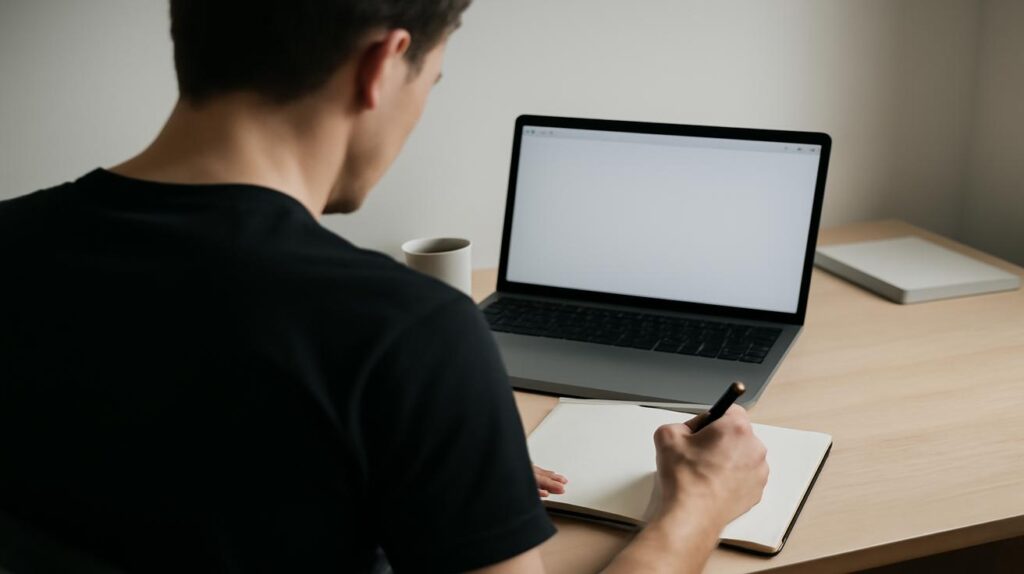
So I did something peculiar, mostly out of frustration. I closed everything. Email. Messaging. Tabs. I turned off the podcast. I flipped my phone over, facedown. On my screen, I left only one lonely document. A project I’d been avoiding because it demanded more from me than quick replies and checkbox victories. I decided to work on just that, for “a little while,” and then reward myself with distraction.
The first minutes felt physically itchy, like I had locked my brain in a quiet room and it was rattling the doorknob. I kept reaching for my phone only to find it wasn’t there. The absence of interruption felt loud. But then, something subtle started to happen. My breathing slowed. My shoulders dropped. Ideas, once stuttering bursts, began to move in longer lines. I was actually thinking. Not skimming. Not reacting. Thinking.
Forty-five minutes later, I came up for air and felt wide awake in a way I hadn’t in a long time. I’d made real progress. More than I’d made in the previous three hours of high-speed flailing. It felt less like work and more like slipping into a stream that had been flowing beside me all along, waiting for me to step in.
The Habit That Changed Everything (Without Feeling Like Work)
What came next wasn’t a grand productivity overhaul or a color-coded system. I’m allergic to anything that feels like a self-improvement boot camp. What I did instead was much smaller, almost embarrassingly simple: I began practicing doing just one thing at a time—but in a very particular way.
Instead of forcing myself to “be focused” through sheer willpower (which had always failed after a day or two), I created tiny, friendly containers for my attention. Little pockets of time where multitasking simply wasn’t invited in. And—and this mattered—I kept them light. No pressure, no perfectionism, no 5 a.m. clubs or rigid rules. Just a few gentle agreements with myself.
The habit looked like this: I would choose one task, set a short, specific window, and give it my undivided senses. Not just my mind—my eyes, my hands, my ears, my breath. I would let myself feel what it was like to be inside that one thing fully, as if it were the only thing happening in the world.
Sometimes that task was work: writing a report, editing a document, planning a project. Sometimes it was washing dishes. Sometimes it was walking to the store. Sometimes it was eating a single orange and actually tasting it this time—the citrus oils misting the air as I peeled it, the slight resistance as my thumbs slid under the skin, the burst of brightness on my tongue.
To keep myself from slipping back into multitasking, I added one small structure that, somehow, made it feel like a game instead of a chore.
The Little Timer That Taught My Brain to Breathe
My secret weapon was a basic countdown timer. Not a fancy app designed to fix my life. Just the humble built-in clock on my phone, set for 15 or 20 minutes. I would put the phone on airplane mode, prop it across the room where I could still see the minutes quietly dissolving, and then sink into my one chosen thing.
There was an almost childlike satisfaction in it. For that short window, I didn’t have to make any decisions about what else to do. The boundary was clear: until the timer chimed, this is where I live. This sentence. This pan of onions sizzling in oil. This email I am actually reading carefully instead of skimming while half-thinking about lunch.
The goal wasn’t to be perfect. My mind wandered plenty. But instead of punishing myself for that, I treated it like training a friendly, slightly overexcited dog. Each time my thoughts sprinted away—toward notifications that weren’t even there, or imaginary to-do lists—I simply noticed, and brought them back to the single task in front of me. No drama. Just, “Oh, there you go again. Come back.”
Something fascinating happened fairly quickly: these short, focused windows started to feel good. Tangibly good. Like slipping into warm water after standing in wind. The more my nervous system got a taste of being undistracted, the more it seemed to crave it. Focus stopped feeling like a discipline and more like a relief.
How Single-Tasking Quietly Outperformed My Chaos
It didn’t take long before I started to notice patterns. When I multitasked, I felt busy but brittle. My brain moved faster but shallower. I’d forget things, make small mistakes, and feel oddly hungry for more stimulation, as if my attention had become a bottomless pit that nothing could quite fill.
In my short, single-task windows, the opposite happened. My thinking gained depth. Ideas linked together more gracefully. I made fewer errors. The work felt smoother, more like weaving than hacking through a jungle with a machete. I also finished things—actually finished them—instead of leaving a wake of half-done fragments behind me.
It reminded me of another kind of experience: being outside, in a place wild enough that your brain has room to stretch out. A long walk on a trail where your phone has no signal. The way your senses brighten when you sit by a river for more than a moment and actually notice the way the surface moves—those small muscular swirls around a stone, the shifting colors, the light playing tag with the current.
I started inviting this outdoor, sensory quality into everyday tasks. If I was cooking, I let it be cooking: the smell of garlic blooming in oil, the changing colors of vegetables as they softened, the way steam curled against the window. If I was on a call, I let it be a call: the tone of the other person’s voice, the pauses, the subtle shift when something I said truly landed.
The difference between these two modes of living—multitasked and single-tasked—became so clear that I found myself naturally drifting toward the latter, without needing to force it. My body knew which state felt better. It was like choosing between standing in the middle of a shopping mall with every screen turned up loud, and standing beneath a canopy of trees with the wind moving through the leaves.
| Multitasking Mode | Single-Tasking Mode |
|---|---|
| Many tabs, constant switching, fragmented attention | One clear focus, minimal switching |
| Feels “busy” but progress is hard to see | Feels calmer, with visible progress on real work |
| Mental fatigue, scattered memory, restless scrolling | Steadier energy, clearer recall, less urge to check devices |
| Checking boxes, but rarely feeling satisfied | Fewer tasks, done more deeply and meaningfully |
| Life blurs past in a fast-forward haze | Moments feel slower, more textured, more alive |
The Gentle Rules That Made It Stick
What surprised me most was that this habit didn’t require iron discipline. It didn’t demand that I become a different kind of person. It simply asked me to be honest about how I felt in each mode, and to choose, more often, the one that felt like breathing instead of drowning.
Over time, a few simple, almost invisible guidelines emerged:
First, I stopped glorifying “busy.” When someone asked how things were going, I experimented with not answering “busy” as if it were a badge of honor. Instead, I tried: “I’m working on a couple of things that matter to me.” Just changing the words shifted something subtle inside—away from frantic quantity and toward thoughtful quality.
Second, I started designing my environment to make focus the default, not a heroic effort. I turned off nonessential notifications. I cleared my desk of extra objects that tugged at my attention. I left my phone in another room for certain tasks. If I needed to concentrate, I told the people I worked with: “I’m going offline for an hour; I’ll be back.” It was almost shocking how rarely that caused a problem.
Third, I used transitions like a kind of soft reset. Before switching tasks, I took ten slow breaths or drank a glass of water or simply looked out the window for a minute. Tiny rituals that told my nervous system: we’re leaving one thing and arriving at another. I stopped expecting my concentration to teleport instantly from one screen to the next like a superhero.
Finally—and this felt oddly radical—I gave myself permission not to be reachable all the time. Not by email, not by messages, not by infinite streams of content. My attention is finite, I realized. Every yes is a no to something else. Every moment I gave to a notification was a moment I could not give to a person in front of me, or a quiet, meaningful piece of work, or a walk under actual sky.
Listening to the Body’s Quiet Signals
Along the way, my body became my most reliable compass. It told me, more honestly than my thoughts, when I had slid back into multitasking overload. The clues were small: a subtle tightness behind the eyes, shallow breathing, the jittery urge to pick up my phone in the middle of a sentence, the sense of never quite landing in my chair.
When I noticed those signals, instead of pushing through, I treated them as a gentle alarm bell. Not “You’re failing,” but “You’re full.” That was my cue to pick just one thing and offer it my full presence, even if only for five minutes: wiping the counter, folding a shirt, answering a single email with care, looking—actually looking—at the sky through the nearest window.
These tiny acts of single-tasking were like small, secret acts of rebellion against a culture that constantly whispers, “More, faster, now.” They were also quiet invitations back into my own life, moment by moment. I started noticing the way sunlight moved across my wall during afternoon calls. The way my coffee smelled different depending on how long it had been sitting. The way conversations deepened when I wasn’t also glancing at a screen.
When Life Stops Blurring and Starts Appearing Again
The unexpected gift of dropping chronic multitasking wasn’t just better productivity. It was the way time itself seemed to change texture. Days felt less like sand slipping through my fingers and more like a string of distinct beads I could actually remember holding.
I remember a particular evening walk—the kind I might once have turned into a podcast-consumption opportunity. This time, I left my headphones on the shelf. The world felt oddly loud at first: the rumble of a distant truck, the staccato tapping of a woodpecker on a pole, the soft squelch of my shoes in damp dirt. A cool breeze brushed the back of my neck. Someone was cooking onions and tomatoes a few houses away; the scent drifted over like an invitation.
Halfway down the block, I noticed a single spiderweb strung between two fence posts, trembling slightly in the wind, catching the last of the light. How many times had I walked past that same fence before, my mind elsewhere, my fingers busy scrolling? How much of the world had I filtered out in the name of efficiency?
That, perhaps, is what this whole experiment has given me more than anything: not a perfectly optimized life, but a more inhabited one. Less like flipping rapidly through channels, more like staying with a single scene until your eyes adjust and you begin to notice the details—the way shadows gather, the small sounds that would otherwise vanish under the noise.
“I used to multitask constantly,” I could say now, the way someone might talk about an old injury. And like many injuries, it healed not through brute force but through gentle repetition of a better pattern. One task. One breath. One moment at a time. Not a rigid rule, not a purity test, but a quiet, ongoing choice: to actually be where I already am.
Frequently Asked Questions
Isn’t multitasking necessary in modern life?
Some things will always overlap—parenting, caregiving, managing a home. The shift isn’t about never doing two things at once; it’s about not living in a constant state of divided attention when it isn’t truly required. Even a few intentional single-tasking windows each day can noticeably change your energy and clarity.
How do I start if my job demands constant responsiveness?
Begin with small, clearly defined focus blocks: 10–20 minutes with notifications silenced, followed by a short check-in period. Let teammates know when you’ll be offline and when you’ll be reachable. Most workplaces tolerate short stretches of deep focus, especially if you communicate them upfront.
What if my mind keeps wandering when I try to focus on one thing?
That’s normal. Treat wandering as part of the process, not a failure. Each time you notice it, gently bring your attention back without judgment—like guiding a curious child by the hand. Over time, the “coming back” gets easier, and the stretches of natural focus grow longer.
Do I need special apps or tools to stop multitasking?
No. A simple timer, a quiet space, and a clear decision about what you’re doing are enough. Tools can help reduce friction—like website blockers or focus modes on your phone—but they’re only supports. The real habit is choosing one thing and staying with it.
How long did it take before this felt natural instead of forced?
Within a couple of weeks of regular short focus sessions, single-tasking began to feel less like effort and more like relief. Your experience may differ, but once your body and mind register how much better it feels, the habit often starts to reinforce itself without much pushing.