The first thing you notice is the way light slips through fine hair. It doesn’t bounce so much as it glides—soft, almost transparent at the edges. In the bathroom mirror one early morning, you tilt your head, pinch a strand between your fingers and sigh. It’s not that you don’t like your hair. It’s just… there isn’t much of it. At least, not the way you wish there were—full, thick, confidently messy. You’ve tried the “volumizing” shampoos, the mousses promising miracles, even the old “flip your head upside down and blow‑dry” trick. And still, your hair settles into that familiar flat halo, parting where it wants, lying obediently against your scalp. Maybe, you think, it’s just how it’s meant to be.
But here’s the quiet secret whispered in modern salons and small, sunlit bathrooms: for fine hair, the right short cut can feel like cheating. It can change how your hair behaves, how it reflects light, how it frames your face—and how you walk out the door in the morning. Not by turning you into someone else, but by revealing what’s already there, waiting. Volume. Texture. Attitude.
Why Short Cuts Can Be Game‑Changing For Fine Hair
Fine hair is not a flaw; it’s a texture—delicate, silky, often soft to the touch. The challenge is that each strand is thinner, so hair collapses more easily under its own length and weight. Long, fine hair can look beautiful, but it frequently demands more styling, more product, more time for a payoff that disappears by noon.
Shorter cuts, on the other hand, remove that excess weight and allow the hair to spring up, quite literally. Layers can be placed strategically. Ends can be cut in ways that create movement instead of limpness. The right shapes invite air between the strands—suddenly your hair isn’t lying flat; it’s standing, shifting, lifting.
If you’ve ever run your fingers through someone else’s short, textured bob or pixie and thought, “Why doesn’t my hair do that?” the truth is: it probably can, with a cut tailored to fine hair rather than fighting against it.
1. The Airy French Bob: Short, Light, Effortlessly Full
Imagine a bob that hits just below your cheekbones or at your jawline. The ends are slightly blunt, but the interior is feathered so gently that you don’t see layers—you feel them. When you turn your head, the hair swings, not as a heavy curtain, but like linen catching a breeze. That’s the magic of the airy French bob on fine hair.
This style thrives on illusion. By keeping the length above the shoulders, the hair is freed from the drag of gravity. A subtle undercut or texturizing near the nape can remove bulk where you don’t need it, which paradoxically makes the rest of the hair look thicker. The outline stays simple: a softly rounded shape that cradles the face rather than clinging to it.
Watch what happens when you tuck one side casually behind your ear. The other side puffs out just enough to look intentional, framing your cheekbones and opening your neckline. You can air‑dry with a spritz of salt spray and a few scrunching motions, or blast your roots quickly with a dryer and a round brush. Either way, this bob doesn’t demand strict styling; it likes to look like you woke up in a sunlit Paris apartment, not a hair salon.
And bangs? Optional but potent. A wispy fringe that just skims the brows can add the appearance of more hair upfront, drawing attention to your eyes and adding an extra layer of visual fullness. For fine hair, keeping the fringe soft and a little piecey prevents it from looking too heavy or separated.
2. The Layered Micro‑Bob: Tiny Length, Big Impact
Now imagine going even shorter—just brushing the corner of your mouth, or grazing the bottom of your ear. This is where the layered micro‑bob lives. It’s bold in silhouette but surprisingly gentle in maintenance, especially for fine hair.
The secret here is internal layering. Instead of chopping obvious steps into the cut, a skilled stylist creates invisible scaffolding inside the shape. Some strands are trimmed shorter beneath the surface, giving the longer ones something to rest on. The result? Subtle lift at the crown and along the sides without needing to tease or backcomb.
Visually, a micro‑bob removes the heaviest, thinnest part of longer fine hair—the tail ends that tend to string together and betray just how little thickness you have. With those gone, every remaining strand counts. The line of the bob can be cut straight or with a soft curve that follows your jaw. Either way, the effect is of density and presence.
Run your hand through it and you’ll feel a quiet resistance, a fluffiness that wasn’t there before. A dollop of lightweight mousse at the roots before blow‑drying can expand each hair shaft a fraction, which is all this cut needs to come alive. If you like a slightly undone look, twist small sections as they cool, then separate them with your fingers. You’ll see pockets of air create texture and movement, like ripples in a shallow tide pool.
3. The Textured Pixie: Volume Where It Matters Most
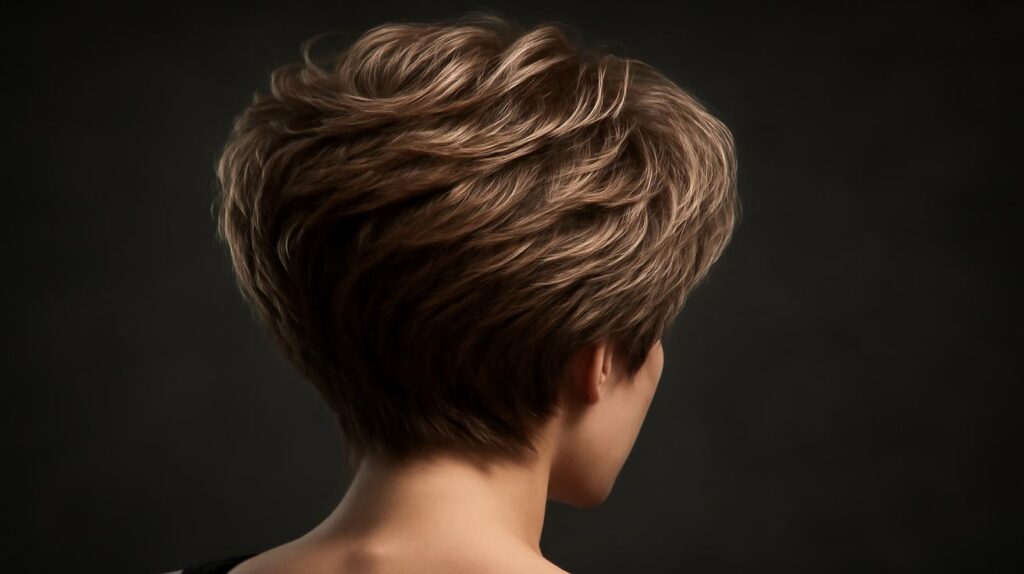
The idea of a pixie often feels like crossing a line. Once you cut it, there’s no ponytail to hide behind, no quick bun on a tired morning. But for fine hair, the textured pixie can be a revelation—a cut that finally lets your hair defy gravity instead of surrendering to it.
A good pixie for fine hair isn’t shaved flat or too close to the scalp everywhere. Instead, it leaves purposeful length on top, with shorter, softer sides and nape. That top section becomes your playground—long enough to push forward into a fringe, swipe back for height, or muss with texturizing cream for an artfully disheveled look.
Because there’s less length to weigh down your roots, any lift you coax in at the crown stays put longer. Fine hair, when cropped close, suddenly feels thicker under the fingertips. Short ends stand up more readily, catching the light and creating the impression of density. The edges around the ears can be tapered delicately or left slightly longer and shaggy for softness.
The beauty of a textured pixie is in the contradictions: it’s both low‑maintenance and expressive. Many people with fine hair find they can air‑dry, add a pea‑sized amount of styling paste, and be done. The key is to rough the product in at the roots and mid‑lengths, then pinch small pieces to create separation. Instantly, your hair goes from “flat” to “intentionally sculpted.”
4. The Soft Shaggy Crop: Controlled Chaos For Extra Body
There’s a moment—walking down a street, seeing someone with that perfectly messy, lived‑in short cut—when you wonder: is their hair thick, or just cleverly cut? Often, with fine hair, the answer is the latter. That effect often comes from some variation on a soft shaggy crop.
This cut lives somewhere between a bob and a pixie, often brushing the nape while layers fall forward around the face. The top and crown are filled with choppy, feathered pieces that stack lightly on one another. Instead of a smooth helmet of hair, you have a landscape: peaks, dips, and waves that catch and reflect the light differently across your head.
For fine hair, the genius of this style lies in how it multiplies movement. Where straight, one‑length cuts reveal every gap and thinness, the shaggy crop disguises it by drawing the eye around: from a flick at the temple to a bit of lift at the crown, to little wisps that hug the jawline. The individual strands may be fine, but together, arranged in this organized chaos, they suggest volume you can feel.
Style it with a light, gritty spray or a dry texturizer, scrunching upward from the ends. Tilt your head, shake it out, and let pieces fall where they want. It’s the kind of cut that embraces imperfection, turning it into character. On a windy day, you don’t lose the shape; the movement is the shape.
Choosing Your Cut: Matching Style To Face, Lifestyle, and Texture
All four of these cuts—airy French bob, layered micro‑bob, textured pixie, and soft shaggy crop—share one thing: they’re designed to support fine hair rather than fight it. But the magic really happens when you choose the one that suits your features and how you live your life day to day.
Look in the mirror and trace the lines of your face with your eyes: the curve of your jaw, the shape of your forehead, where your cheekbones rise and fall. Short cuts bring attention to these details. A bob that hits at the widest part of your cheek can make your face appear fuller and softer. A pixie that’s a touch longer at the top can add height and drama if your face is rounder. Shaggy layers can carve definition into a softer jaw or soften a sharper one.
Your routine matters, too. If you usually have five minutes for hair in the morning, choosing a cut that needs a full blow‑out and precise round‑brushing might not be kind to yourself. The French bob and shaggy crop both excel at air‑drying into something charmingly undone. The pixie tends to ask only for a quick fluff and product, while the micro‑bob rewards a bit more mindful styling but pays back in polish.
To help you see these cuts side by side, here’s a simple comparison:
| Style | Best For | Maintenance Level | Volume Effect |
|---|---|---|---|
| Airy French Bob | Soft, romantic volume; face‑framing | Medium | Natural lift, bouncy movement |
| Layered Micro‑Bob | Polished look; short but not drastic | Medium–High | Strong visual thickness at the edges |
| Textured Pixie | Bold change; minimal styling time | Low–Medium | Maximum root lift and density |
| Soft Shaggy Crop | Messy, lived‑in texture lovers | Medium | Layered body and airy fullness |
None of these styles are about perfection. They’re about partnership: your hair working with gravity and movement instead of collapsing under them.
Subtle Techniques That Make Fine Hair Look Thicker
Behind every “wow, your hair looks so thick!” comment usually lies a handful of quiet techniques: small choices in the cut and styling that shift your hair from flat to full without shouting for attention.
First, there’s the scalp line. Harsh, dead‑center parts can expose more scalp on fine hair, breaking the illusion of density. Slightly off‑center parts, or even a soft zigzag part, help camouflage this. Some of the cuts above—especially the shaggy crop and pixie—look great when you push the hair away from its natural part, instantly creating lift.
Then there’s the way the ends are finished. Blunt ends, especially in a bob, are your ally. They form a solid line, visually thickening the bottom edge of your hair. But inside that outline, gentle point‑cutting (where a stylist snips into the hair vertically rather than straight across) prevents the shape from looking blocky or helmet‑like. The hair moves, but it doesn’t thin out.
Color, too, can be a quiet conspirator. While you might be keeping your natural hue, even subtle variations—a slightly lighter veil of color on the top layers, a hint of depth underneath—can create the illusion of shadows and light, the same way a forest canopy looks denser where leaves overlap. This doesn’t have to be dramatic or high‑maintenance; it’s about giving your fine hair a bit of visual architecture.
And then there are products—but used sparingly and intelligently. For fine hair, heavy creams and oils are like wet wool blankets. Instead, think clouds: lightweight volumizing sprays, mousses, and dry texturizers. Apply most of your product at the roots and mid‑lengths, leaving the ends relatively free so they can swing and separate instead of clumping together.
Living With Your New Short Cut: Rituals, Not Routines
The morning after a big cut, your hand goes to your head before you even open your eyes. There’s that quick, startled moment of difference—and then, if the cut is right, a smile. Your neck feels cooler. Your head feels lighter. You don’t have to wrestle with tangles or coax limp lengths into something presentable. Instead, you meet your own reflection with curiosity: how will it fall today?
Caring for a short cut on fine hair isn’t about rigid routines; it’s about small rituals that make the most of what you’ve chosen. Washing slightly less often can help—fine hair tends to get oilier, yes, but daily washing can also strip away the small amount of natural texture that gives it grip and volume. Many people find a rhythm of every other day washing, using a spritz of dry shampoo near the roots on in‑between mornings to reset lift.
Blow‑drying becomes faster and more purposeful. Instead of spending twenty minutes dragging a brush through long hair, you might take three to five minutes lifting sections at the crown with your fingers while the dryer directs warm air at the roots. Flip your head upside down for the final 30 seconds, massage the scalp lightly, and you’ll feel the hair puff and float into shape.
Regular trims matter more now, not less. With fine hair, a short cut can lose its shape subtly but quickly, sliding from “intentionally voluminous” to “slightly uncertain” in a few extra weeks. Think of trims as refreshing the architecture that makes your hair look fuller. Every six to eight weeks is a common rhythm, but you’ll start to feel when the edges soften and the crown loses its spring.
Most importantly, living with short hair when it’s fine is an invitation to touch it differently. To scrunch instead of smooth. To lift instead of flatten. To welcome a bit of chaos instead of constantly taming it. There’s a point where you stop saying, “My hair is so flat,” and start saying, “My hair just does this,” with a little shrug and a lot more ease.
FAQ: Short Cuts and Fine Hair
Will cutting my fine hair short actually make it thicker?
Cutting your hair short doesn’t change the diameter of each strand, so it’s not literally thicker. But by removing weight and damaged, wispy ends, short cuts help your hair stand away from the scalp and create the appearance of much greater density and volume.
Which of these four cuts is best if I’ve never gone short before?
The airy French bob or layered micro‑bob are often ideal first steps. They’re short enough to give visible volume but still long enough to tuck behind your ears and style in different ways. Once you’re comfortable, you can explore bolder options like a pixie or shaggy crop.
How often should I trim short, fine hair?
Most short styles on fine hair benefit from a trim every six to eight weeks. This keeps the shape sharp, prevents the ends from thinning out, and maintains the structure that creates volume.
Do I need special products for these cuts?
You don’t need a shelf full of products, but choosing the right kind matters. Lightweight volumizing mousse or spray, a gentle texturizing or dry spray, and possibly a dry shampoo are usually enough. Avoid heavy oils and thick creams that can weigh fine hair down.
Can I still style short, fine hair with heat tools?
Yes, but in moderation. A small round brush and blow‑dryer or a compact flat iron used to bend, not flatten, can enhance volume and texture. Always use a heat protectant and remember that with less length, you typically need less heat and less time to achieve the look you want.