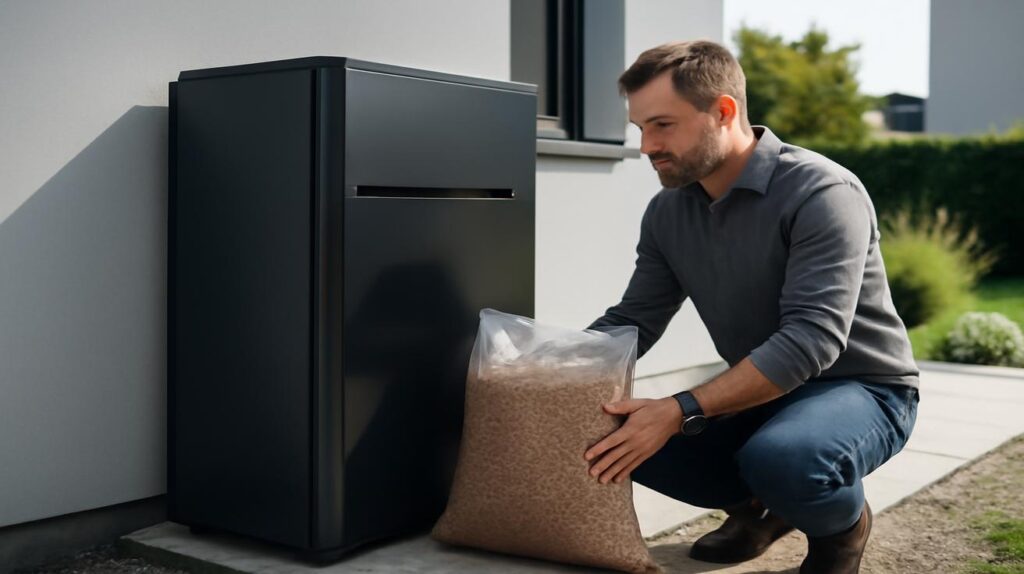
The first thing you notice is the sound: not the crackle of logs or the low clatter of wood pellets, but a soft, steady hum that feels more like a refrigerator than a furnace. Outside, winter leans its weight against the windows. Inside, the air is warm, dry enough that the glass doesn’t fog, gentle enough that it doesn’t roast your face when you stand over the vent. Somewhere, a small compressor whirs, and with it an almost subversive idea: what if staying warm didn’t have to mean hauling bags of pellets, feeding a hungry stove, and watching smoke twist into a pale winter sky? What if “heating” could be quiet, clean, and—improbably—cheaper?
The quiet revolution replacing your pellet stove
Over the last decade, wood pellets carved themselves a niche as the “greener” answer to oil and gas. They felt earthy and honest: compressed sawdust instead of fossil fuels, the satisfying heft of a 40-pound bag, the visible fire doing work. Many homeowners traded their oil tanks for pellet stoves with a sense of moral relief. Smoke, yes—but from trees that would regrow. Carbon, yes—but part of a natural cycle, not a one-way ticket from deep underground to the atmosphere.
But in the background, another technology has been quietly evolving, shedding its clunky reputation and getting leaner, smarter, and far more efficient. Energy experts across Europe and North America have begun converging around a clear message: if you really want to cut emissions and save money, say goodbye to wood pellets and hello to modern electric heat pumps.
Heat pumps don’t look like a revolution. They look like a box on the outside wall, a slender unit on the inside, or a grille in your ceiling. They don’t glow orange. They don’t ask you to shovel, chop, pour, or sweep. They simply sit there, moving heat around the way a tree moves water—quietly, efficiently, invisibly. And in doing so, they are rewriting what “home heating” can be.
Why energy experts are turning away from wood pellets
Wood pellets were sold on a promise: use leftovers from lumber mills, press them tight, burn them efficiently, and get a “carbon-neutral” flame. There’s truth in that story, but not the whole truth.
For one, burning anything—pellets, logs, crop waste—sends out fine particles and gases that do not politely vanish into the cold air. They hang there, mingling with exhaust and chimney smoke, sneaking into lungs. Even with modern stoves, pellet systems contribute to local air pollution, especially in valleys and dense neighborhoods where winter air sits heavy.
Then there’s the carbon accounting. Yes, the carbon from pellets originally came from the atmosphere, locked up by trees. But when demand for pellets grows fast, forests are harvested more intensively, and it can take decades for regrowth to truly balance out the emissions from burning. Climate scientists increasingly warn that “eventual” neutrality isn’t good enough when we’re racing the clock.
Finally, there’s the simple question of economics. Pellets are not magic dust; they’re a fuel. You have to buy them, store them, haul them. Prices swing with supply, transport costs, and global events. In some winters, the cost of pellets quietly creeps closer to oil or propane, especially in regions where demand is high and supply chains are strained.
Against this backdrop, heat pumps behave almost rudely well. They don’t burn anything. They move heat that already exists in the air, the ground, or nearby water, using electricity as the lever. With modern designs, especially in cold climates, they can deliver three to four units of heat for every single unit of electricity consumed. That’s where energy experts start using phrases like “game-changer” and “no-brainer.”
Heat pumps in plain language: refrigerators in reverse
If a pellet stove is a fireplace with a college degree, a heat pump is more like a refrigerator with a passport. The simplest way to understand one is to look at the fridge in your kitchen. Open the door, and you feel the cool; touch the coils at the back, and you feel the warmth it has shuttled away.
A heat pump is the same trick, just flipped and scaled. Instead of dumping unwanted heat from your groceries into the air, it pulls heat from the outside world—yes, even when it’s cold out—and brings it inside. In summer, the process reverses and the same system cools your home like an air conditioner. One set of pipes, one compressor, two seasons of comfort.
Because the pump moves heat rather than creating it, it cheats the usual rules of efficiency. A wood pellet stove can only turn the energy in the pellets into heat, topping out near 80–90% efficiency. A heat pump can be 300% efficient or more in mild conditions, and still remarkably efficient in sub-freezing temperatures, especially with modern “cold-climate” models.
Counting the costs: eco-friendly and economical, side by side
It’s one thing to talk in metaphors; it’s another to face a winter bill. Numbers have a way of stripping away romance, and that’s where heat pumps have surprised even skeptical homeowners. When energy analysts compare real-world heating costs, heat pumps routinely come out ahead—not just of oil or propane, but increasingly of wood pellets as well, especially where electricity isn’t outrageously priced and grid power is decarbonizing.
| Heating Option | Typical Efficiency | Emissions at Point of Use | Comfort & Convenience |
|---|---|---|---|
| Wood Pellet Stove | 80–90% of fuel energy to heat | Smoke, fine particles, CO₂ | Manual loading, ash cleanup, hot/cold spots |
| Modern Heat Pump | 250–400% (COP 2.5–4) depending on temperature | Zero on-site; depends on grid mix | Automatic, steady warmth, heating & cooling in one |
| Oil or Gas Furnace | 85–95% of fuel energy to heat | High CO₂ and other pollutants | Automatic but fossil-fuel dependent |
That mouthful of an acronym—COP, coefficient of performance—is where the budgets swing. A well-designed heat pump system can take one unit of electricity and turn it into three or more units of heat. As grids absorb more wind, solar, and hydro, each of those units comes with less and less carbon.
Compare that to pellets. Even when pellets are relatively cheap, every unit of heat requires buying, trucking, and burning an equivalent amount of material. There’s no multiplier, no elegant sleight of hand. You’re tied to supply chains, to sawmill outputs, to forests turned into bags. When pellet demand spikes or transportation costs rise, your heating bill becomes a hostage.
Energy experts increasingly point out a subtle but important difference: a pellet stove lets you feel your fuel. You see it, stack it, scoop it, sweep it. It creates the comforting illusion of control. A heat pump does the opposite: it dissolves the fuel into a quiet monthly line item labeled “electricity.” But behind that line, the math has shifted firmly in its favor.
Breathing easier: clean air inside and out
Beyond bills and carbon charts, there’s another, more intimate metric: the air you breathe in your own living room. Pellet stoves, especially older or poorly maintained ones, can leak fine particulate matter indoors. Even at low levels, these particles can irritate lungs, aggravate asthma, and nudge along chronic health issues.
Step into a home heated entirely by a heat pump, and the air feels different in a way that’s hard to name at first. There’s no tang of smoke, no warmth that clings to your clothes, no invisible dust from bags and ash. Many modern systems come with advanced filtration, quietly passing your air through fine meshes again and again as they heat or cool. It’s less like living with a fire, more like living with an attentive butler for your lungs.
Outside, the difference is even starker. Streets once blurred by winter smoke—wood, pellets, coal—can gradually clear as households switch to electric systems. Cities that encourage this shift see public health benefits that ripple far beyond climate statistics: fewer respiratory hospital visits, cleaner snow, clearer winter sunsets.
What it actually feels like to live with a heat pump
Heat has texture. Pellet heat radiates: you stand near the stove and feel a sharp, toasty push against your skin. The rest of the room lags behind. Corners stay colder. A hallway might be freezing. There’s a romance to that radiant heat, the way it draws you in like a small indoor campfire.
Heat pump warmth is different. It wraps instead of blasts. Because these systems like to run steadily rather than blazing and shutting off, the result is a more even, lower-intensity heat. Instead of the roller coaster of hot-cold-hot-cold, the house settles into a quiet plateau of comfort. The thermostat stops calling attention to itself; it simply exists, like the paint on the walls.
There are trade-offs in this new texture. If you love the ritual of standing in front of a pellet flame in thick socks, heat pumps won’t give you that. They trade drama for smoothness, spectacle for convenience. You’ll no longer schedule your evening around loading the hopper, cleaning the glass, or checking the ash pan. Your winter routines dissolve into other things: reading, cooking, finally fixing that drafty window simply because you want to, not because the stove can’t keep up.
You also gain something subtle but powerful: control over each part of your home. With ductless mini-split systems—one of the most common heat pump setups—you can dial in different temperatures for different rooms. The living room can be cozy; the bedroom, cool enough for dreams. No single stove in the corner deciding the fate of the entire house.
“But I live where winters bite”: cold-climate performance
There’s a sticky myth that heat pumps only work where winter is a mild suggestion instead of a serious commitment. That used to be closer to the truth. Early models struggled in sub-zero temperatures, kicking in expensive backup resistive heat or simply outputting lukewarm air.
That story is now outdated. Engineers took that weakness personally. Today’s cold-climate air-source heat pumps are built with variable-speed compressors, improved refrigerants, smarter controls, and designs specifically tuned for freezing conditions. Energy experts from snowy regions—Maine, Scandinavia, the Alps—now routinely recommend them, with caveats about proper sizing and installation.
What changes for the homeowner is mostly invisible: behind the plastic and metal, the machine works harder as the mercury drops, but it still keeps pulling heat out of air that feels empty of warmth to human skin. You may hear the unit slightly more on bitter nights, but you still wake to a warm house, no ice-flecked pellet bags waiting at the door.
Some households choose a hybrid path: keep a small pellet or wood stove as a backup or for ambiance, but let a heat pump carry 80–90% of the heating load. The stove becomes an occasional treat instead of a daily chore. Emissions drop dramatically; costs, too. You can still have your flickering flame on holidays and stormy nights—just without the year-round dependence.
From pellet room to heat pump home: how the transition unfolds
Picture the corner of the basement where the pellets live: stacked bags, a faint woody smell, a thin dusting of sawdust on the floor. In another corner, the stove, its metal skin scuffed by years of service. Making the switch to a heat pump doesn’t happen with the snap of a finger; it’s more like slowly rearranging the stage set of your winter life.
The process usually starts with an audit—sometimes formal, sometimes just a thoughtful contractor with a clipboard. How well is the house insulated? Where does the heat leak out? Are there drafts around old windows, uninsulated attic hatches, leaky ductwork? A heat pump will happily warm your home, but it does its best work in a building that isn’t bleeding energy into the night.
Then comes the design. Do you want a ductless mini-split in the main living spaces, leaving the pellet stove as backup in the coldest snaps? Do you prefer a whole-house ducted system that hides the hardware behind vents and grilles? Is a ground-source (geothermal) system on the table, with its even higher efficiency but more complex installation?
In many regions, the economics are sweetened by rebates and incentives—governments and utilities quietly nudging households toward options that align with long-term climate goals and grid planning. For a homeowner, this can mean the difference between a system that feels like a luxury and one that lands firmly in the “smart investment” column.
Finally, there’s the human side: letting go of the idea that “real heat” has to involve flame. That shift is more emotional than technical. You might find yourself, in the first weeks, instinctively glancing toward the corner where the pellet stove once glowed, only to remember that the warmth now arrives more like sunlight through a window—present, comforting, but not always seen.
Why this matters beyond your front door
The decision to give up wood pellets for a heat pump can feel deeply private, one household in one neighborhood making a single practical choice. But multiplied across thousands, hundreds of thousands, millions of homes, it starts to change the map.
It eases pressure on forests that serve as both carbon sinks and biodiversity havens. It reduces the plumes of winter smoke that settle in city streets and rural valleys alike. It lines up with the great, slow retooling of our energy system, where electricity increasingly comes from wind-rattled ridges, sunlit rooftops, and rivers turning turbines instead of coal and gas.
Most of all, it chips away at an old assumption: that comfort must be paid for in smoke and soot, in heavy bags and daily rituals of combustion. A heat pump whispers another story. Comfort, it says, doesn’t have to be loud. Warmth doesn’t have to come with a plume. You can step into winter, close the door, and let a small, persistent machine do its quiet work while you get on with being human.
FAQs
Are heat pumps really more eco-friendly than wood pellets?
Yes. Heat pumps don’t burn fuel on-site, so they produce no direct emissions or smoke. Their total climate impact depends on the electricity source, but as grids add more renewable power, heat pump emissions fall over time. Wood pellets, by contrast, always emit CO₂ and air pollutants when burned, and large-scale pellet demand can pressure forests.
Will a heat pump work in very cold winters?
Modern cold-climate air-source heat pumps are designed to work efficiently well below freezing, and can still provide heat in sub-zero temperatures. Proper sizing, good installation, and some basic weatherization of your home are key. In the coldest climates, some people keep a small backup heat source for rare extreme conditions, but use the heat pump for the vast majority of the season.
Are heat pumps more expensive to run than pellet stoves?
In many regions, no. Because heat pumps can deliver three or more units of heat for every unit of electricity, their running cost per unit of heat is often lower than pellets, oil, or propane—especially where electricity prices are reasonable and there are efficiency incentives. Local energy prices and your home’s insulation level will influence the exact savings.
What about the upfront cost of switching from pellets to a heat pump?
The initial installation cost of a heat pump can be higher than simply replacing a pellet stove, but many areas offer rebates, low-interest loans, or tax incentives that reduce that burden. When you factor in lower fuel costs, reduced maintenance, and the added benefit of summer cooling, the total cost of ownership over several years is often lower than continuing with pellet heat.
Can I still keep my pellet stove if I install a heat pump?
Absolutely. Many homeowners choose a hybrid setup: they install a heat pump as the primary system and keep their pellet stove for occasional use or as a backup. The heat pump handles everyday heating and cooling efficiently, while the stove becomes more of a comfort feature than a necessity, dramatically cutting your pellet use and emissions.
Do heat pumps require a lot of maintenance?
Not usually. Routine maintenance typically includes cleaning or changing filters, keeping outdoor units clear of snow and debris, and periodic professional check-ups similar to those for a furnace or air conditioner. Compared with hauling pellets, cleaning ash, and servicing a stove, many people find heat pump upkeep lighter and less messy.
Will my home feel as warm with a heat pump as with a pellet stove?
Yes, but the warmth will feel different. Pellet stoves create a very radiant, localized heat near the appliance, while heat pumps provide a more even, gentle warmth throughout the space. Most people come to prefer the consistent comfort of a heat pump, especially when combined with the ability to control temperatures by room or zone.