The jade plant arrived on a rainy Tuesday, its leaves still beaded with droplets from the nursery mist. You set it on the kitchen counter, peel off the plastic label, and turn the pot thoughtfully in your hands. It’s small but sturdy, with glossy, coin-shaped leaves that catch the light like tiny green mirrors. You bought it on a whim, drawn by that quiet promise printed on the tag: “Good fortune plant.” Still, the question hangs in the air as the kettle hums to a boil—where, exactly, should this little symbol of prosperity live? By the window? Beside the front door? On your desk where the bills gather like storm clouds?
The Quiet Power of Choosing a Place
Before Feng Shui, before elaborate guides and color-coded Bagua maps, humans intuitively understood one thing: where you put something changes how it makes you feel. A chair turned toward a view calms the mind. A bed tucked into a corner feels safe. A table bathed in morning light makes breakfast taste better. The jade plant is no different. The spot you choose will shape the way it shows up in your life—how often you notice it, whether it thrives, whether it becomes a meaningful ritual or just another plant silently shrinking in a shadowy corner.
Feng Shui simply gives language to that invisible dance between objects, space, and emotion. It offers a lens: this corner nurtures wealth, that direction feeds relationships, another invites reflection. When you combine that lens with the jade plant—already revered in many cultures as a symbol of luck, endurance, and prosperity—you get a surprisingly simple, almost poetic invitation:
Place your jade plant where it can grow, where you can see it, and where it can quietly remind you of everything in your life that wants to expand too.
The “Exact Spot” Feng Shui Keeps Whispering About
If you’ve ever fallen down a rabbit hole of Feng Shui advice, you might have noticed a nearly unanimous chorus around jade plants: put them in the wealth corner. This sounds mystical and vague until you realize two things: the wealth corner is surprisingly easy to find, and the deeper goal isn’t magic—it’s harmony.
In classical Feng Shui, the Bagua map is laid over your home like an invisible grid, dividing it into life areas: career, relationships, family, knowledge, and yes, wealth. When you use the modern, doorway-based approach, there’s a simple way to find the so-called “money spot”:
Stand at the main entrance of your home (the door you use most regularly), facing inside. Now imagine your floor plan as a large rectangle. The back left area of that rectangle—relative to where you’re standing—is your wealth and abundance area. That’s the place tradition says is especially receptive to symbols of growth, vitality, and prosperity.
And the jade plant, with its plump, coin-like leaves and slow, determined growth, slides into that role like it was born for it.
Why the Back Left Corner Matters
There’s a practical, almost psychological poetry to this spot. It’s not right up front by the door where energy rushes in and out; it’s deeper, quieter, more rooted. We tend to store long-term things in the back areas of our homes: heirlooms, archives, winter coats, memory boxes. The back left zone aligns with the energy of what you want to cultivate over time: wealth, yes, but also stability, generosity, long-term blessings.
So the exact spot Feng Shui is whispering about is this:
- The back left area of your home (standing at the main entrance, facing in), ideally in a room filled with activity and light such as a living room, home office, or bright dining nook.
- Somewhere slightly elevated—on a table, stand, or shelf—where the plant isn’t underfoot or forgotten.
- Close to natural light but not scorched by harsh midday sun.
In other words, place your jade plant where life is lived, not where dust gathers.
Let the Light In: What Your Jade Needs to Thrive
Forget for a moment all the shimmering symbolic weight resting on this small plant. Strip away the folklore, and you’re left with a living, breathing succulent that has a very real set of needs. If those needs aren’t met, no amount of ideal positioning will compensate.
Jade plants love light the way we love a good window seat in a café. They prefer bright, indirect sunlight—soft, steady, generous. Too dim, and the leaves might stretch out, losing their plumpness, their color fading as if someone slowly erased them. Too intense, and the leaves may scorch, turning brown or red along the edges, a quiet protest against unfiltered noon glare.
Imagine the light as a conversation. Your jade doesn’t need a spotlight; it needs a sunlit room where the day moves gently around it—a place where morning or late afternoon light can brush its leaves without burning them. A bright east-facing window or a slightly back-from-the-glass spot in a south or west-facing room often works beautifully.
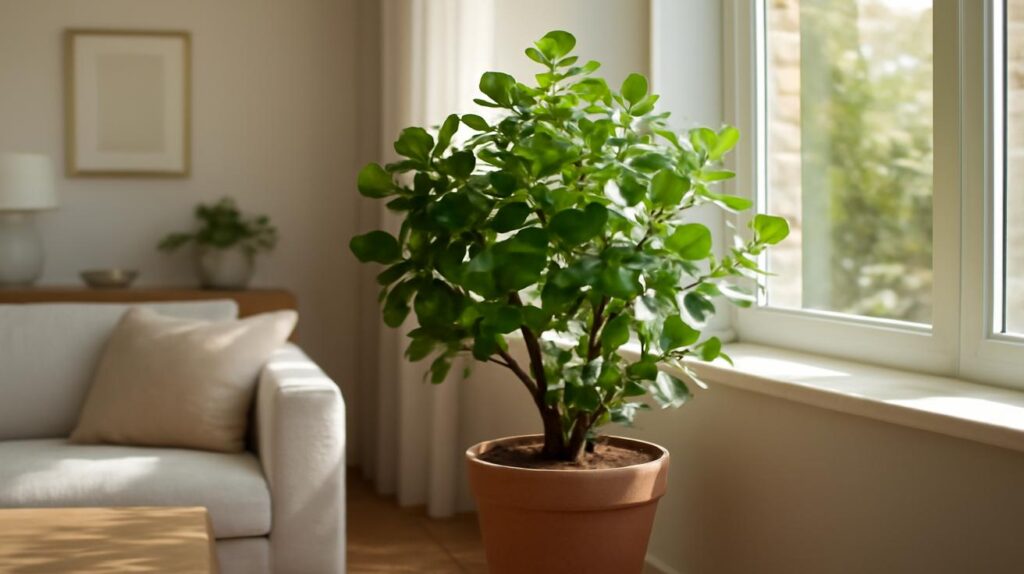
Now blend that with the wealth zone. Your ideal arrangement might look like this: a small table tucked into the back left area of your living room, a sheer curtain softening the sun, your jade plant perched in a simple pot. Close enough to the window to glow. Far enough to feel safe.
A Tiny Table of Jade-Plant Sweet Spots
Here’s a quick, mobile-friendly snapshot of where your jade might feel—and look—its best, depending on your home layout and habits:
| Location Idea | Why It Works |
|---|---|
| Back-left corner of a sunny living room | Activates the wealth area in a social, lively space; plenty of indirect light. |
| Back-left of a home office desk (facing the room) | Links prosperity energy with your work, focus, and income-generating activities. |
| Back-left of a bright dining area | Connects nourishment, family gatherings, and abundance in one spot. |
| Entry-adjacent console table, slightly deeper into the home | Greets you with growth energy as you arrive, still aligned with deeper wealth areas. |
| Back-left corner of a sunroom or bright hallway | Keeps the plant in consistent light while still energizing the wealth corner zone. |
Wealth, Yes. But Also Harmony and Happiness.
Feng Shui can sometimes get flattened into a single glittery promise: more money. But the tradition, at its heart, has always been about balance—about the way energy circulates, how it feels to move through your home, how space supports you rather than drains you. When you tuck a jade plant into its ideal corner and let it take root there, you’re not just placing a “wealth magnet.” You’re quietly tuning the emotional tone of your home.
Think about how it feels when you first wake up and pad barefoot across the floor, coffee mug warm in your hands. Your eyes skim the familiar shapes of the room: the couch, the books, a picture frame. Then they rest on this small tree of coins in the corner, its leaves glossy in the slanting light. You remember to water it once a week, to brush dust from its leaves, to turn the pot slightly so it grows evenly. Without realizing it, you’ve created a ritual of care—and that ritual loops back into you.
Financial abundance without emotional harmony feels hollow. A jade plant—especially when placed with intention—quietly knits these ideas together: growth that’s slow, real, and steady; beauty that doesn’t shout; life that expands in quiet increments. Over time, the plant becomes a living barometer of your home’s mood. Is it thriving or struggling? Overwatered in panic? Neglected during periods of stress? It mirrors the pace at which you’re moving, the attention you can spare, the gentleness you allow yourself.
The Subtle Shift Feng Shui Aims For
When people talk about a “Feng Shui cure” like a jade plant, what they’re often pointing to is not just an object, but a shift in awareness. You place the plant in a meaningful spot. You begin noticing that corner more often. You tidy the bills near your desk. You clear clutter from the floor. You open the curtains a little wider. You make a small repair you’ve been avoiding. Prosperity doesn’t magically fall from the sky, but you begin to move through your space—and your life—with a little more respect, a little more clarity.
In this way, the jade plant becomes a quiet promise in the room: that growth is possible, that care matters, and that abundance can be something you build with your own two hands, one watered root and one intentional choice at a time.
When Life (or Floor Plans) Don’t Match the Ideal Map
Of course, not every home cooperates with tidy Feng Shui diagrams. Maybe your back-left corner is a windowless storage nook, a bathroom, or the cramped side of a galley kitchen. Maybe that corner sits precisely where your cat has declared sovereignty, and any plant placed there is doomed. The good news is that Feng Shui, when practiced with a bit of softness, is less about rigid rules and more about intelligent adaptation.
If the literal back-left corner of your home just doesn’t work, you can get creative without losing the spirit of the practice. One option is to apply the wealth area to a single room instead of the entire home. Stand in the doorway of a room that feels central to your life—your living room, your office, even your studio space. Again, look toward the interior of the room and find the back-left zone of that space. This mini-Bagua approach lets you choose a spot that’s energetically aligned and practically workable.
Another option is to prioritize two criteria over everything else: vitality and visibility. Vitality means the plant should be where it can actually grow (good light, reasonable temperature, no drafts). Visibility means it should land somewhere you’ll see it often enough to form a relationship with it—in the path of your daily movements, not banished to a forgotten ledge.
If you’re torn between the “perfect” Feng Shui corner and the place where the jade actually thrives, always choose life. The philosophy behind Feng Shui is to support living energy; a struggling, leggy plant suffocating in a dark wealth corner does the opposite of what the tradition intends.
Common Placement Pitfalls (And Gentle Fixes)
While there’s room to improvise, a few placement choices can subtly work against the mood you’re trying to cultivate. For example:
- Right next to a trash can or clutter pile: This can symbolically tangle growth energy with waste and stagnation. Fix: declutter the area or shift the plant a few feet away to a cleaner, calmer surface.
- On the floor in a high-traffic hallway: Here the plant can feel vulnerable, kicked, or overlooked. Fix: raise it onto a stand, small table, or wall shelf so it feels valued and protected.
- In a dark corner out of sight: Hidden energy is rarely supportive. Fix: move it where you naturally pass and glance, even if that means shifting wealth activation to a single room instead of the whole floor plan.
- Directly above aggressive electronics tangles: A cacophony of wires can feel chaotic. Fix: tidy cords, or choose a more serene surface like a wooden sideboard or a simple desk corner.
Each tiny adjustment is like tuning a stringed instrument, tightening or loosening just enough until the note feels right in your chest.
Making the Jade Plant Part of Your Story
The most powerful thing about placing a jade plant in your home isn’t the folklore, the wealth associations, or even the light level. It’s the meaning you decide to weave into that daily encounter with green leaves and quiet growth.
On certain mornings, you might pause beside the plant in its back-left corner, fingertips lightly brushing a leaf as you pass. Maybe you use that moment to name one kind of “wealth” you’re grateful for that has nothing to do with numbers: a steady friendship; a warm bed; time to read; the gentle weight of a pet at your feet. On other days, the jade might be your reminder to pay a bill on time, to ask for a raise, to price your work more fairly. Wealth becomes less an abstract dream and more a series of practical, doable steps—always paired with an inner sense of enoughness.
As the plant grows—thickening its trunk, branching slowly, leaves multiplying like a green constellation—you might find that your idea of prosperity grows too. It might come to include harmony at home, calmer conversations around money, a feeling of safety in your body when you open your banking app. The plant doesn’t do any of this for you. But it stands there in its chosen spot, season after season, a constant, living reminder that slow growth is still growth, and that tending something small can shift the whole atmosphere of a place.
In the end, that exact spot everyone talks about—the back-left wealth corner bathed in gentle light—is less a secret code and more an invitation: to notice your surroundings, to place things with intention, to remember that the journey toward more wealth, more harmony, more happiness at home might just begin with a single pot of living green, set down on a table, and truly seen.
FAQ
Does my jade plant have to be in the exact back-left corner of my entire home?
No. That’s the traditional wealth area, but if that spot is dark, cramped, or impractical, use the back-left area of a key room instead (like your living room or office). Prioritize good light and a place where you’ll see and tend the plant regularly.
Is it okay to put a jade plant in the bedroom?
Many Feng Shui practitioners prefer keeping strong “active” symbols of wealth outside the bedroom to preserve restfulness. If your bedroom is the only bright area, you can still keep the jade there, but choose a calm, uncluttered corner and let it symbolize overall wellbeing rather than just financial gain.
How much light does a jade plant really need?
Jade plants do best with bright, indirect light for several hours a day. An east-facing window or a spot a bit back from a sunny south or west window usually works well. If the plant gets leggy or pale, it likely needs more light; if leaves scorch or turn red-brown at the edges, it may need softer, filtered light.
Can I place more than one jade plant for extra luck?
You can certainly have multiple jade plants, but quantity isn’t the main driver of energy. One healthy, well-cared-for plant in a meaningful spot is more supportive than several neglected ones. If you like the look of a group, keep them all in good light and avoid cluttering the space.
What should I do if my jade plant starts looking unhealthy?
First, check basics: is the pot draining well, are you overwatering, and does it get enough light? Most jade problems come from too much water and not enough brightness. Trim damaged leaves, let the soil dry out between waterings, and consider shifting the plant to a brighter, calmer spot. From a Feng Shui perspective, a thriving plant is more aligned with abundance than a struggling one, so support its health first, symbolism second.