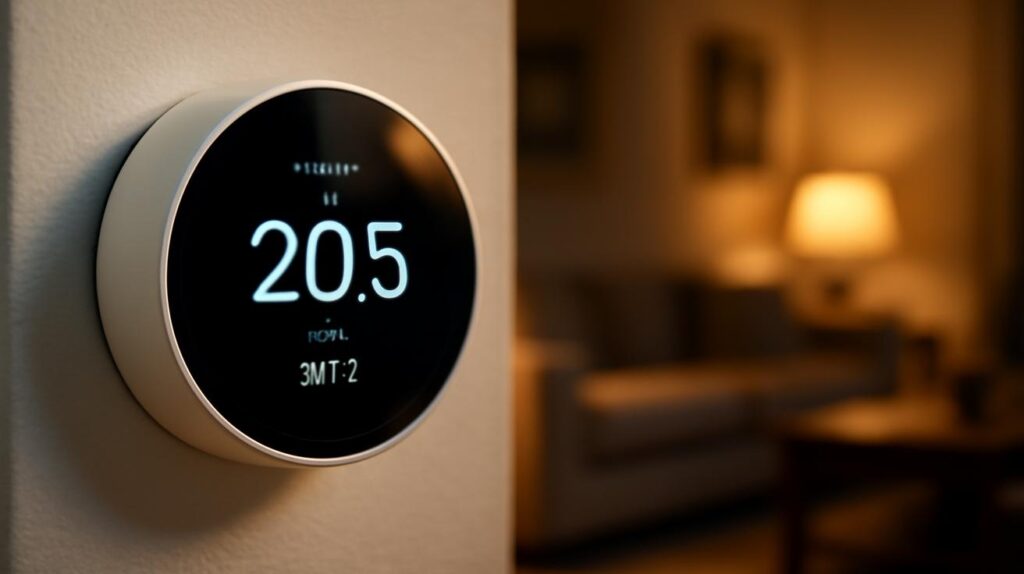
The first cold night of the season always sneaks up on you. One evening the air is just pleasantly crisp, and the next, you’re hugging your mug of tea like it’s a life raft, wondering if your toes have permanently turned to ice. You pad over to the thermostat, thumb hovering in mid-air, and that old phrase echoes in your mind: “Keep it at 19 degrees. Be sensible. Save energy.”
Only this time, your body has other ideas. Nineteen suddenly feels less like “sensible” and more like “slightly heroic.” You bump it up a notch. Then another. Somewhere between a shiver and a sigh of relief, you realise something: the 19 °C rule doesn’t feel like it fits your life anymore—if it ever really did.
As it turns out, experts are beginning to agree with you.
The Myth of the Magic Number
For years, 19 °C was treated like a magic number. Governments recommended it. Environmental campaigns repeated it. Friends compared settings like some kind of stoic winter badge of honour: “You keep yours at 21? I’m on 19. With a wool jumper.”
But the more carefully researchers have studied how we actually live, work, and feel in our homes, the clearer it’s become: there is no one-size-fits-all temperature. Bodies are different. Buildings are different. Mornings are not the same as evenings, and sitting still at a laptop is a world away from briskly hoovering the hallway.
Thermal comfort experts now talk less about a single “correct” temperature and more about a band of comfort—an adaptable range that shifts with age, health, activity levels, and even mood. It’s not just about what’s tolerable; it’s about what’s genuinely healthy and sustainable across a winter, not merely survivable on a single chilly afternoon.
Behind the scenes, research into cold-related health risks has been quietly rewriting the rules. Older advice leaned heavily toward energy efficiency alone; newer guidance tries to balance efficiency with wellbeing, productivity, and long-term health. The old 19 °C mantra was simple. The real story, it turns out, is much more human.
The New Goldilocks Zone: What Experts Now Recommend
So if 19 °C is no longer the answer, what is? Instead of one rigid target, specialists in indoor climate and public health increasingly point toward a narrow “Goldilocks zone” for most healthy adults: around 20–22 °C for living spaces, with some nuance built in.
Within that band, a sweet spot is emerging—about 21 °C—for rooms where you spend a lot of time sitting, working, or relaxing. At this temperature, most people feel comfortable in light indoor clothing without piling on layers, and the body doesn’t need to work too hard to keep its core warm. For bedrooms, a slightly cooler range, roughly 17–19 °C, still makes sense for good sleep, provided the bed itself is cozy.
To make this more tangible, here’s a quick comparison, not as strict rules but as a living, breathing reference point you can adjust to your own life:
| Space / Situation | Old 19 °C Rule | Current Expert Guidance |
|---|---|---|
| Living room (evening, sedentary) | ≈ 19 °C for “efficiency” | ≈ 20–22 °C, with ~21 °C as a comfort target |
| Home office / study | Often kept around 19 °C | ≈ 20–22 °C to support focus and avoid chill |
| Bedroom (night) | 19 °C, sometimes lower | ≈ 17–19 °C with warm bedding |
| Homes with older adults / health issues | 19 °C across the board | ≈ 21–23 °C in main living areas to reduce risk |
| Short absences (few hours) | Turn down sharply to save energy | Reduce by 2–3 °C, don’t let rooms get cold-soaked |
Those extra couple of degrees might not sound dramatic, but your body notices. Your shoulders drop. You stop tensing against the air. Your fingers move more easily across the keyboard. It’s the difference between just coping and actually feeling at ease in your own home.
Why 21 °C Feels So Different from 19 °C
On paper, 2 degrees doesn’t look like much. On skin, it’s a small revolution.
Thermal comfort is a delicate conversation between your environment and your body. Air temperature is only one voice in the choir. There’s what you’re wearing, how humid the air is, the temperature of the walls and windows around you, your activity level, your circulation, even how much sleep you got last night. But air temperature is the dial we all have our hands on, so that’s where the story usually starts.
At around 19 °C, a healthy, well-dressed person can usually manage, especially if they’re moving around. But sit at a desk for a couple of hours at that temperature and something changes. Blood flow to the extremities reduces slightly as your body works to protect its core. Fingers and toes start to cool. Muscles tighten just a touch. You can ignore it, but you’re never quite relaxed. Over time, that low-level stress can leave you more tired, more distracted, and, for some people, more prone to aches or respiratory problems.
Shift up to around 21 °C, and that background effort eases. You’re no longer asking your body to fight a tiny daily battle just to stay warm. For older adults, children, or anyone with heart or lung conditions, that battle isn’t tiny at all. Cold indoor air has been linked to higher blood pressure, increased risk of respiratory infections, and worsening symptoms in those with cardiovascular issues. That’s part of why updated public health advice tends to be less strict about holding the line at 19 °C and more insistent on making sure vulnerable people in particular are kept warm enough.
At the same time, experts are not recommending you swing to tropical. Above the low twenties, the balance tips in the other direction: dry throats, sluggishness, heaviness in the air, spiralling bills. Comfort turns into stuffiness. The art lies in staying within that calm middle band—warm enough that your body can relax, cool enough that your home and your budget don’t overheat.
Comfort, Cost, and Carbon: Walking the Tightrope
If you’ve ever watched your heating bill and your climate conscience wrestle in your head, you know this isn’t just a story about comfort. Every thermostat nudge has consequences. The old 19 °C slogan gained traction because it made a decent dent in energy use and carbon emissions, especially in leaky homes with old boilers or single glazing.
The physics is simple: for most heating systems, each degree you turn down can save a noticeable slice of energy over a season. But the inverse is true too—raise the temperature and your usage climbs. For a long time, the conversation stopped there. Less heat equals less carbon. The end.
What we missed was the hidden cost of chronic underheating: more doctor’s visits for chest infections, more falls in cold homes, more time off work from seasonal illness, more strain on health systems. At a personal level, there’s the cost of feeling constantly a bit miserable in the place that’s supposed to restore you.
Newer expert advice tries to lay all of these costs on the table at once. The emerging consensus is something like this: aim for the lowest temperature that keeps everyone in the home genuinely comfortable and healthy, then use every other trick you can to reduce your energy demand—insulation, draught-proofing, smart controls, zoning—rather than asking your body to make up the difference.
In practical terms, that might mean finding that 20–21 °C feels like the point where you no longer think about being cold, then working on everything around that number. Seal the gap under the front door. Add a rug over the bare floorboards. Use thick curtains at night. Bleed the radiators so the heat they provide is used well. The target temperature is just one part of the system, not the whole strategy.
Designing a House That Meets You Halfway
Walk into two homes, both set to 21 °C, and they can feel completely different. In one, the air is warm but your back is chilled by a cold wall, and the window beside you seems to radiate frost. In the other, the warmth feels gentle and even, as if the whole room is participating in keeping you comfortable. This is the difference between heating air and creating a truly warm space.
Thermal experts talk about “mean radiant temperature” to describe how warm the surfaces around you are. Your body senses that almost as much as it senses the air itself. A slightly cooler room with warm walls, floors, and furnishings can feel cozier than a warmer room with icy surfaces. That’s one reason underfloor heating feels so luxurious: it invites your skin, not just your lungs, into the experience.
Most of us don’t live in perfectly insulated eco-homes with silent underfloor pipes humming beneath oak boards. We live in city flats with a mysteriously cold corner, or older houses where the hallway seems to leak weather from the front step. But even in those spaces, the new thinking about indoor temperature gives you permission to design comfort rather than just chase numbers.
Maybe that means focusing heat where you actually live—your living room, your bedroom—instead of trying to drag every hallway and spare room up to the same level. Maybe it means accepting that your thermostat setting is a starting point, not a measure of moral virtue. The real question isn’t “Can I endure 19 °C?” It’s “How can I shape this home so 20–21 °C feels efficient, comforting, and kind to both my wallet and my lungs?”
Finding Your Personal Winter Setting
What experts recommend is a range. What you settle on inside that range is a conversation between your space, your body, and your routines. The end of the 19 °C rule doesn’t mean no guidance; it means the guidance now asks you to participate.
A good way to start is to treat one chilly week as an experiment. Begin at about 21 °C in your main living space and notice—not once, but across a few days—how you feel. Are you always reaching for a blanket? Still tensing your shoulders? Or are you slipping into a state where the temperature stops being something you think about at all? That absence of awareness is a strong sign you’re in your comfort band.
Then, try nudging the thermostat down by half a degree or a degree for a day or two. Layer up sensibly. Pay attention: does your concentration dip? Are your hands colder at the keyboard? Do you get up to move around more because you can’t quite settle? Those clues tell you where your personal line lies—often slightly different for different members of the same household.
In bedrooms, experiment in the opposite direction. Let the air be cooler, but upgrade the cocoon instead: thicker duvet, an extra throw, maybe warm socks or a hot water bottle on the coldest nights. Many people find they sleep more deeply when the room itself is cooler but the bed is unmistakably warm. Here, the recommended 17–19 °C is less about frugality and more about giving your body the conditions it loves for rest.
If you share a home with someone whose comfort band is different from yours—say, a partner who runs hot and a child who always seems to feel the cold first—that’s where zoning, smart valves, and simple habits like closing doors become powerful. The living room might anchor at 21 °C, a bedroom at 19 °C, and a little study at 20 °C. Instead of one number to rule them all, you create a small landscape of microclimates under the same roof.
The Quiet Future of Winter Indoors
Stand outside on a frosty evening and walk down a residential street. Behind each lit window, someone is having their own conversation with the cold. The student revising under a blanket at 20 °C. The elderly couple, health visitor’s advice printed on a leaflet by the kettle, keeping their living room at a steady 22 °C. The young family nudging the thermostat to 21 °C after a long battle with wheezy midnight coughs in a too-cold nursery.
The era of narrow slogans—19 °C for everyone, all the time—is fading. In its place is something less tidy but more honest: a recognition that our homes are ecosystems, and that warmth is not a luxury so much as a basic ingredient of health and human dignity in a cold climate.
Experts haven’t abandoned the need to reduce emissions or to use energy wisely. If anything, that need has become more urgent. But they’re increasingly clear that the solution cannot rest on persuading millions of households to live at the edge of their comfort for months on end. Instead, the future of winter indoors looks like better buildings, better controls, better understanding of how our bodies respond to cold—and household decisions that are informed, not guilt-ridden.
So the next time you feel that little stab of doubt as you tap the thermostat above 19 °C, remember: the rulebook has changed. The question is no longer “Am I failing some invisible standard?” but “Is this temperature supporting my health, my focus, my sleep, and the people who share this space with me?”
Maybe your answer will land on 20 °C. Maybe 21 °C. Maybe it will shift with the month, with your tasks, with who is home that day. That flexibility isn’t weakness; it’s wisdom. Winter is not a test of endurance. It’s a season to live through well.
Frequently Asked Questions
Is 19 °C unsafe now?
For many healthy adults who are active and well-dressed, 19 °C is not inherently unsafe, especially for short periods. The issue is that long-term living at that temperature, particularly while sedentary, can be uncomfortable and, for vulnerable people, potentially risky. Updated guidance leans toward around 21 °C in main living areas as a healthier target.
What temperature should I keep my home if I have older relatives or health issues?
Experts generally suggest keeping main living spaces around 21–23 °C for older adults, young children, or people with heart or lung conditions. Bedrooms can be a little cooler, but it’s important that the person feels comfortably warm and is not regularly shivering or bundled in excessive layers just to cope.
Will increasing my thermostat to 21 °C dramatically raise my bills?
Raising the thermostat by a degree or two can increase energy use over a season, but the exact impact depends on your home’s insulation, heating system, and habits. You can often offset the extra cost by improving draught-proofing, using zoning, closing doors, and heating only the rooms you use most.
Is it better to keep the heating on low all the time or switch it on and off?
In most homes, using a timer and letting the house cool slightly between heating periods is more efficient than keeping the heating on constantly. However, letting the temperature drop too low can make the system work harder to reheat cold-soaked walls and floors. A moderate setback of around 2–3 °C during absences is usually a good compromise.
What if I still feel cold at 21 °C?
Everyone’s comfort threshold is different. If you feel chilly at 21 °C, first check for draughts, cold surfaces, or thin clothing. Adding a rug, closing curtains at night, or wearing a warmer layer can make a big difference. If you’re still uncomfortable, it’s reasonable to nudge the temperature up slightly; your wellbeing matters as much as the number on the dial.