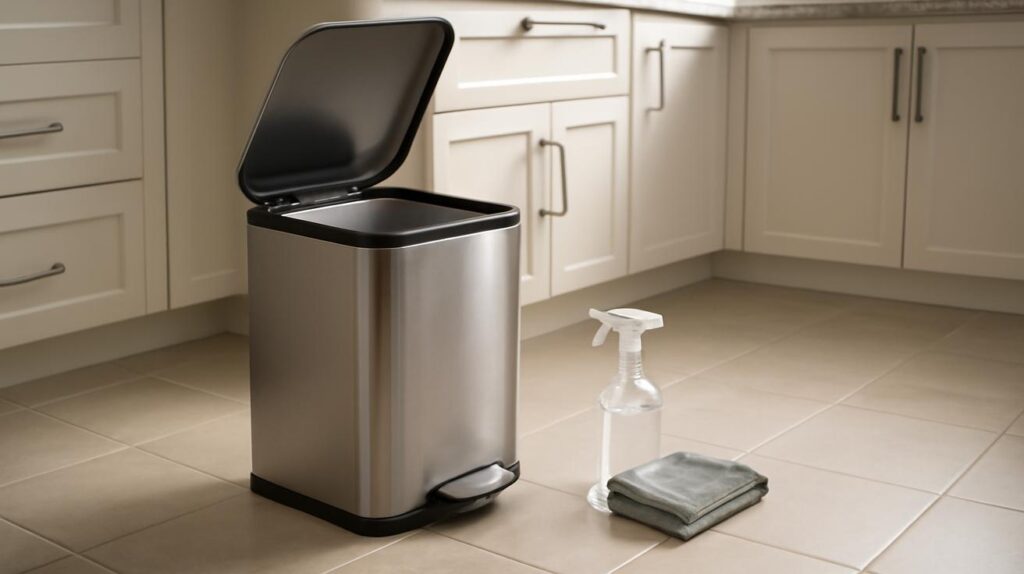
The smell usually hits first. Not the obvious sour reek of a full trash bag, but that faint, unsettling note that lingers even after you’ve taken the garbage out. You open the cabinet under the sink or step close to the bin by the fridge, and there it is—a thin, invisible cloud of “something’s not right.” You scrub the counters, you mop the floor, you light a candle that smells like a mountain cabin after rain, yet your kitchen never quite reaches that deep, easy-clean feeling. The culprit is almost always the same: the trash area. Not the trash itself, but the quiet ecosystem of drips, crumbs, condensation, and forgotten stickiness that gathers around it.
The Hidden World Around Your Trash Can
Spend just thirty seconds looking closely at your kitchen trash area and you notice it: the faint ring on the floor where the bin always stands. A dull mark on the wall at the bin’s height. A mysterious sticky patch on the cabinet door. Maybe a fruit fly lifting lazily into the air when you move the lid. The trash bag might be fresh, but the space around it tells a longer story.
Most of us respond to this realization in one of two ways. We either pretend we didn’t see it and quickly shut the door—or we reach for the harsh stuff. The heavy-duty degreasers, the scrub sprays with warning labels, the eye-watering bleach that promise to “kill 99.9% of everything” but leave the kitchen smelling like a public pool.
There’s another way, though. A quieter way, one that smells less like a lab and more like a clean, sunlit morning. It doesn’t require expensive products, and it doesn’t leave you coughing over chemical fumes. It’s about using what you already have, combining gentle ingredients in smart ways, and putting a simple rhythm in place that keeps the trash corner from ever becoming a real problem again.
Before we dive into the “how,” picture this: it’s early evening, dinner’s simmering on the stove, and someone tosses vegetable scraps into the bin. The lid closes with a soft click. No smell escapes. The cabinet around it is dry and smooth, the floor beneath is clean. You don’t think about your trash area at all—and that’s the goal. Not perfection. Just making this little corner of the kitchen quietly, consistently easy.
The Quiet Power of Simple Ingredients
Open your pantry, and you probably already own the best “cleaning products” for your trash area. They just don’t wear loud labels or neon colors. The easiest way to keep the zone around your garbage fresh doesn’t come in a single bottle—it comes from pairing a few familiar things with the right habits. Here are the unsung heroes:
- Baking soda – a gentle abrasive and natural deodorizer that soaks up smells like a sponge.
- White vinegar – cuts grease, dissolves mineral deposits, and helps neutralize odors.
- Castile soap or mild dish soap – lifts grime without leaving heavy residues.
- Hot water – your simplest degreaser and dissolver of gunk.
- Lemon peels or citrus rinds – add a bright, natural scent.
- Reusable cloths or old T-shirts – kinder on surfaces and the planet than endless paper towels.
When you combine these, they create a sort of “gentle cleaning tool kit” that works like a quiet background system. No stinging eyes, no plastic-heavy bottles lined up under the sink. Just a few staple ingredients that you can mix and match for every kind of trash-area mess—from the slow creep of sticky grime to the dramatic “raw chicken juice somehow escaped the bag” emergency.
| Need | Best Simple Ingredient | How To Use |
|---|---|---|
| Deodorize bin & cabinet | Baking soda | Sprinkle lightly on bin bottom or place in an open jar nearby. |
| Cut grease & sticky spills | White vinegar + hot water | Mix 1:1 in a spray bottle; wipe with cloth. |
| Regular wipe-down | Castile or dish soap | Few drops in a bowl of warm water for daily or weekly cleaning. |
| Refresh lingering odors | Lemon or citrus peels | Place a few dried peels under the liner or in a small dish nearby. |
| Tackle stubborn grime | Baking soda paste | Mix with a splash of water; scrub gently; rinse. |
The magic isn’t that these ingredients are powerful on their own—it’s that they’re powerful enough, without being harsh. When you’re cleaning a space you open dozens of times a day, where kids and pets and food are always nearby, that “gentle but effective” line matters.
The 10-Minute Reset: A Simple Trash-Area Ritual
There’s something oddly satisfying about giving your trash zone a quick reset and watching it transform from a slightly suspect corner to a clean, quiet part of the room. Set a timer for ten minutes, put on a podcast or music, and walk through this easy ritual:
1. Start with the Empty
Wait until the trash bag is already full and ready to go. Tie it up and take it out. Don’t rush to put a new one in yet—this is the rare moment when you see the bin bare. If any crumbs, liquid, or mystery specks are clinging to the bottom, just tap them into the sink or compost, or vacuum them up with a handheld vacuum.
2. Give the Bin a Quick Wash
Fill your sink or bathtub with a few inches of warm water. Add a small squeeze of dish soap or a teaspoon of castile soap. If your bin fits, lower it in and let it soak for a minute or two; if not, use a cloth dipped in the soapy water to wipe every surface—inside, outside, around the lid, and especially the rim where leaks tend to settle.
For stubborn spots, dip your cloth in a bit of baking soda and use it as a soft scrub. It’s surprisingly effective at lifting old coffee drips, sticky juice trails, or oily marks without scratching plastic or metal.
3. Rinse, Dry, and Deodorize
Rinse the bin with clean water—just enough to remove the soap. Then, the step most people skip: dry it well. A dry bin is much less inviting to bacteria, mold, and odor. Use a clean towel or an old T-shirt rag. Once dry, sprinkle a spoonful of baking soda into the base, or tuck it into a small scrap of breathable fabric and tie it like a tiny sachet.
4. Wipe the Surroundings
Now look at the area around the bin: the floor, the inside of the cabinet door, the wall behind it, or the side of the fridge it leans against. Mix equal parts white vinegar and warm water in a bowl or spray bottle. Use a soft cloth to wipe down every surface in the “splash zone” of the trash.
The vinegar solution lifts grease and sticky residues and dries quickly without a chemical smell. If you leave the cabinets open or the bin pulled out for a few minutes, you’ll notice the air begins to clear almost immediately.
5. Line Smarter, Not Harder
Before you put in a new trash bag, consider this small trick: lay a sheet of old newspaper or a scrap of brown paper bag at the bottom of the bin. It catches tiny leaks and crumbs, making the next clean-up easier. If you have lemon or orange peels, let them dry out a bit, then toss a few between the paper and the bag. It won’t smell like a perfume ad—but it will quietly keep mustiness at bay.
Slide the fresh bag in, pressing it gently into the corners so it won’t slip. And that’s it: 10 minutes, one relaxed loop from bin to cabinet to floor, and your trash area is reset.
Small Habits That Keep the Smell Away
The easiest cleaning is the cleaning you barely have to do at all. Once your trash area has had its “deep-ish” reset, the goal is to keep it that way with tiny habits that take seconds, not minutes. Think of them as simple nudges that prevent the slow build-up of stink and stickiness.
- Wipe once a day. When you finish the dinner dishes, swipe the top rim of the trash bin and the nearby floor or cabinet with your dishcloth or sponge. One quick pass while the cloth is already in your hand.
- Deal with leaks immediately. If you notice a wet spot under or around the bin, don’t tell yourself you’ll handle it “later.” A quick blot with a cloth and a splash of vinegar-water now saves you a mystery smell in two days.
- Go smaller on the bin if you can. A giant trash can that takes days to fill becomes a fermentation vessel. A slightly smaller bin that fills and empties more often smells better with less work.
- Separate the real stinkers. Food scraps, meat packaging, fish bones, and anything likely to rot quickly can be wrapped in newspaper, placed in a compost caddy, or taken out sooner. The less decomposing matter sits in your main bin, the easier everything is to keep fresh.
- Let things dry first. If you toss wet coffee grounds, soggy tea bags, or dripping leftovers directly into the bag, they speed up the smell cycle. Let them drain for a moment in the sink or on the edge of the compost before tossing.
These small acts don’t feel like “cleaning sessions.” They feel like simple, almost reflexive gestures. Over time, they create something that feels more valuable than a once-a-month deep scrub: a trash area that never really becomes a problem in the first place.
When Things Get Really Gross (And How to Recover Gently)
Every kitchen has that day. The bag ripped on the way out. Someone forgot about a container of leftovers until it was more science experiment than food. A summer heatwave turns three days of garbage into something…bold. When the trash zone crosses from “a little stale” to “truly gross,” you don’t actually need harsh products to restore peace—you just need a clear, calm plan.
Step 1: Air It Out
Open a window if you can. Pull the bin outside for a few minutes if that’s possible. Let fresh air move through the space. Odors always feel less overwhelming when there’s a bit of breeze involved.
Step 2: Dry First, Then Clean
If there are visible spills or puddles, blot them up with old towels or paper first. Trying to mop or wipe around a big liquid mess only spreads it. Once the worst is absorbed, then go in with your warm water and soap, or vinegar-water mix.
Step 3: Use a Baking Soda Paste
For places where the smell seems to cling—plastic corners, textured surfaces, cabinet interiors—mix baking soda with just enough water to make a thick paste. Spread it over the area like you’re frosting a cake. Let it sit for 10–15 minutes, then wipe away with a damp cloth. The paste pulls odors and residues out of tiny crevices in a way regular wiping can’t.
Step 4: Double Rinse the Bin
For an especially gnarly bin, wash it once with warm soapy water, rinse, then go over it again quickly with a vinegar-water mix. The soap handles grime; the vinegar neutralizes smells. Dry it thoroughly afterwards—odor loves moisture.
Step 5: Reset With Intention
Once everything is clean, leave the cabinet doors open or the bin lid off for a short while so the space dries completely. Sprinkle baking soda in the bin base, tuck in a few dried citrus peels, and line with fresh paper and a new bag. There’s something quietly empowering about reclaiming this small corner after a messy episode—it reminds you that even the grossest situations are reversible with calm, simple tools.
Making Your Trash Area Part of a Kinder Kitchen
Cleaning the trash zone without harsh products isn’t just about avoiding bleach and chemical fumes. It’s part of a bigger shift toward a kitchen that feels calmer and more humane—for you, for the people you live with, and for the planet.
When you stop relying on harsh cleaners, you start to notice how little you actually need. A bag of baking soda lasts months. A bottle of vinegar does double duty for cleaning and cooking. A block of castile soap sits quietly by the sink, ready for dishes, counters, and trash bins alike.
You also start to notice how connected everything is. When you separate food scraps or compost them, the trash smells less. When you use reusable cloths instead of endless paper towels, the under-sink cabinet stops overflowing with packaging. When your cleaning routine is simple and gentle, you’re more likely to do it regularly—not just when things get bad.
Most of all, a trash area that doesn’t stink or feel sticky changes how the whole kitchen feels. Suddenly, opening that under-sink cabinet isn’t a chore; it’s just another motion among many in the rhythm of making coffee, rinsing fruit, cooking dinner. There’s an ease that settles into the room when even the “ugly” corners are quietly taken care of.
You don’t need a shelf full of neon bottles to get there. You just need a few familiar ingredients, ten minutes here and there, and a willingness to pay attention to the small, often overlooked places. Over time, the trash area stops being the source of the mystery smell and becomes something else entirely: just another well-loved, gently cared-for part of your kitchen.
FAQ
How often should I deep-clean my trash can?
For most households, a proper wash every two to four weeks is enough, as long as you’re wiping the surrounding area weekly and dealing with leaks or spills right away. If you cook a lot of fresh food, especially meat or fish, cleaning more frequently can help keep odors away.
Can vinegar and baking soda be used together?
They can, but they’re usually more effective when used separately. Baking soda is great as a scrub or dry deodorizer; vinegar works best as a liquid cleaner and rinse. When you mix them, they fizz and neutralize each other, which is fun but less powerful for cleaning.
What if I can’t stand the smell of vinegar?
You can dilute it more (for example, 1 part vinegar to 3 parts water) and add a few drops of a gentle essential oil, or use mild dish soap and warm water for most daily cleaning. The vinegar smell also fades quickly as it dries, especially if there’s some airflow.
Is it okay to put baking soda directly in the trash bag?
Yes. You can sprinkle a small amount into the bottom of a new bag or directly into the bin before you add the bag. Just keep it light—a tablespoon or so is usually enough to help absorb odors without making a mess.
How do I keep fruit flies away from the trash?
Fruit flies love exposed, moist food scraps. Keep your bin covered, empty it more often in warm weather, and try storing very fragrant scraps (like overripe fruit peels) in a sealed container or compost caddy. Wipe the bin rim and nearby surfaces daily to remove sticky spots that attract them.
Can I use these methods on stainless steel bins?
Yes. Mild dish soap, warm water, vinegar-water, and baking soda paste are all safe for stainless steel. Always use a soft cloth, wipe in the direction of the grain, and dry thoroughly to avoid water spots.
Do I need special “trash deodorizer” products?
No. Baking soda, a clean bin, dry surfaces, and regular emptying handle most odor issues. If you want extra freshness, dried citrus peels or a small open jar of baking soda near the trash work just as well as store-bought deodorizers, without extra chemicals or plastic.