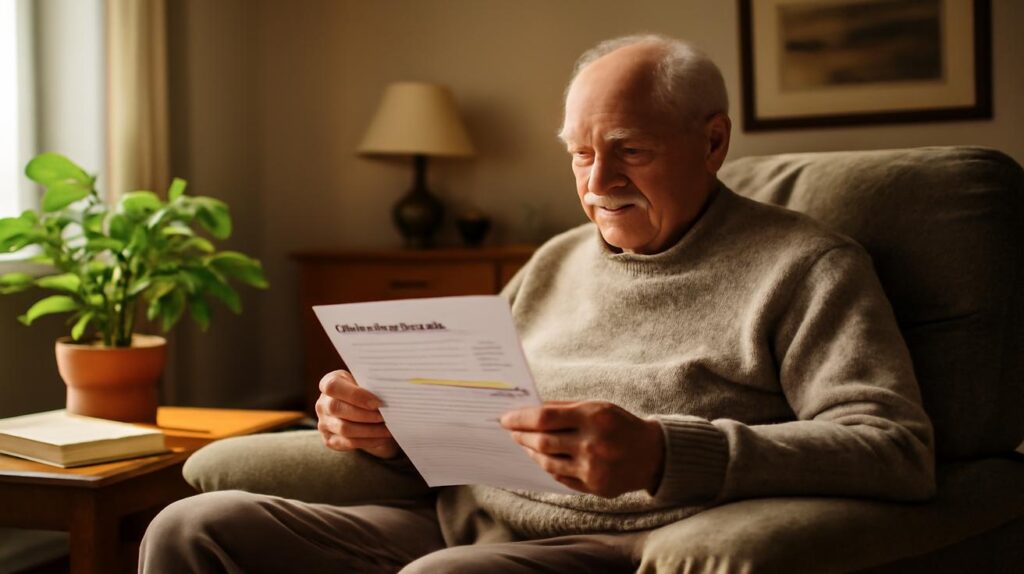
The kettle clicks off with a soft sigh, and the tiny kitchen fills with the warm, toasty smell of tea and slightly burnt toast. Outside the window, a single sparrow hops along the balcony rail, inspecting a pot of herbs that has seen better days. In the quiet of a Tuesday morning, the world feels unhurried, as if time has finally loosened its grip. This is what you once imagined retirement might feel like: peaceful, unpressured, yours. But as you stir a spoonful of honey into your mug and glance at the unopened envelope from your pension provider, a different feeling creeps in—one that sits just behind your ribs. Will it be enough? Am I going to be okay… on my own?
The Quiet Mathematics Behind a Peaceful Life Alone
Living alone in retirement has its own soundtrack. There’s the soft tick of the clock, the whirr of the fridge, the low hum of a distant lawnmower. There’s also the quiet click of mental arithmetic you keep doing in your head: rent plus utilities, groceries plus bus fare, a birthday gift for a grandchild, the price of heating in winter. The numbers march across your mind in a steady, anxious rhythm.
When people talk about “the ideal pension amount,” it often sounds theoretical, like it belongs to someone with spreadsheets and a financial advisor on speed dial. But in reality, it’s about moments like this: standing barefoot in your kitchen, wondering not about abstract percentages, but about whether you’ll be able to keep the home you love, visit the places that feed your soul, and say “yes” to life more often than “I can’t afford it.”
Before we talk numbers, imagine the kind of life you actually want. Not a fantasy, but a grounded, breathable life. You wake up without an alarm. Your home is modest but warm and filled with things that hold stories: a chipped mug from a long-ago holiday, a faded photo on the wall. You can cover your bills without flinching when they arrive. You can meet a friend for coffee without scanning the menu for the cheapest option. You can replace an old pair of shoes without sacrificing your grocery budget. Maybe, once a year, you can get away for a few days—by the sea, in the hills, or to see someone you love.
That, in essence, is what an “ideal pension amount” is trying to protect: a life that feels safe and still has room for joy.
So, What’s the “Ideal” Number for a Solo Retiree?
Let’s get practical. When you live alone in retirement, there’s no one to split the rent, the electricity, or the unexpected vet bill for the cat. The responsibility is yours alone, but so is the freedom. To navigate that, you need a number—something you can point to and say, “If I’m near this, I’m likely going to be okay.”
Because costs vary wildly by country, city, and lifestyle, think in terms of ranges rather than a single “magic” amount. For a single person living alone in a modest but comfortable way in many urban or suburban areas, a realistic ideal monthly pension income (from state, workplace, and private sources combined) often falls somewhere around this kind of pattern:
- Basic but tight comfort: enough to pay bills, buy decent groceries, and handle occasional small extras—but little room for travel or big surprises.
- Comfortable and relaxed: daily needs covered, some savings for emergencies, and regular treats like meals out, hobbies, and small trips.
- Generous single lifestyle: more travel, more flexibility, the ability to help family or indulge in bigger hobbies or projects.
Of course, your currency and actual figures will differ, but the shape of the need remains remarkably similar from place to place. You’re not just chasing a number; you’re chasing a feeling: I can breathe. I’m not constantly on edge.
To move from vague comfort to clarity, you need to look gently but directly at your own living costs. And that starts with a quieter, more personal question:
“What does ‘enough’ truly look like for me, living by myself?”
The Sensory Budget: Smell the Coffee, Count the Coins
Budgeting can feel cold on paper, but in real life, it’s filled with smells, textures, and tiny rituals. Money is woven into the steam of your morning coffee, the crispness of clean sheets, the warmth of the radiators in January. To find your ideal pension, you’re not just adding numbers—you’re mapping the shape of your days.
Imagine walking slowly through a typical month of your retired life, room by room.
In the kitchen, you open the fridge. It holds fresh vegetables, a bit of cheese, maybe some fruit that isn’t always the cheapest in the shop, and a small treat or two. You’re not feasting, but you’re not counting every spoonful either. That has a cost.
In the living room, a lamp glows in the corner as evening falls. The TV murmurs, the internet router blinks softly, charging cables snake across a table. Heat hums through the radiators. All these small comforts rely on steady electricity and gas payments, on a connection that keeps you linked to the world beyond your walls.
In your wardrobe, there’s a warm coat for winter, shoes that don’t hurt your feet, clothes that make you feel like yourself. Once in a while, you buy something new—not extravagant, but of decent quality. That too is part of “enough.”
Now add the less tangible: the bus pass that takes you into town or out to a park, the entrance fee to a gallery, the occasional taxi when your legs are tired. The small gifts you tuck into envelopes for birthdays, the charity donations that matter to you, the classes or hobbies that keep your days full of color.
Layer on top the quiet, heavy things: prescriptions, dental check-ups, new glasses, perhaps the cost of hiring someone to fix the leaky tap you used to tackle yourself. The older you get, the more this part matters—and the more you’ll be grateful for a pension that gives you the dignity of choice.
This is where the numbers start to crystallize. Your budget isn’t just “housing, food, bills.” It’s warmth, movement, connection, and care.
Breaking Down a Realistic Solo-Retiree Budget
Consider a simple example of how a single person’s monthly retirement budget might look. This is just an illustration—the actual figures will depend on where you live and the lifestyle you choose. Think of it as a template to adjust rather than a prescription.
| Category | Approx. % of Income | What It Covers |
|---|---|---|
| Housing & Utilities | 30–40% | Rent or property costs, electricity, heating, water, basic maintenance |
| Food & Household | 20–25% | Groceries, cleaning items, occasional takeaway or café visits |
| Healthcare & Insurance | 10–15% | Medicines, check-ups, insurance premiums, glasses, dental care |
| Transport & Communication | 10–15% | Public transport, fuel, phone, internet, small trips |
| Leisure, Gifts & Hobbies | 10–15% | Cafés, books, crafts, memberships, family gifts, occasional holidays |
| Savings & Emergencies | 5–10% | Unexpected repairs, health costs, replacement of appliances, rainy-day fund |
Once you sketch this out with your own figures, you’ll see your personal “ideal” emerging—not as someone else’s benchmark, but as your own, rooted in the lived texture of your days.
Living Alone Doesn’t Mean Planning Alone
There’s a particular silence that comes with living alone. It can be peaceful, but it can also amplify worries. When you share your home with someone, you often share the money fears too. You worry together, plan together, compromise together. Alone, the echoes are louder. But “alone” doesn’t have to mean unsupported.
Your pension, savings, and plans are like a small forest you’ve been growing over a lifetime. Different trees represent different things: a state pension, a workplace scheme, a private or personal pension, maybe some savings or investments, perhaps even income from renting a room or doing a little side work you enjoy. Each tree adds shade and shelter.
The ideal pension amount for you isn’t just “how big one tree is,” but how the whole forest fits together. For someone living alone, diversification matters because there’s no second income to fall back on if one source falters. The more varied your income, the more resilient your life becomes.
And support can be emotional and informational as much as financial. A conversation with a fee-based financial planner, a community workshop on retirement planning, or even a long talk over tea with a wise friend can bring clarity. Sometimes, the act of saying the fear out loud—“I’m not sure if my pension is enough”—is the first step to realizing you still have options.
Imagining Future You in Different Seasons
Close your eyes for a moment and picture yourself ten years into retirement. It’s an evening in late autumn. Rain taps against the window. You’re curled under a blanket with a book or watching a film. The heating is on, your stomach is full, and your mind is at ease because the direct debit for the bills went out this morning and there’s still money left sitting calmly in your account. Your pension has done its quiet work in the background.
Now imagine a different version: the room is cooler than you’d like because you’re afraid to turn the heating up. You’ve skipped a social outing because you’re not sure you can stretch the month that far. You tell yourself you don’t mind, you’re used to your own company. But underneath, there’s a low hum of anxiety.
The difference between these two scenes isn’t luxury. It’s margin. The ideal pension for someone living alone builds that margin in—enough that mild shocks (a broken washing machine, higher food prices, an unexpected dental bill) don’t unravel the life you’ve carefully built.
The Art of “Right-Sizing” Your Life
Sometimes the ideal pension amount isn’t only about increasing income; it’s also about gently reshaping your life so that what you have fits more comfortably. This isn’t the same as shrinking your dreams. It’s more like pruning a tree so it grows in a way that suits its space.
For a solo retiree, “right-sizing” can mean choosing a smaller home that’s cheaper to heat, easier to maintain, and maybe closer to the places you actually go. It might mean selling a car and embracing a bus pass and good walking shoes. It might be as simple as switching to more energy-efficient appliances or reviewing insurance policies you no longer need.
The aim isn’t to strip life down to bare bones. It’s to free up money for the things that truly nourish you: that weekly swim, fresh flowers on the table once in a while, a rail ticket to see someone who lights up your whole week.
There’s a quiet power in intentionally choosing a simpler, well-fitted life. The fewer fixed costs you carry, the lower your “ideal” pension needs to be—and the easier it becomes to feel safe and in control.
Turning “Ideal” Into a Number You Can Use
Once you’ve explored what your days look like, you can begin to map an actual figure. One way is to work backward:
- List your essential monthly costs: housing, utilities, food, basic healthcare, transport. Add them up.
- Add the non-essentials that still feel essential to your heart: small holidays, hobbies, gifts, eating out occasionally.
- Add a buffer for emergencies and rising prices—often 10–20% on top.
- Multiply that final monthly figure by 12 to get your ideal yearly pension income.
Then compare that with what you expect from your current pension plans. The gap between the two is where your planning energy needs to go. Maybe you can increase contributions now if you’re still working, delay retirement a little, or adjust your expectations around housing or travel. Maybe you’ll discover that you’re closer than you thought—and that realization alone might help you sleep better.
Retirement as a Landscape, Not a Line
We often talk about retirement as if it’s a cliff-edge: you’re working, then suddenly you step off into a new world. In reality, it’s more like a changing landscape you move through over time. The early years might be active and full of new experiments. Later years might be slower, more inward, more focused on comfort and care.
Your ideal pension amount today may not be the same as the ideal amount in fifteen years. Costs shift, health changes, priorities move. That’s why it can be helpful to think of your retirement in phases:
- Early retirement: more travel and activity, perhaps higher spending on experiences.
- Middle years: a more settled rhythm, maybe slightly lower outgoings.
- Later years: higher medical and care costs, but perhaps less spent on travel or big outings.
For someone living alone, the later years need particular tenderness in your planning. Who will help if you need care? Will you bring help into your home, move closer to family, or choose a community designed for older adults? Each path has a cost attached, financial and emotional. Building in room for those costs now, in your sense of what your pension needs to do, can soften the edges of the future.
Walking through your imagined retirement this way doesn’t have to be bleak. It can be strangely comforting—a way of befriending the older versions of yourself you haven’t met yet, making sure they’re warm, fed, and still have something to look forward to.
In the End, “Ideal” Means Sleeping Well
Back in the quiet kitchen, the sparrow has flown. The tea has cooled a little. The envelope from your pension provider is still waiting, patient and plain on the table. But now, instead of feeling like a threat, it feels like an invitation—to look clearly at the shape of your life, the weight of your needs, and the texture of the days you hope to live.
The ideal pension amount for someone living alone isn’t a single number someone else can hand you. It’s the income that lets you pay your bills with a steady hand, handle the unexpected without panic, and still have a bit of sweetness in your days. For one person, that might mean a relatively modest income in a small, sunlit flat with simple pleasures. For another, it might mean a larger figure, filled with travel and generous gifts.
What matters is not how your number compares to anyone else’s, but how it feels in your body when you picture living with it. Do your shoulders drop? Does your breath slow? Do you see yourself, older and maybe a bit slower, but still able to choose, to say “yes” to a lunch invitation, to take a bus to the park, to buy a ticket to somewhere that smells of salt and sea air?
Open the envelope when you’re ready. Put the numbers beside a cup of tea and the life you’re imagining. And remember: retirement isn’t the end of your story. It’s a long, unfolding chapter, full of quiet mornings, small adventures, and days that belong to you. Your ideal pension is simply the tool that helps you live that chapter with dignity, safety, and just enough room for joy.
Frequently Asked Questions
How do I know if my pension is enough for living alone?
Compare your expected monthly pension income with a detailed budget of your likely retirement expenses. Include housing, utilities, food, healthcare, transport, leisure, and an emergency buffer. If your income comfortably covers this total with some margin, you are likely in a good position. If not, you may need to adjust your savings, retirement age, or lifestyle expectations.
Should I plan for higher costs because I live alone?
Yes. When you live alone, there’s no one to share housing, utility, or emergency expenses. It’s wise to build in extra margin for bills, healthcare, and unexpected costs. Consider both inflation and the possibility of needing help at home later in life.
What if I’m already close to retirement and my pension seems too small?
You still have options. You might delay retirement, take on part-time work, reduce housing costs by downsizing, relocate to a more affordable area, or trim non-essential expenses. You can also look for government benefits or support schemes you may be entitled to. Small changes combined can significantly improve your position.
How often should I review my retirement budget and pension needs?
Review your plan at least once a year, and whenever something major changes—such as a move, a shift in health, or a change in benefits or pension rules. Regular review lets you adjust gradually instead of facing sudden, painful corrections later.
Is it realistic to include travel and hobbies in my “ideal” pension amount?
Absolutely. Retirement isn’t meant to be a long exercise in bare survival. Within your means, travel, hobbies, and small pleasures should be part of your planning. They keep life rich and meaningful. The key is to be honest about their cost and balance them with your essential needs and emergency savings.