The first time I lifted the Canon 15×50 IS All Weather binoculars to my eyes, the world tightened into sharp, intimate focus. A raft of wintering ducks, once a blurry smear of motion at the far side of the lake, suddenly flared into crisp detail—each ripple of water, each iridescent head, each tiny shake of a tail. And here’s the thing: my hands were not steady. The wind bit through my gloves, my elbows trembled from being held aloft, and still, the image barely flinched. It felt a bit like cheating, like someone had bent the rules of hand-held optics in my favor.
The First Look: Heft, Balance, and That “Canon” Feel
Before you ever peer through the glass, the Canon 15×50 IS All Weather makes an impression in your hands. These are not dainty binoculars you sling around your neck and forget. They have presence. There’s weight—about a kilogram of it—and a solid, confident build that feels closer to a robust camera body than a lightweight hiking bino.
The armor coating is matte, slightly rubberized, and textured enough that you trust your grip even when the morning dew hasn’t quite burned off. Chunky, sculpted curves guide your palms into a natural position, and your fingers fall onto the main focus wheel as if Canon’s designers had been secretly watching you hold binoculars your entire life. The balance is surprisingly neutral: heavy, yes, but not front-heavy. The barrels don’t drag your wrists downward so much as they simply rest there, willing you to look a little farther, stay a little longer.
There’s a quiet seriousness to them. They don’t scream for attention; they just sit there with that understated, “I know what I’m doing” confidence you see in well-used field gear—binoculars that expect to be in a pack, on a boat, in a blind, not perched prettily on a shelf.
Image Stabilization: The Magic Trick You Can’t Unsee
The real story of the Canon 15×50 IS begins the moment you press the image stabilization button. Up to that point, you’re using a powerful but fairly ordinary pair of high-magnification binoculars: 15× brings the world thrillingly close, but it also amplifies every quiver of your muscles, every gust of wind, every heartbeat. At that power, hand-held, the image dances and jitters just enough to frustrate careful observation.
Then you push the button.
The view settles as though someone has gently laid a hand on your shoulder and whispered, “Easy. I’ve got this.” The twitching horizon stills. The bird you’re tracking on a distant sandbar stops vibrating. That far-off observation tower, once wavering in your view, becomes a motionless, precise structure. It’s not the surreal, utterly locked-off stillness you’d get from a tripod, but it’s shockingly close—especially for something you’re holding with two human hands and a touch of caffeine in your system.
Inside, Canon’s Vari-Angle Prism system works with gyroscopes and clever electronics to counter your motion in real time. In use, you don’t think about the technology. You just experience this improbable calm, a minor miracle in the middle of your normal, imperfect human steadiness. For birders, marine watchers, and casual stargazers, this changes the game. Suddenly, details that were once reserved for tripod-mounted scopes—subtle plumage patterns, the bright glint of a distant buoy, faint structure in a faraway cliff—become accessible on the fly.
The View Through the Glass
All the stabilization in the world wouldn’t matter if the optics were mediocre. Fortunately, Canon brought its camera-lens heritage fully to the table here. The 15×50 IS delivers a bright, high-contrast image that feels almost etched onto your retina. Colors pop, but not in a fake, overly saturated way; instead, they have that clean, neutral richness you want when you’re trying to distinguish between subtle shades of green on a forested hillside or pick out a warbler in tricky mixed light.
Edge-to-edge sharpness is impressive for a binocular with this magnification and field of view. There’s some softening near the outermost rim, but it never feels like your subject is falling off a cliff of resolution. Chromatic aberration—those annoying purple and green fringes on high-contrast edges—is well controlled. Look at a dark branch against a bright winter sky, or a lighthouse standing against silver water, and you might catch the faintest trace of color fringing if you really go hunting for it, but it’s mild and never intrusive.
The 50 mm objective lenses pull in a generous amount of light. At dusk on a salt marsh, when the air turns blue and sounds carry farther than light, the Canon 15×50 IS holds onto detail longer than many smaller binoculars. You won’t mistake it for a dedicated low-light giant, but in that crucial half-hour when most birds are still moving and deer slip from shadow to shadow, these binoculars keep you in the game.
Living with 15×: Power, Trade-offs, and Real-World Use
Magnification is always a negotiation. At 15×, you get thrilling, immersive closeness—but you also narrow your field of view and amplify movement. The Canon 15×50 IS asks for a bit more of you: more deliberate posture, more intentional scanning, a bit more patience. In exchange, it shows you detail that 8× and 10× users simply leave on the table.
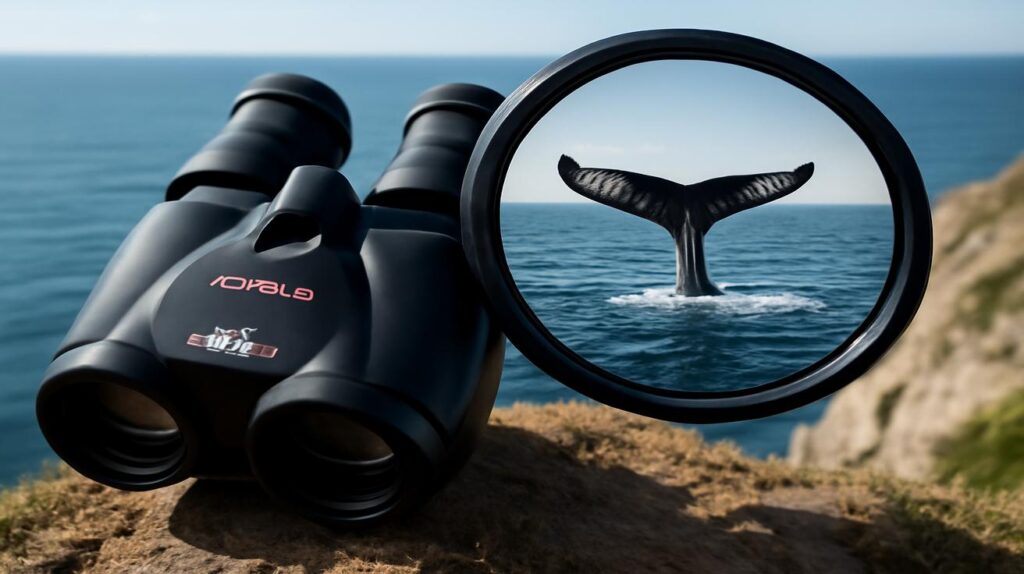
Birders, in particular, will notice this. Watching shorebirds on a distant mudflat, the 15× power allows you to inspect leg color, bill shape, and fine feather structure without breaking out a spotting scope. Raptors circling high overhead turn from silhouettes into identifiable species, with patterns on the underwings coming into reach. On a whale-watching trip, a blow on the horizon resolves more quickly into a visible body, not just a distant disturbance.
Of course, that power does come with compromises. The field of view is narrower than what many are used to at 8× or 10×, so scanning large swaths of landscape takes more time and careful panning. This is not the binocular you grab to quickly sweep a forest edge for movement. Instead, it excels when you already know where to look—or when the world is vast and open, and your subject is simply far away.
In long sessions—say, two hours on a seawatch—fatigue can creep into your forearms and shoulders more than with lighter binoculars. Image stabilization eases the mental strain of trying to hold things steady, but gravity still wins its slow argument with your muscles. Many users find that bracing their elbows against a railing, their chest, or their knees transforms the experience from “manageable” to “effortlessly comfortable.”
All Weather, All Seasons
Weather resistance is not a bullet point; it’s a personality trait. The Canon 15×50 IS wears its All Weather label like a promise. These are binoculars that expect fog banks, sea spray, light rain, early-morning frost, and the damp breath of a forest just after a storm.
The housing is well sealed to keep out moisture and dust. While they’re not designed to be tossed into a lake or submerged, they’re perfectly content under drizzle at a coastal lookout or waves breaking into fine mist across a boat deck. On cold mornings, when your breath hangs in the air and the world is still half-asleep, the Canon’s external surfaces don’t feel treacherously slick, and the focus wheel keeps turning with quiet, reassuring consistency.
The eyecups twist up and down with a solid, clicky feel, offering enough adjustment for both glasses wearers and those who go bare-eyed. Eye relief is generous enough that many spectacle users find a comfortable full view, though, as with any binocular, face shapes and frames can make this a bit individual.
Controls, Batteries, and the Human Factor
The focus wheel is broad, ridged, and easy to find without looking. There’s enough resistance to prevent accidental shifts but not so much that you feel like you’re working at it. From near focus to infinity is a smooth, intuitive turn—not the lightning-quick travel of tiny pocket binos, but a more deliberate glide that matches the precision of 15× magnification.
The stabilization button is placed where your index finger can reach it naturally. Press, and the world calms. Release, and you’re back to the raw reality of 15×. The system runs on AA batteries, a simple choice with huge benefits in the field. Need more power? You can find replacements at nearly any gas station, corner store, or rural outpost. Battery life depends on how constantly you engage the IS, but for most users who toggle it on for critical views rather than leaving it on nonstop, a fresh set of AAs lasts for multiple outings.
There’s also something human about the way you end up using the stabilization. You start to develop a rhythm: scan briefly unstabilized to find your subject, then press the button to lock in for the fine details. It becomes a kind of optical breathing pattern—wide and fluid, then slow and exacting.
Where the Canon 15×50 IS Shines—and Where It Doesn’t
Every piece of serious gear comes with its own ideal environment. The Canon 15×50 IS All Weather slots beautifully into a particular kind of field life.
Think big, open spaces: headlands where seabirds slash across the horizon; high vantage points where raptors ride thermals; sweeping estuaries, mudflats, and lakeshores where your subjects rarely come close. Think long ridgeline views, distant mountain goats, ships on the horizon, whales far offshore. The Canon is in its element when the world is large and your subject is small and far away.
Under dark skies, the binoculars reveal a second talent: casual astronomy. The 15× magnification paired with a 50 mm aperture gives star clusters texture and shape. The Pleiades turn from a pretty spray of stars into a tiny, intricate jewel box. The Moon reveals craters, rilles, and shadows with enough detail to feel almost tactile. You’ll notice a bit of hand-induced drift when sweeping across the sky, but hit the IS button and constellations hang almost motionless for long, satisfying gazes.
They are less ideal for quick, close-in woodland birding, or for hikers trying to shave ounces from their pack. If you spend your days weaving through dense forest, trying to pick up tiny flickers of motion just beyond arm’s reach, a lighter, wider-view 8× might be the better companion. If your shoulders protest at the idea of a heavier neck strap, the Canon’s strengths may feel like overkill.
Key Specifications at a Glance
For those who like to see the essentials laid out clearly, here’s a compact overview of the Canon 15×50 IS All Weather’s core traits:
| Magnification | 15× |
| Objective Lens Diameter | 50 mm |
| Image Stabilization | Yes (powered, IS button) |
| Weather Protection | All Weather, sealed housing |
| Prism Type | Porro with Vari-Angle Prism IS |
| Power Source | AA batteries |
| Approximate Weight | Around 1 kg (without batteries) |
| Ideal Use | Birding, seawatching, long-distance viewing, casual astronomy |
The Intangible Part: How They Change Your Experience
Specs tell only half the story. The other half is quieter, and happens between your eyes and your brain. The Canon 15×50 IS doesn’t just show you more; it subtly changes the way you approach looking itself.
With most binoculars, you learn to accept the slight tremor in the view as part of the deal. At 15× without stabilization, your mind works a bit harder to assemble clarity from motion. With the Canon’s IS engaged, that mental effort melts away. You can simply watch. That reduction in strain might seem small, but over an hour, or an afternoon, it adds up. You feel less fatigued, more patient, more willing to stay locked onto that distant falcon, that bobbing sea duck, that tiny, moving patch of light on a far hillside that might be a chamois.
There’s also a psychological effect: a subtle rush when you first realize how far you can reach, handheld. Suddenly, the far side of the lake is not “far”; it’s accessible. The distant dunes are not vague shapes; they are textured, legible landforms. The horizon stops being the boundary of your attention and becomes part of your working field. That sense of expanded reach is addictive in the best way.
And perhaps most importantly, the Canon 15×50 IS invites lingering. You find yourself staying with a scene longer than you normally would—watching how light glides over distant hills at sunset, following the slow, deliberate sweep of a lighthouse beam, waiting as a hidden hawk finally breaks from its perch. In a world of quick glances and constant distraction, any tool that encourages deeper, more sustained attention feels almost radical.
Verdict: Who Are These Binoculars Really For?
The Canon 15×50 IS All Weather binoculars occupy a distinctive niche: they are not for everyone, and that’s precisely what makes them special.
If you are a casual walker who occasionally glances at a bird in a nearby tree, they will probably feel like too much—too heavy, too powerful, too specialized. If your days are spent weaving through close, tangled woodland and snapping your binos up for fast, reactive views, a lighter, wide-angle pair will likely serve you better.
But if your heart beats a little faster at the idea of distant horizons, if you spend your time on headlands, seawalls, cliff paths, open fields, lakeshores, marsh hides, or the deck of a small boat, these binoculars start to make profound sense. They’re for the watcher who wants detail without the encumbrance of a tripod. For the birder who loves raptors and shorebirds. For the naturalist who lingers at a viewpoint and wants to see the far edges of their world as clearly as the near ones.
They are, in a way, a promise: that the far things you care about—birds, whales, mountains, ships, stars—need not remain distant abstractions. With a press of that stabilization button, they become immediate, present, touchable by sight alone. And once you’ve experienced that feeling, it’s very hard to go back.
Frequently Asked Questions
Are the Canon 15×50 IS binoculars too heavy for everyday use?
They are heavier than most standard 8× or 10× binoculars, so you’ll feel them around your neck or in your pack. For long hikes where every gram counts, they may be overkill. But for day trips, seawatching sessions, or birding from fixed spots, the weight is manageable, especially if you take short breaks or brace your arms while viewing.
Do I always need to use the image stabilization?
No. You can use the binoculars with IS off, just like any other 15× binoculars. Many people scan with IS off, then press the button when they want a rock-steady, detailed look. Using IS selectively also helps extend battery life.
How well do they work for astronomy?
They perform very well for casual stargazing. The 15× magnification and 50 mm objectives reveal good detail on the Moon, resolve star clusters nicely, and pull in more faint stars than smaller binoculars. Image stabilization is especially helpful when observing small, bright objects like Jupiter or tight star groupings.
Are they suitable for glasses wearers?
Yes, many glasses wearers find the Canon 15×50 IS comfortable. The twist-up eyecups and reasonable eye relief allow most users to see the full field of view with glasses on, though individual comfort depends on your frames and facial structure.
Can they handle rain and rough conditions?
They’re designed as “All Weather” binoculars, meaning they’re sealed against dust and moisture and can handle drizzle, sea spray, and damp conditions without complaint. They’re not meant to be submerged, but normal outdoor weather is well within their comfort zone.
Are they a good choice as a first and only pair of binoculars?
It depends on how you use binoculars. If you mainly bird in forests, hike long distances, or want something very light and general-purpose, you might be better served by a smaller 8× or 10× pair. If you’re drawn to long-distance viewing—shorelines, raptors, open landscapes, marine life, or astronomy—the Canon 15×50 IS can be an extraordinary primary tool.