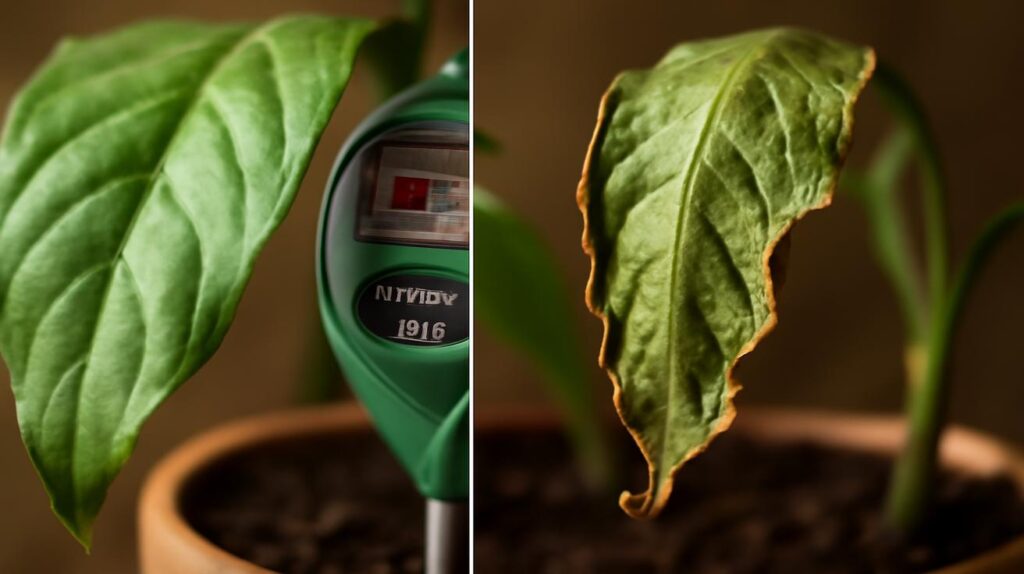
The first time I killed a plant, I did it with kindness. Or at least, that’s what I told myself as I tipped yet another watering can over its drooping leaves, watching the soil shimmer dark and shiny, like freshly brewed coffee. The little basil plant had looked so sad and soft, its leaves folding like tired hands. “Thirsty,” I whispered, and gave it more water. A week later, the leaves were no longer soft. They were translucent. Then they were gone.
When Soft Leaves Send the Wrong Message
Walk through any garden center on a warm afternoon and listen. You’ll hear the same worry float again and again above the racks of seedlings and rows of houseplants: “I think it needs more water. The leaves feel limp.” Fingers pinch, press, and stroke. Leaves are prodded like fruit at a market, tested for firmness, for some imagined standard of plant health.
We are a species raised on metaphors of thirst. We picture cracked soil, parched throats, dusty roads. When something living droops, we assume it is crying out for water. In the garden, softness in leaves becomes an emotional trigger—something’s wrong, something needs fixing, and our quickest tool is the watering can.
But plants do not always speak in the language we expect. What feels like a plea for a drink is often a quiet protest against already soggy roots. Many gardeners learn this the hard way: in pots that stay wet for days, in yellowing leaves that fall at a touch, in that sour, swampy smell that rises from soil starved of air.
The trouble starts with how we use our hands. We trust touch, and touch alone, to read the plant’s story. Soft leaves? Must be thirsty. But leaf softness is a slippery, deceptive thing. It changes with time of day, with weather, with simple genetics. Some plants are born with tender foliage, no matter how well-watered they are. Others stiffen not because they’re healthy but because their cells are bloated with excess water, moments away from collapse.
The Science Hiding Inside a Leaf
To understand why softness misleads us, it helps to zoom down to the microscopic world inside a leaf. Imagine a leaf as a tiny, sun-powered balloon. Inside are millions of plant cells, each like a water-filled bag wrapped in a sturdy wall. When those cells are full and pressurized, the leaf stands firm and plump; gardeners call this turgor. When water pressure drops, the cells slacken, and the leaf wilts or feels softer.
But here’s the twist: turgor is not a water-level meter in the soil; it’s a dynamic balance between water, air, and heat. On a hot, bright afternoon, a perfectly watered plant may soften slightly as it loses moisture faster than the roots can replace it. By evening or the following morning, the leaves perk back up, having caught up with the day’s losses. If you water every time you see that temporary midday droop, you’re essentially responding to a breeze with a fire hose.
Overwatering complicates this balance further. When soil stays saturated, roots lose access to oxygen. They begin to suffocate, rot, and lose their ability to draw water upward. The cruel irony is that the plant can then show the same signs as drought: drooping, yellowing, softness. To the hurried eye, it looks thirsty. To the roots, it’s drowning.
Leaf softness also shifts with simple biology. Herbaceous plants—basil, lettuce, coleus—naturally have tender foliage. Their tissues are thinner, their structure more delicate. They may never feel as firm as a jade plant or a rosemary sprig, no matter how closely you monitor their moisture. Seedlings, with their paper-thin first leaves, are especially prone to being misread. Their softness is youth, not distress.
Why We Trust Fingers More Than Facts
This habit of reading leaves like tea leaves isn’t just ignorance; it’s deeply human. We connect to plants through touch. A gardener kneels, lifts a trailing stem, brushes soil from a leaf. You can’t help but form a kind of sensory friendship with what you’re growing. The soil’s texture between your fingers, the way a leaf gives slightly when you pinch it, the coolness of a shaded stem—these are the signals that shape your care.
But unlike a pet that can yelp or purr, plants give feedback slowly and indirectly. We remember the one time a drooping houseplant revived after a good soaking and forget the six quiet, overwatered victims that yellowed away in silence. Leaf softness becomes a story we tell ourselves: “I know what this means.” And gardens, polite as they are, do not argue; they simply live or die according to our interpretations.
The Soil Tells a Truer Story Than the Leaf
Out in the world, plants have no one to adjust the faucet. Rain comes or doesn’t. Roots probe deep, seeking whatever moisture remains after sun and wind have taken their share. In such places, a bit of mid-afternoon softness is normal. The plant bends, endures, rehydrates with evening dew and cooler air. We forget that “perky” 24/7 is not nature’s default setting.
In pots and garden beds, we hold the weather in our hands, and that’s precisely why our senses need retraining. The more reliable narrator in this story isn’t the leaf—it’s the soil. Moisture at root level is what matters, not the fleeting squish of a leaf blade between your fingers.
Instead of asking, “Does this leaf feel soft?” the better questions are: “What does the soil feel like? How long has it been since the last watering? What kind of plant is this, and how does it behave when healthy?” These questions move us from reaction to observation, from impulse to pattern.
Below is a simple guide to help translate what you see and feel into a more accurate reading of your plants’ needs:
| Leaf & Soil Sign | What It Often Means | Likely Action |
|---|---|---|
| Soft leaves, soil cool and moist 2–3 cm down | Not thirsty; could be heat or natural texture | Wait, add shade or airflow, do not water yet |
| Soft, drooping leaves, soil dry and crumbly | True thirst; plant lacks available moisture | Water deeply, then wait for recovery |
| Yellowing lower leaves, soil constantly wet | Overwatering, possible root rot | Let soil dry, improve drainage, reduce watering |
| Leaves firm in morning, soft at midday, firm again at dusk | Normal daily cycle under warmth and sun | Observe only; adjust watering schedule if needed |
| Soft, dull leaves, faint rotten smell from soil | Root distress from excess moisture | Repot or aerate soil, trim damaged roots, water less |
Notice how often the guidance said “wait.” Patience is the hardest tool for a gardener to use and the most necessary. Many plant problems are not solved by one more act, but by a pause long enough to see the pattern unfolding.
A Day in the Life of a Leaf
If you want to loosen leaf softness’s grip on your judgment, follow one plant throughout a full day. Morning: touch its leaves gently. Notice the cool, slightly firm texture, the way dew or overnight moisture has restored them. By noon, after hours of sun, feel again. Are they a bit more pliable, a little warmer? Late afternoon, they may droop subtly, especially on hotter days. Then at dusk or the next morning, touch once more. Have they regained their earlier firmness?
This simple ritual teaches a quiet truth: softness is often a temporary chapter, not the whole story. It’s the plant adjusting, balancing water loss with uptake. If you rushed in with water every time the leaves felt a touch less crisp, you’d drown the roots in your attempts to keep the foliage forever at its morning best.
This is especially true for plants in direct sun or small pots. Containers heat quickly; their soil can be warm even when still moist. The plant, sensing stress, may soften its leaves slightly as part of its self-protection response. It’s not always a cry for more water; sometimes it’s a sign the plant is already working hard to cope.
Rewriting the Garden Script
To garden well is to develop new instincts, to swap old stories for better ones. The old story says: “Soft leaves mean water.” The new story might sound more like: “Soft leaves are a clue; the soil holds the answer.” It’s a subtle shift, but it changes everything about how you move through your garden.
Imagine this revised script in action. You step outside on a bright afternoon and notice your pepper plant looking a little wilted, its leaves no longer taut. The old reflex flares—water. Instead, you kneel, slide your fingers into the soil up to the first knuckle. The soil feels cool, slightly damp. You remember you watered yesterday. You stand back. “Not today,” you tell yourself. An hour later, a few clouds drift over, the air cools, and the plant lifts its leaves without a single drop added.
In another corner, a potted houseplant sits by the window, its leaves soft and dull. You probe the soil and find it sticky, heavy, slow to crumble. Weeks of small, unnecessary waterings have turned its pot into a swamp. The softness here is not thirst at all; it’s the plant suffocating. This time, you don’t reach for the watering can. You gather fresh potting mix, gently lift the plant, trim the blackened roots, and give it air as much as water.
These small acts of restraint, of listening before responding, create a different kind of gardener—less a rescuer, more an observer. You begin to notice which plants are naturally tender (the velvety leaves of sage, the thin blades of cilantro) and which are supposed to be firm and waxy (succulents, many evergreens). You learn each plant’s “normal” so that “soft” becomes a relative term, not an absolute emergency.
Learning the Language of Enough
There is a surprising emotional weight to watering. It feels like care you can measure: a full can, an empty one. We pour not just water but worry, affection, even guilt over our plants. The fear of neglect drives many gardeners to overcompensate, to keep the soil perpetually wet, to erase any hint of stress as soon as it appears.
But plants evolved under a regime of “sometimes enough, sometimes not.” Periods of dryness push roots deeper, strengthen tissues, encourage resilience. A plant that gets exactly what it wants, when it wants it, every day of its life is more fragile than we realize. The leaves of such plants may indeed feel firm—but their roots are shallow, their tolerance thin.
Learning to accept a little softness, a brief droop at noon, a day or two of dry soil before watering again, is really learning to trust that plants are capable. Your role shifts from constant rescuer to thoughtful steward. You intervene when patterns, not single moments, tell you something is wrong.
In time, you’ll find that your garden grows more quietly, with fewer dramatic crises. Fewer sudden yellowings, fewer inexplicable deaths. You will have traded the instant reassurance of always watering for the deeper, slower comfort of understanding.
Soft Leaves, Gentle Lessons
Some of the most enduring lessons in a garden arrive on the backs of our mistakes. That first basil plant of mine, the one I loved to death with my over-attentive watering, still hovers in the back of my mind each time I feel a leaf and instinctively think, “More water.” It is the memory that makes me pause, that sends my fingers into the soil instead of to the faucet.
Leaf softness will always be part of the conversation between you and your plants. You will still notice it, still feel that flicker of concern. But now you know it is only one voice, not the verdict. You’ll listen also to the soil—the way it clings or falls away from your fingers, the color at the bottom of the pot. You’ll listen to time—how long since the last rain, the last deep soak. You’ll listen to the plant’s history—how it behaved last summer, how it looked yesterday.
Over time, you’ll come to recognize that the truest measure of care is not how quickly you respond, but how accurately. The garden rewards not our speed but our attention.
And perhaps, one day, you’ll catch yourself doing something quietly radical: noticing a plant’s soft leaves, feeling that old urge to water rise up—and then simply standing there, empty-handed, watching the light shift on the foliage, trusting that waiting, too, can be a form of love.
FAQ
Are soft leaves always a bad sign?
No. Some plants naturally have tender, flexible leaves, and many plants soften slightly during hot or bright parts of the day. Softness is a clue, not a diagnosis. You need to check the soil and consider time of day and recent weather before deciding what it means.
How can I tell if soft leaves are from overwatering or underwatering?
Feel the soil 2–3 cm below the surface. If it’s dry and crumbly, the plant is likely thirsty. If it’s cool, heavy, or soggy, the problem may be too much water and poor drainage. Overwatered plants may also have yellowing leaves, a musty smell, or blackened roots if you inspect the pot.
Should I water when my plant droops in the middle of a hot day?
Not automatically. Many plants droop or soften a bit in midday heat even when the soil is moist. Wait until evening and check again. If the plant perks up as temperatures drop, it probably didn’t need extra water. If it’s still drooping and the soil feels dry, then a deep watering is appropriate.
Is checking leaf firmness a good way to decide when to water?
Not on its own. Leaf firmness can change with heat, light, and plant variety. Use it alongside other signs: soil moisture, pot weight, leaf color, and the plant’s normal behavior. The soil is a more reliable indicator than the leaf.
How often should I water my plants to avoid misreading soft leaves?
There is no single schedule that works for all plants. Instead of watering by the calendar, water by observation. Let the top layer of soil dry slightly between waterings (more for drought-tolerant plants, less for thirstier ones). Check moisture at root level with your finger, and adjust frequency based on season, pot size, and plant type.
Can a plant recover from being overwatered because I misread soft leaves?
Often, yes—if you act early. Allow the soil to dry out, improve drainage, and, if needed, repot into fresh, well-draining mix. Trim away any rotted roots and reduce watering until the plant shows new, healthy growth.
What’s the best quick test to avoid unnecessary watering?
Use your finger or a simple wooden stick. Insert it a few centimeters into the soil. If it comes out mostly clean and the soil feels dry, it’s time to water. If it comes out with moist soil clinging to it, wait. Let that simple test, not leaf softness alone, guide your watering decisions.