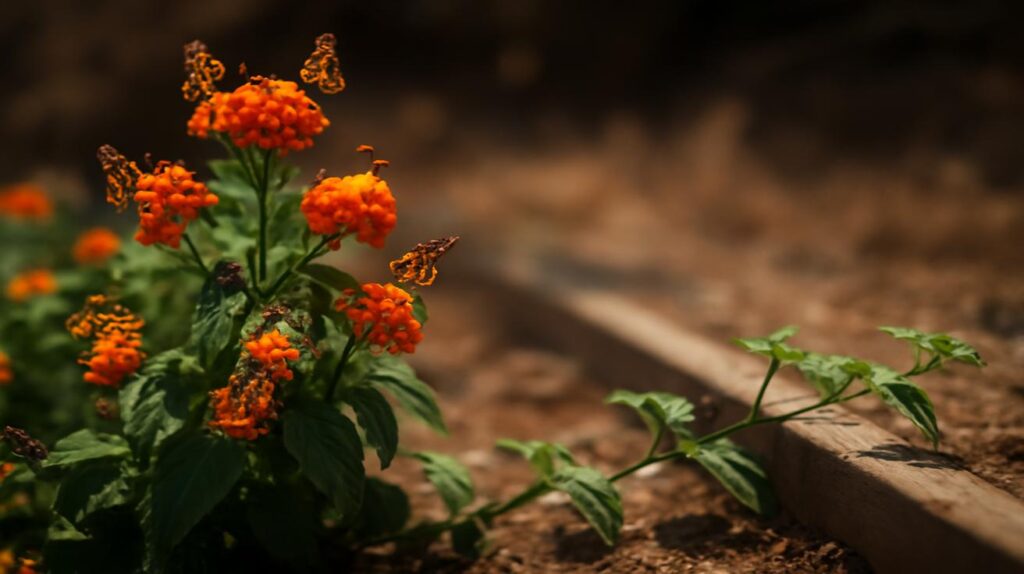
The first time I met this plant, I almost stepped on it. It sprawled like a sun-bleached fountain, all silvery-green stems and tiny, flaming flowers vibrating with wings. The air around it shimmered with heat and movement—swallowtails looping lazily, skippers zipping in tight zigs and zags, a monarch tilting like a stained-glass ornament in a breeze you could barely feel. The soil under my shoes was cracked and stubbornly dry, the kind of ground that sends most garden plants into a quick, dignified death. But this one? It glowed. It buzzed. It thrived.
“Butterfly weed,” my neighbor called from across the fence. “Milkweed. Asclepias. You want butterflies, you plant that.”
Later, in another town, another garden, another sweltering August—someone else pointed to a different plant with the same thrill in their voice. Tall, arching, smoky purple flower spikes. Clouds of butterflies and bees. “Butterfly bush,” they said. “Buddleia. Practically bombproof. No water. Loves heat.”
Two different plants, two different stories, one identical promise: a yard teeming with butterflies, even when everything else is frying in the sun. And somewhere between those two gardens, a quiet warning began to circulate: this kind of beauty might be a little too good at surviving. Some gardeners started using harsher words—“invasive,” “problem species,” “ticking time bomb.”
The Plant That Refuses to Die (Even When Everything Else Does)
Let’s start with what makes these plants so irresistible, both to butterflies and to us. Whether you’re talking about butterfly weed (Asclepias tuberosa) or its moodier cousin, the butterfly bush (Buddleja davidii), the story begins in the same place: brutal heat and impossible dryness.
Picture a sidewalk-edge strip of earth in midsummer—thin soil, full sun, no irrigation, just reflected heat from asphalt. It feels like the kind of place plants go to be punished. Yet butterfly weed happily digs its long taproot down into the unforgiving ground and settles in as if it booked a beach vacation. Butterfly bush may not dive quite as deep, but its woody framework and tough, felted leaves shrug off weeks of forgetful watering like it’s nothing.
They’re the kind of plants that make gardeners giddy. No drama. No drooping. The hotter it gets, the more they bloom, as if they feed on sunlight and neglect. These are plants for people who forget to water. For people who say, “Oh, everything dies in my yard,” as they gesture to a graveyard of thirsty petunias and potted herbs long gone to dust.
And the butterflies—my goodness, the butterflies. Monarch caterpillars strip butterfly weed leaves to skeletons, leaving the plant looking like it barely survived an attack. Then, almost casually, it leafs out again. Adult butterflies use it as a nectar bar, lingering over clusters of molten-orange blooms. Butterfly bush, meanwhile, is like an all-you-can-drink cocktail party for pollinators. Bees, moths, butterflies: they all line up at its long, honey-scented flower spikes. From a distance, the plant looks like it’s humming—flower clusters swaying under the weight of visitors.
It all seems so perfect. Too perfect, some would say.
A Miracle for Butterflies—or a Masked Trouble-Maker?
In certain corners of the gardening world, conversations about plants like butterfly bush have started to sound less like a celebration and more like a late-night crime podcast. The clues are all there: unstoppable growth, thousands of seeds, no obvious predators, and a suspicious ability to appear in places where nobody remembers planting it.
In some regions, you can find seedlings pushing up from gravel driveways, storm drains, cracks in retaining walls. Highways, railroads, industrial lots—anywhere the sun blazes and the soil is ignored, butterfly bush seems to think, Ah yes, home.
To many gardeners, this feels like a small, private miracle. “Look how tough it is,” they say. “It’s saving the pollinators.” And in a very narrow sense, they’re not wrong. Butterfly bush really is a nectar powerhouse. On a hot day, when other blooms are collapsing, it’s still a neon sign to hungry wings.
But nectar is only half the story of a butterfly’s life. They don’t just need flowers—they need the right host plants to lay their eggs on, foliage their caterpillars can safely devour, a layered habitat that includes wild grasses, shrubs, trees, and messy corners. Butterfly bush doesn’t provide that. It’s a buffet with no nursery.
And in the spaces where it spreads—and it does spread in many climates, vigorously and quietly—it can start to press out the very native plants that do host those caterpillars. In other words, it risks becoming the loudest voice in a conversation that was already fragile. Ecologists in some regions have watched it creep into riverbanks, scrubland, and disturbed forests, colonizing bare soil faster than native species can recover. There’s a reason a few states have put it on official invasive plant lists.
When gardeners call it a “ticking time bomb,” they’re talking about this slow, almost invisible shift—from a single beloved shrub in a backyard to a network of escapees dotting the landscape, rewriting what “wild” looks like without asking permission.
The Seduction of a Plant That Does It All
It’s hard to blame anyone for falling under the spell. If you’ve ever lost an entire border to drought, you know how desperate you can become for something—anything—that shrugs off water bans and heat waves. When a plant shows up and says, “I’ll bloom my head off, feed the butterflies, and barely ask you for a drink,” it’s like the garden version of a too-charming stranger at a party.
You start imagining how your yard could look: bare patches transformed into glowing tapestries, the air moving with wings instead of hot, lazy silence. You picture your kids or grandkids chasing swallowtails between the shrubs, the kind of childhood scene that feels almost mythical now. You imagine yourself as the person who “helps the butterflies,” who plants for the future. The plant makes you feel generous, even heroic.
What it doesn’t tell you is what happens when its seeds ride the wind down the block, or into the vacant lot across the street, or into the drainage ditch that runs out of sight. You don’t notice the first rogue seedling. Or the second. Or the fifth. Only years later, when you’re driving across town and you spot a familiar shape blooming out of the rubble of an abandoned building, does a small, uneasy thought creep in: How did you get here?
A Yard Turned Butterfly Haven
Let’s step into the fantasy for a moment, because there’s a reason so many people can’t resist it. Imagine your yard in late July. The kind of hot where the air feels heavy, where the horizon flickers slightly in the distance. The lawn has gone from green to a tired yellow-brown. The soil in your flower beds is hard enough to clink when your trowel hits it.
And then—color. A low, ruffled sea of orange butterfly weed. Tall plumes of violet and magenta butterfly bush. Maybe some white for contrast, glowing in the late light. The flowers look almost electrified by the sun, impossibly bright against the baked earth. This is where the action is.
You walk outside and the sound hits you first: a soft chaos of wings and tiny bodies. Bees thread their way between flowers, heavy with pollen. Sulphur butterflies flip past in flashes of lemon-yellow. A red admiral intersects with a painted lady, their paths crossing in the air like brushstrokes.
It feels like your yard is breathing differently than the rest of the neighborhood, as if you’ve built a small, living oasis in a time of scarcity. You haven’t watered in weeks, but the plants don’t care. In fact, they seem to be ramping up, pouring energy into fresh buds, inviting every pollinator in a two-block radius to swing by.
Standing there, hand on the warm rail of the porch, it’s very hard to think of this scene as anything other than good. You’ve witnessed a small miracle: a thriving ecosystem stitched into a suburb, a city block, a rooftop garden, an empty corner of a lot that used to be all gravel and glare.
So how do you hold that feeling—and still make room for the more complicated story?
Balancing Beauty with Responsibility
One of the quieter skills modern gardeners are learning is the ability to love a plant and question it at the same time. To say, “You’re stunning. You’re tough. You’re generous with nectar. But what are the long-term costs of that toughness in this particular place?”
The answer depends heavily on where you live, and which species you’re dealing with. Butterfly weed, for instance, is native to large parts of North America and forms an integral link in the monarch butterfly’s life cycle. For many regions, it’s less a ticking time bomb than a long-lost friend finally being invited back into the yard.
Butterfly bush, on the other hand, is non-native and has a reputation in some climates—especially in parts of the Pacific Northwest, the Northeast, and certain river valleys—for jumping the fence and setting up shop in the wild. Plant it there without thought, and you might be unintentionally stocking the landscape with a species that outcompetes local flora.
But the story is not uniform. In harsher, colder, or drier areas, butterfly bush may struggle to survive, let alone invade. Breeders have also developed “sterile” or low-fertility cultivars designed to reduce seed spread. Whether they’re truly low risk can vary by region, but they’re one response to the growing unease.
All of this creates a kind of moral weather front in the gardening world: hot, swirling debates between those who see the plant as a vital nectar source and those who see it as slowly erasing the deeper, older relationships between insects and their native host plants.
A Quick Look: Tough Butterfly Plants and Their Habits
| Plant | Native Status (North America) | Water & Heat Tolerance | Wildlife Value | Invasive Risk |
|---|---|---|---|---|
| Butterfly weed (Asclepias tuberosa) | Native in many regions | Very drought- and heat-tolerant once established | Nectar + host plant for monarch and other caterpillars | Generally low; spreads modestly by seed |
| Butterfly bush (Buddleja davidii) | Non-native | Extremely tolerant of heat and poor soils | Heavy nectar provider; not a host plant | High in some regions; escapes cultivation |
| Other native milkweeds (Asclepias spp.) | Mostly native | Varies, many are drought-tolerant | Critical monarch hosts + nectar | Low; some spread by rhizomes |
How to Build a Butterfly Haven Without Lighting the Fuse
If you’re feeling torn—excited by the idea of a butterfly-rich, low-water garden but wary of planting something that might misbehave—you’re not alone. More and more gardeners are learning how to turn their yards into pollinator paradises without rolling the dice on species that can jump the fence.
One way is to shift the question from “Which plant will give me the most butterflies the fastest?” to “How can I grow a community of plants that supports butterflies through every stage of life?” It’s a subtle reframing, but it changes everything.
Instead of a single showy shrub doing all the work, you start layering: native milkweeds for monarch caterpillars and nectar; coneflowers and black-eyed Susans for midsummer feeding; asters and goldenrods to carry butterflies into fall; native grasses and groundcovers to offer shelter and overwintering sites. The yard grows wilder, maybe, a bit shaggier at the edges—but it also grows deeper in meaning.
If you still crave the look and performance of butterfly bush, you might:
- Research whether it’s considered invasive in your particular region.
- Seek out truly low-fertility or sterile cultivars where they’re recommended and vetted locally.
- Deadhead spent flower spikes religiously before seeds mature, preventing spread beyond your fence.
- Balance each non-native nectar plant with multiple natives that host and feed wildlife.
In places where butterfly bush is clearly a problem, you might simply let it go—literally and metaphorically—and lean into natives like butterfly weed that give you much of the same heat-loving, drought-resistant show, but with deeper ecological ties and less risk.
The Emotional Weather of Letting Go
There’s one piece of this story that’s easy to overlook: the way it feels to fall in love with a plant and then realize it may not belong in your garden anymore. Gardeners don’t just collect species; we collect memories, seasons, griefs, and small joys that root themselves in particular leaves and flowers.
Maybe your butterfly bush grew from a cutting given by a friend who’s no longer here. Maybe the first time your child saw a monarch, it was resting on one of its purple blooms. To be told that this plant—this living memory—is “bad” or “invasive” can feel like an accusation, a judgment not just of what you grow, but of who you are as a gardener.
But ecology isn’t about shame; it’s about relationship. When you choose to replace a questionable plant with a more regionally appropriate one, you’re not erasing those memories. You’re extending them forward, turning your garden into a place where the stories don’t stop at your fence line, but continue out into the ecosystem you’re part of.
Sometimes that looks like digging out an old shrub with real sadness, then planting a young milkweed in its place and whispering, “All right, let’s see what you can do.” Sometimes it means keeping a beloved plant but changing the way you care for it—deadheading more carefully, watching for seedlings, staying alert. Often, it simply means paying attention, staying curious, and being willing to adjust as you learn more.
The truth is, the plant that thrives without water, loves heat, and turns any yard into a butterfly haven is not a villain in itself. It’s a mirror—a way of reflecting back to us the kinds of landscapes we create when we value toughness and beauty above all else. The “ticking time bomb” is not in its roots; it’s in what happens when we stop asking questions and assume that if something is good for our garden, it must be good for every place it touches.
Writing a Different Kind of Butterfly Story
Stand again in the heat of that August afternoon. Listen to the wings. Feel the dried grass beneath your feet, the cracked soil, the sharp contrast between life and desiccation. And then imagine a slightly different version of this scene.
Butterfly weed burns bright in the foreground, orange against the dusty brown. Behind it, a stand of native asters waits for fall, green now but ready to explode in starry purple when summer fades. A few clumps of little bluestem grass catch the light, their blades turning copper at the tips. Somewhere in the tangle, a milkweed beetle clings to a stem, its red-and-black armor a tiny flag of persistence.
Butterflies still come. So do bees and beetles and moths you never bothered to name before. The yard hums with more than nectar—it hums with the quiet, layered complexity of relationships that have been building for hundreds, if not thousands, of years.
You haven’t just created a pretty scene; you’ve stitched your small piece of land back into the larger fabric of the place you live. The plant that can thrive without water, that loves heat and beckons butterflies, still has a place in this story—but it no longer has to be the star. Instead, it’s one character among many, held in check by your attention, your choices, your willingness to see beyond the thrill of a single bloom to the long, slow arc of an ecosystem healing itself.
And maybe, as you watch a monarch curl its abdomen under a milkweed leaf to lay an egg—trusting this plant, this place, with its fragile future—you’ll feel something shift. A quiet understanding that in the garden, as in life, the things that seem too easy, too indestructible, too instantly rewarding often come with hidden costs. And that the deepest, richest beauty is the kind that takes a little more time, a little more humility, and a willingness to share the stage.
FAQ
Is butterfly bush always considered invasive?
No. Its invasiveness depends on where you live. In some regions, especially parts of the Pacific Northwest, Northeast, and river corridors, it has clearly naturalized and spread aggressively. In other areas with harsh winters or very dry conditions, it may struggle to survive long term. Check local extension services or native plant organizations for guidance specific to your location.
Is butterfly weed invasive too?
Butterfly weed (Asclepias tuberosa) is native to much of North America and generally not considered invasive there. It can spread modestly by seed and slowly enlarge over time, but it’s usually a welcome part of native plant communities and an important host for monarch caterpillars.
If butterfly bush is so good for nectar, why is it a problem?
Butterfly bush provides abundant nectar for adult butterflies and other pollinators, but it does not host their caterpillars. In regions where it escapes cultivation, it can displace native plants that do provide both nectar and larval food, reducing overall habitat quality despite the apparent abundance of flowers.
What can I plant instead of butterfly bush?
Good alternatives vary by region but often include native shrubs and perennials such as butterfly weed and other milkweeds, coneflowers, black-eyed Susans, bee balm, blazing star, native asters, and goldenrods. These plants handle heat and modest drought once established and support more stages of pollinator life cycles.
How can I keep my existing butterfly bush from spreading?
If it’s not invasive in your area—or you choose to keep it—you can reduce risk by deadheading spent flower heads before they set seed, monitoring for and removing volunteer seedlings, and avoiding planting it near natural areas or waterways. Where available, consider replacing older, fertile varieties with locally recommended low-fertility or sterile cultivars.