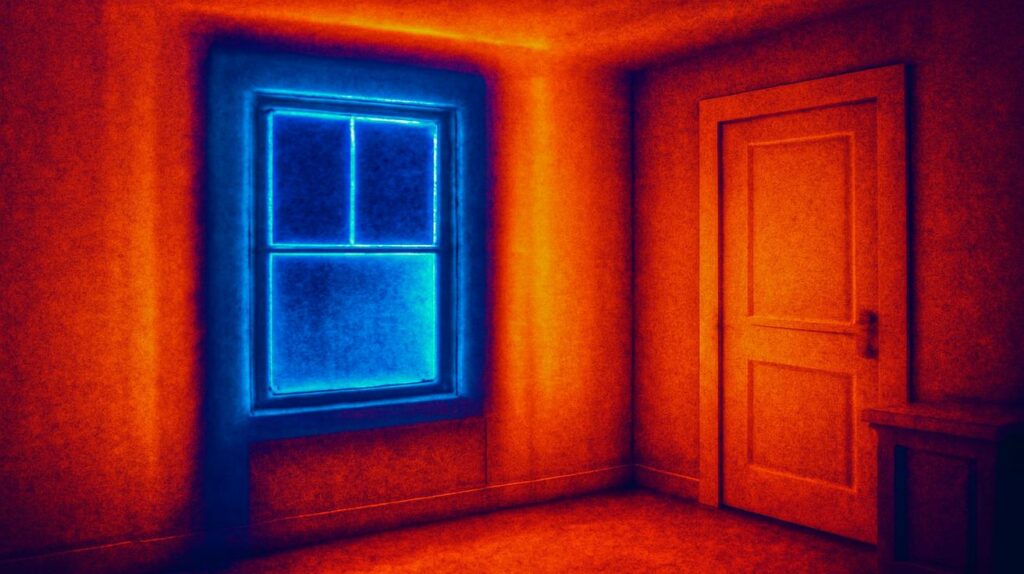
You notice it the moment you step through the doorway. The hallway is warm and familiar, the kind of quiet comfort that makes your shoulders drop a little. But then you cross into that one room—the study, the bedroom at the back of the house, the living room with the big windows—and the air changes. It feels thinner somehow, sharper along your skin. You tug your sweater a little closer and glance at the thermostat in the hall. It still insists the whole house is sitting at a pleasant 21°C. So why does this room feel like walking into late October?
The Strange Personality of Rooms
Houses have moods. Spend enough time in one place and you begin to notice that every room has its own character, its own way of holding light, sound, and temperature. The kitchen hums with the warmth of simmering pots and oven doors that open like small suns. The bathroom fogs up with steam that curls along the mirror. The spare bedroom? Somehow it manages to feel like a forgotten cabin on a chilly hillside, no matter how high you turn up the heat.
Temperature, as we talk about it day to day, is supposed to be simple—a single number glowing on a wall, a dial you turn, a bill you pay. But your body tells a different story. It knows that the room where you work on your laptop all afternoon feels colder than the one where you curl up with a book at night. It knows that the north-facing room has a kind of quiet chill while the sunlit one feels like it’s been gently hugged by the day.
In a way, the thermostat is like a storyteller who leaves out half the plot. It measures air temperature in one location, but it can’t feel the icy breath crawling along your feet or the draft sneaking in at the window frame. The numbers may be the same, but the experience is not. And your body, with its nerves and skin and ancient instincts, is much more interested in the story of how the air feels than the number glowing in orange plastic.
So why does one room feel colder than another, even when your heating system is working hard and the thermostat swears everything is equal? To understand that, we have to walk slowly through the house—not just with our eyes, but with all our senses—and notice the often-invisible forces shaping the comfort of each room.
How Your Body Reads a Room
Before blaming the radiators or the heat pump, it’s worth pausing on the quiet, ever-present instrument you’re carrying around: your own body. When you step into a room, you don’t actually care what the raw temperature is. You care how warm or cold you feel, which is a messy blend of physics, physiology, and psychology.
Your skin is constantly comparing its own temperature with the temperature of the surfaces and air around you. It senses not just warmth, but movement—little breezes you barely see, the way air glides past your ankles under a door, the slightly faster cooling of a bare wrist near a window. Your body isn’t reading the thermostat; it’s reading heat loss.
Stand near a big, cold window for a minute. The glass might be just a few degrees cooler than the room, but it pulls warmth from your body. You become, in effect, a small radiator for that cold glass, sending your heat across the invisible gap. You might not feel a gust of air, but you feel yourself losing warmth, and your brain translates that loss as, “This room is cold.”
Now imagine two rooms set to the same temperature. One has thick curtains, a plush rug, and a bookshelf acting as an accidental layer of insulation on an exterior wall. The other has bare floors, thin blinds, and a big expanse of glass facing a winter sky. The thermostat reads the same, but your body doesn’t. To your skin, the first room is a gentle conversation. The second is a quiet argument.
The Invisible Rivers of Air
There’s another player in this subtle drama: moving air. Even the faintest draft can turn a “warm” room into one that feels stubbornly chilly. Air loves to move from high pressure to low pressure, from warm to cool, from the smallest gap to the largest opening. A door that never quite closes, an outlet on an exterior wall, a chimney flue, a cat flap—each is a potential river mouth for cold air flowing in or warm air slipping out.
The strange thing is that you don’t always feel a classic “wind.” Instead, there’s a kind of slow, creeping movement. Warm air from your heating system rises, brushes the ceiling, drifts past a cold window, cools, sinks to the floor, and then slinks back toward the source of heat. This slow loop creates pockets of air that feel different depending on where you stand or sit. Your head might be comfortable while your feet grumble quietly in their chilly zone a few degrees cooler.
When people complain that one room in their home always feels colder, what they’re often noticing is this subtle choreography of air. The room might be on the end of a duct run, leaving the radiator or vent a little weaker. Or it might be cut off from the gentle circulation happening in the rest of the house. A closed door on a still day can trap a room in its own microclimate—separated from the home’s general warmth, like a forgotten corner of a garden that never sees the sun.
The Quiet Power of Surfaces and Materials
Rooms aren’t just empty boxes of air. They’re a collection of surfaces, each with its own relationship to heat. Walls, windows, floors, furniture—everything you see and touch is either absorbing, holding, or leaking warmth in its own quiet way.
Consider the difference between stepping onto a cold tile floor and stepping onto a soft rug. The air temperature might be identical, but the feeling is drastically different. That shock of cold under your bare feet is conduction in action: heat flowing directly from your skin into the harder, more conductive material of tile or stone. Your brain doesn’t care that the thermostat is “correct.” It only knows that your toes are losing heat fast.
Windows, especially older single-pane ones, are some of the most powerful characters in this story. They allow heat to escape more easily than insulated walls, and they radiate cold inward. Sit next to a large window on a winter night and you may notice a gentle but persistent chill, almost like the feeling of someone quietly opening a door to the outside. The thermostat can’t measure that invisible tug on your body heat—but your skin can.
You can think of surfaces in your home as either cozy allies or quiet thieves. Thick curtains, layered rugs, upholstered furniture, and even bookshelves along exterior walls help slow the escape of warmth. Bare walls, thin glass, exposed concrete, and uninsulated floors over garages or crawl spaces tend to pull heat away, making the whole room feel less forgiving.
| Feature | Tends to Feel | Effect on You |
|---|---|---|
| Bare tile or stone floor | Cooler, especially at night | Cold feet, overall chillier impression |
| Thick rug or carpet | Warmer, softer | Slower heat loss from feet, cozier feel |
| Large single-glazed window | Noticeably cold nearby | Radiant chill on skin, room “feels” colder |
| Heavy curtains or blinds | More stable, less drafty | Reduces cold downdrafts, more even comfort |
| Exterior wall without insulation | Cool to the touch | Increases overall heat loss from the room |
When a room feels persistently cold, it’s often because its surfaces are quietly plotting against you. They’re taking back the warmth you’re paying for faster than your heating system can comfortably replace it.
Sunlight, Orientation, and the Daily Mood Swing
If you’ve ever followed a beam of sunlight around your home throughout the day, you already know how orientation changes everything. The room that basks in morning light feels like a gentle invitation. The north-facing room that never quite catches the sun might spend its days in a kind of muted gray chill.
Even with heating set to the same level, the sunlit room often feels warmer because of radiant heat. Sunlight touches surfaces—floors, couches, walls—and warms them directly. Those surfaces then share some of that warmth back with you. It’s the cozy, almost sleepy feeling of lying in a patch of sun like a cat, even on a cold winter afternoon.
In contrast, rooms starved of sunlight rely entirely on your heating system to maintain comfort. Their surfaces start colder, stay colder, and never gain that gentle boost of solar warmth. In winter, you might notice this difference most sharply: the bright side of the house hums with life while the shaded side feels like it’s perpetually one season behind.
Time of day matters, too. A west-facing living room might feel like a cool cave in the morning and a warm, slightly stuffy retreat by late afternoon. In summer, this can be a curse—overheating and heavy air—but in winter, it can be a subtle blessing, letting you ease back on the heating in the evening as the walls and furniture slowly release the day’s stored warmth.
The Hidden Story in Your Walls and Ducts
Behind the surfaces you see, another story plays out in the hidden spaces of walls, ceilings, and narrow, echoing ducts. A room can feel colder simply because it’s the last to be invited to the warmth party. Maybe it’s at the end of a long run of ductwork, where hot air arrives a little tired, having shared its heat with every turn and junction along the way. Maybe the radiator in that room is undersized for the volume of air it’s meant to warm.
Insulation is one of those unglamorous details that quietly determines the personality of a room. In older houses, insulation can be patchy or missing entirely in certain areas. An exterior corner room, exposed on two sides to the outdoors, might lose heat much faster than an interior room smuggled safely in the center of the home’s body. Attics with thin insulation act like giant cooling fins in winter, drawing heat upward and away from the rooms below.
Even within the same home, different eras of renovation can create mismatched comfort. A rear extension that looks lovely in summer may have thinner walls, cheaper windows, or simpler insulation than the original house. The result: a beautiful glassy space that becomes an icebox each winter evening, no matter what the thermostat says.
Air leaks hide in small, forgettable places—around recessed lights, electrical outlets on exterior walls, gaps where pipes exit the house, cracks along floorboards at the edge of a room. The room that feels inexplicably colder might simply be the one that has more of these hidden escape routes, quietly letting your heated air slip away into the places you never see.
How You Live in a Room Changes Its Climate
There’s another part of this story that has nothing to do with building materials or engineering and everything to do with the way you inhabit a room. A space that’s used often tends to stay more stable in temperature. Warmth from your body, from electronics, from cooking or working or reading—these all add up to a subtle but real layer of heat.
Think about a guest room that mostly sits in silence versus the kitchen, where the oven roars, the kettle sings, and someone is always moving from one counter to another. The kitchen becomes a living thermal engine. The guest room, by comparison, is a quiet pond of air, undisturbed, cooling slowly against its walls and windows.
Even simple habits shape a room’s comfort. Closing a door at night can trap heat in—or keep it out. Opening blinds in the morning might let winter sunlight nudge a room into a more generous mood. Plugging in a computer, turning on a lamp, lighting a candle: small gestures that barely register on an energy monitor, but that collectively thicken the sense of warmth.
In this way, rooms don’t just passively receive climate; they grow one around the patterns of your days. A workspace you inhabit for hours will feel different from a hallway you only cross. And when you do finally step into that little-used back room, the cold you feel isn’t just physical—it’s the sensation of entering a place that hasn’t been part of the day’s shared warmth.
Teaching a Cold Room to Feel Warm
The comforting truth is that the stubbornly cold room in your home isn’t cursed. It’s just telling you a story about heat loss, air movement, and surfaces. And once you understand that story, you can begin to rewrite it—often with small, practical changes rather than grand renovations.
You can start with your senses. Stand in the room for a few minutes. Feel where the cold is strongest. Is it near the window? Along the floor? At one particular wall? Reach out and touch the glass, the wall, the floor—are they noticeably cooler than the air? Light a candle or stick of incense and watch where the smoke drifts; it will reveal drafts you can’t see.
Small interventions can have a surprisingly large impact. A thick rug on a cold floor softens the shock to your feet and slows the escape of heat. Heavy curtains over a leaky window help stop that quiet waterfall of cold air that tumbles down the glass at night. Draft stoppers along doors, foam gaskets behind outlet covers on exterior walls, a simple thermal blind—each is like a scarf or extra layer you’re wrapping around the room itself.
Sometimes, the solution lives in how you use heat rather than how much of it you produce. A fan set on low can gently mix warmer air pooled near the ceiling back down to where you are. Rearranging furniture away from cold windows or exterior walls can pull you out of the coldest zones. Using a small, efficient space heater for a short burst in the chilliest room can give it a head start, letting it catch up with the rest of the house without cranking the central heating for everyone.
On a deeper level, sealing obvious air leaks and improving insulation in key places—attic access doors, under eaves, around window frames—can quietly transform your home’s thermal landscape. The investment feels less like buying equipment and more like teaching your house to hold warmth more wisely.
In the end, the reason certain rooms feel colder, even at the same heating level, is that temperature isn’t just a number. It’s a relationship—between your body and the space it inhabits, between moving air and still surfaces, between sunlight and shaded corners. When you listen closely to what a cold room is trying to tell you, you begin to hear not just complaints, but instructions.
And perhaps, the next time you cross that familiar threshold and the air shifts around you, you’ll recognize what’s happening: not a failure of the thermostat, but a quiet, complex conversation between heat and home—one you now know how to join.
FAQ
Why does my bedroom feel colder than the living room even with the same thermostat setting?
Bedrooms are often on exterior corners, have less internal heat from appliances and people, and may have more exposed walls or windows. They also tend to be used less during the day, so surfaces and air have more time to cool before you return at night.
Can two rooms at the same temperature really feel different?
Yes. Your body senses heat loss, not just air temperature. Drafts, cold surfaces, and lack of sunlight can make one room feel colder than another, even when the thermometer reads the same number.
How can I tell if drafts are making a room feel cold?
You can use your hand to feel for moving air around windows, doors, and outlets, or watch the smoke from a candle or incense stick. If the smoke leans or swirls, air is moving—and likely taking your heat with it.
What’s the simplest way to make a cold room feel warmer?
Start with softening the coldest surfaces and blocking obvious drafts: add a rug to a bare floor, hang heavier curtains, seal gaps around windows and doors, and move seating away from cold glass or exterior walls.
Do I need to increase the thermostat to fix a cold room?
Not necessarily. Often you can improve comfort in the cold room specifically—by reducing drafts, improving insulation in key spots, or gently circulating air—without overheating the rest of the house or raising your energy use dramatically.