The older man on the park bench is not doing anything remarkable. At first glance, he is just sitting there, hands folded over the top of his cane, watching the slow choreography of a late afternoon. A dog tugs at its leash along the path. A boy on a scooter skids and laughs. Leaves, tired from summer, turn the color of toast and drift lazily to the ground. The man watches it all with the kind of attentive stillness that makes time feel thick and golden around him. You notice the way he lifts his face to the breeze as if it were a familiar friend, the way his eyes linger on small things—the curl of a leaf, the wobble of the scooter wheel—as if they were worthy of a standing ovation.
It is easy to assume he’s idle. But something else is happening here, something subtle and profound: he is rediscovering the simple pleasures the rest of us rush past. And, increasingly, many people over 65 are doing the same.
The Slow Magic of Having Lived a While
If you listen carefully to people in their late sixties, seventies, and eighties, a pattern emerges. They start talking with unusual tenderness about small things: the first sip of hot coffee before anyone else is awake, the feel of soil under their fingernails in the garden, the ordinary miracle of a robin landing on the balcony rail. These aren’t just sentimental snapshots. They’re evidence of a quiet shift in focus.
For decades, life can feel like one long to-do list: careers to build, kids to raise, loans to pay, status to prove, worries stacked like unpaid bills. Many people move so fast that their senses dim into survival mode—eyes scanning calendars instead of sunsets, fingers typing on glass instead of tracing the grain of a wooden table. Then, almost without warning, the pace changes. Retirement knocks. The children leave. The body issues its own firm instructions: Slow down, or I’ll do it for you.
At first, that slowing can be disorienting, even frightening. But after the panic about “What now?” begins to settle, another question tiptoes in: “What have I been missing?” People over 65 often discover that the answer is—almost everything right under their noses.
Psychologists sometimes call it the “positivity effect”: older adults, aware that time is finite, naturally lean toward experiences that are emotionally meaningful and gently joyful. The stakes of impressing others drop. The stakes of actually feeling alive rise. A walk is no longer a step-counting exercise; it becomes a sensual encounter—how the light hits that one crooked fence post, how the air smells different after last night’s rain. They are not practicing a trendy mindfulness technique. They are, often without naming it, just finally paying attention.
The Way Time Changes Flavor After 65
To understand why simple pleasures bloom later in life, you have to understand how time itself changes flavor.
In youth and middle age, time feels like a wide-open highway. There’s a kind of reckless abundance to it—you can waste an afternoon doomscrolling because, implicitly, there will be thousands more afternoons. But somewhere after 65, time starts to feel less like a highway and more like a series of small, finely carved rooms you enter one by one. The awareness that life doesn’t stretch on forever doesn’t always bring despair; surprisingly often, it brings clarity.
A woman in her early seventies told me, “I used to gulp life. Now I sip it.” She was talking about mornings on her tiny balcony. For years she’d rushed through them: throw back coffee, check email, mentally rehearse meetings, wrestle with to-do lists. Now, retired, she sits with the cup warm in both hands and notices the steam rising in small swirling ghosts. She can tell you which neighbor’s car door squeaks and at what time the school bus sighs to a halt. The world has not grown more beautiful. She has simply stopped long enough to see that it always was.
There is also a loosening, a letting-go that makes room for enjoyment. When your calendar is less crowded with ambitions and obligations, the “little” things are no longer competing with giant, flashing goals. The pleasure of making soup on a cold day doesn’t have to be squeezed between deadlines; it can be the day. Standing at the stove, she listens to carrots knocking gently against the pot, smells the slow release of thyme and onion, hears rain pushing at the windows—and that, right there, is a full life for an hour.
The Small, Quiet Luxuries of an Ordinary Day
Ask people over 65 about the best part of their day, and you’ll hear answers that rarely involve extravagance. Instead, they talk about “luxuries” that cost almost nothing but attention:
- The soft, rhythmic click of knitting needles in the late afternoon light.
- The sharp, satisfying snap of a fresh bean broken in half over the sink.
- The rustle of newspaper pages and the faint ink smell on their fingertips.
- The feel of warm laundry against their chest as they carry it up the stairs.
These details sound unremarkable until you realize how fiercely people cling to them. Each small pleasure is like a knot tied to the present moment, holding them steady against the tug of worries and regrets. Aging may narrow some possibilities, but within that narrowing, many find a kind of intense intimacy with the everyday.
When the Body Slows, the Senses Wake Up
Aging brings losses: aching knees, slower reflexes, the occasional betraying word that slips just out of reach in conversation. Yet the same slowing that makes sprinting harder can make savoring easier. Moving more carefully through the world means the world has more chances to touch you.
Think of the way an older person might walk through a garden. They are not power-walking; they are drifting. Their hand trails along the tops of lavender plants, fingertips waking to the dusty, clean scent clinging to their skin. They lean closer to examine the veins on a leaf or the almost comical architecture of a bee’s legs dusted with pollen. Kneeling takes effort now, so kneeling becomes an event, a chosen act, not an afterthought. They press their palm to the soil and feel the surprising coolness a few inches down, the slight give and readiness of earth preparing to welcome roots.
As outer speed decreases, inner spaciousness expands. There is more room to notice the texture of things, to let a smell or a sound travel all the way through. A spoon scraping along the inside of a mixing bowl is no longer kitchen noise; it’s a familiar music from a life spent feeding people you love. The tap of rain on the roof at 3 a.m. can become something to listen to, not just sleep through.
Simplicity as a Form of Bravery
This rediscovery of simple pleasures isn’t just cozy nostalgia. It can also be quietly brave. When you are older, the world tends to press a narrative onto you: you are less useful, less central, less visible. To turn your attention fiercely toward the tiny, ordinary joys that are still yours is a way of refusing that erasure.
There’s courage in choosing to delight in what you can still do, rather than endlessly mourning what you can’t. Maybe the long hikes are gone, but there is still the path around the block that smells of pine needles after rain. Maybe your fingers no longer fly over piano keys, but you can still rest your hand on the polished wood and feel the instrument’s low hum when your grandson plays. Pleasure, in these moments, is an act of defiance against shrinking expectations.
And sometimes, simplicity is the only thing that makes sense. When friends begin to die, when doctor’s appointments dot the calendar like caution signs, the sleek ambitions of earlier life can feel thin and brittle. The sweetness of butter melting into hot toast, the comfort of a familiar radio voice at breakfast, the kindness of a neighbor who always waves—these become anchors. They are proof that however fragile the future feels, the present is still generously furnished.
Letting Go of “Should” and Leaning Into “Want”
Something else interesting happens after 65: the word “should” begins to lose some of its power. For years, it drove many choices. I should take that promotion. I should host the family holiday. I should volunteer for that committee. Many older adults, looking back, talk about how their lives were shaped by expectations—of parents, employers, society, even their younger selves.
At a certain age, though, the question quietly flips from “What should I do?” to “What do I actually want?” And very often, what they want is not flashy at all. It’s to bake bread and eat the warm, uneven slices right from the oven. It’s to sit in a sunny window and re-read a dog-eared novel from forty years ago, feeling the pages whisper between their fingers. It’s to watch the same river they’ve walked beside for decades and notice how its sound is never exactly the same twice.
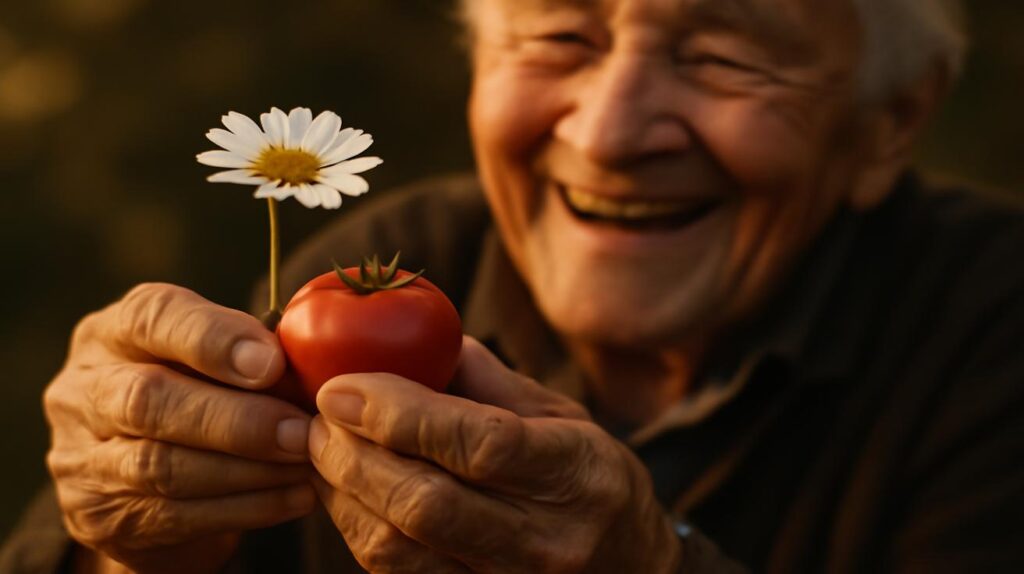
One man in his late sixties said that the best part of his week was now shopping at the small local market alone. Not because it was efficient—he walked slowly, stopped frequently—but because, after a lifetime of rushed errands, he could finally stroll the aisles like a tourist in a foreign country. He admired the irregular shapes of tomatoes, picked up jars just to read their labels, chatted with the cashier about nothing in particular. He told me, “For the first time, I feel like I’m in my own life instead of always catching up to it.”
How Simple Pleasures Shape Daily Rhythm
Over 65, many people begin to measure the success of a day not by productivity, but by the quality of its small moments. Their calendar might look plain, but their inner schedule is alive with tiny rituals.
| Time of Day | Simple Pleasure | Why It Matters |
|---|---|---|
| Early Morning | Quiet cup of tea or coffee by a window | Sets a gentle tone; creates space to notice light, birds, and weather. |
| Late Morning | Short walk around the block or in a nearby park | Connects body and world; offers variety in sights, smells, and sounds. |
| Afternoon | Hobby time—gardening, puzzles, simple crafts | Provides focus, creativity, and the satisfaction of “making” something. |
| Evening | Phone call or chat with a friend or family member | Strengthens connection and offers emotional warmth. |
| Night | Listening to music or the sounds outside before sleep | Helps close the day with calm reflection. |
None of these rituals will make headlines. Yet for many older adults, they are precisely what makes life feel rich and worthwhile. They are no longer background noise; they are the melody.
The Deep Pleasure of Being With, Not Doing For
Another quiet shift after 65 is in relationships. Earlier in life, being with others is often entangled with doing for others: feeding children, supporting partners, fixing problems, organizing gatherings. Connection is real, but it’s busy, threaded with tasks and responsibilities.
As those responsibilities change, many older adults find a new joy in simply being with the people they love. There is less need to orchestrate the perfect holiday or give the perfect advice. Sitting on the sofa with a grandchild, watching cartoons while their small body leans into your side, can be enough. Drinking tea with an old friend and letting the conversation wander—sometimes into memories, sometimes into comfortable silences—can feel like a feast.
The pleasure is no longer in crafting impressive moments; it’s in inhabiting ordinary ones together. A grandmother teaching a child to knead dough, their hands sticky with flour, isn’t aiming for bakery-level bread. The point is the texture of the moment: the giggles when the dough sticks, the puff of flour on the child’s nose, the sense that time has briefly opened up wide enough to hold both of them fully.
Listening as a Simple, Radical Joy
With age often comes a different relationship to talking and listening. Many older people, having told their stories countless times, begin to find an unexpected pleasure in listening instead. There is something satisfying about watching a younger friend pour out their struggles, seeing in their expressions the echoes of your own younger self, and responding not with a ten-point plan but with a calm, steady presence.
A man in his seventies told me, “I used to try to fix everyone’s problems. Now I sit on my porch and let them talk. Somehow, that feels like enough.” He described the simple happiness of just being a witness: hearing the quaver in someone’s voice when they talk about a breakup, the bright lift when they share good news. His role, he said, was to hold the space, offer the occasional story or joke, and watch the world continue through them.
This, too, is a simple pleasure: the quiet pride of seeing the next chapters unfold in other people’s lives, knowing you helped write some of the early pages and now get to enjoy the reading.
Rewriting What It Means to Enjoy Life
There’s a cultural myth that aging is a long, gray slide into irrelevance and boredom. Spend a little time really listening to people over 65, and that myth begins to crumble. What often emerges instead is a different definition of enjoyment—less about adrenaline and accumulation, more about texture, meaning, and presence.
That doesn’t mean big adventures disappear. Plenty of older adults travel, learn new skills, start late-life romances, or throw themselves into fresh projects. But woven between the larger experiences is a new reverence for the small ones. A sunrise seen from a hotel balcony in a foreign country may be dazzling; so is the same sunrise, years later, quietly observed from the same kitchen window you’ve stood at a thousand times before.
Rediscovering simple pleasures is not a consolation prize for being old. It’s a skill, honed by years of loss and gain, of rushing and regretting, of loving and letting go. By 65, many people have been broken open enough by life that they can finally taste it fully. The sweetness was always there—in the steam of the coffee, in the warmth of a dog’s fur under your palm, in the familiar squeak of your front gate at dusk. Age doesn’t create those pleasures; it removes enough distractions that they can be felt.
So the older man on the park bench is not “just” sitting. He is practicing a kind of everyday wisdom: letting the world arrive as it is, moment by moment, and discovering that even now—maybe especially now—it is more than enough.
Frequently Asked Questions
Why do many people over 65 seem happier with less?
With age, priorities often shift from achievement and accumulation toward emotional well-being and meaning. When people realize time is finite, they focus more on experiences that feel deeply satisfying rather than impressive. Small, everyday pleasures become more noticeable and valuable.
Is it normal to lose interest in big goals after 65?
Yes, it can be very normal. Many older adults move from long-term, ambitious goals to shorter-term, more personal ones: enjoying a garden, maintaining friendships, staying active, or learning simple new skills. This isn’t “giving up”; it’s often a sign of clarity about what truly matters.
Can younger people learn to appreciate simple pleasures the same way?
Absolutely. While aging naturally encourages this shift, anyone can begin cultivating it by slowing down, limiting distractions, and paying close attention to sensory details in daily life. Practicing gratitude and setting aside time for quiet, unhurried activities can help at any age.
What are some examples of simple pleasures older adults often enjoy?
Common examples include morning coffee or tea in a favorite spot, gentle walks, gardening, reading, listening to music, cooking familiar recipes, chatting with neighbors, and spending unstructured time with family or friends. The key is not the activity itself, but the quality of attention given to it.
How can families support older relatives in rediscovering simple pleasures?
Families can support this by respecting slower rhythms, inviting older relatives into everyday activities, and not insisting that “fun” must be busy or extravagant. Simple visits, shared meals, time outdoors, and patient listening often mean more than elaborate plans. Encouraging them to maintain small routines they enjoy is also very helpful.